
You’ve invested time and resources in employee training, but how do you make sure people actually use what they’ve learned? Training doesn’t end when learners complete a course. What matters most is applying new skills in their everyday work.
Choosing one of the best LMS for employee training can help you make that happen. But deciding is harder today than it used to be. AI authoring, mobile delivery, and automation show up in every demo, but the real differences hide behind long feature lists.
Your choice also needs to account for learning gaps that aren’t immediately visible. TalentLMS’s Learning Debt Report reveals 47% of employees say they have stayed quiet about not knowing how to do something related to their job. So, it’s important for learning to keep up with real workplace needs.
To make things easier, we’ve compared the 12 best-rated LMS for employee training. We explore their key features and pricing and explain what to consider when deciding on the right solution for your team.
TL;DR
- The best LMS for employee training is the one your team actually uses. Prioritize ease of setup and intuitive navigation over long feature lists.
- The top platforms include TalentLMS, Docebo, Trainual, Absorb LMS, CYPHER Learning, Litmos, Adobe Learning Manager, Cornerstone Learning, LearnWorlds, LearnUpon, 360Learning, and iSpring LMS.
- AI features that matter most reduce admin workload and make launching faster.
- Plan how to measure training effectiveness. Combine completion and assessment results with checks on how employees apply their skills at work.
- Compare total costs and room to grow, including setup, content, integrations, support, and the features you’ll need as training expands.
What is the best LMS for employee training?
The 12 best LMS for employee training in 2027 are TalentLMS, Docebo, Trainual, Absorb LMS, CYPHER Learning, Litmos, Adobe Learning Manager, Cornerstone Learning, LearnWorlds, LearnUpon, 360Learning, and iSpring LMS. These platforms support onboarding, compliance training, upskilling, and AI-powered course creation. Key selection criteria include training goals and audiences, ease of use, implementation requirements, AI capabilities, training effectiveness, and total costs as your needs grow.
12 best LMS for employee training in 2027
| Platform | Best for | G2 rating | Pricing |
|---|---|---|---|
| 1. TalentLMS | Growing businesses delivering employee, customer, and partner training | 4.6/5 (818 reviews) | Free plan & premium free trial. Paid plans start from $119/month for 40 users. |
| 2. Docebo | Large, global organizations with complex training needs | 4.4/5 (670 reviews) | Custom pricing based on tier and user model. Elevate and Enterprise plans, with optional add-ons. |
| 3. Trainual | Small and growing teams that want simple SOP and process training | 4.7/5 (1094 reviews) | No published pricing. Custom quote. |
| 4. Absorb LMS | Organizations wanting multi-audience training, course authoring, and automation | 4.6/5 (1002 reviews) | Custom quote based on features, training program size, and support needs. |
| 5. CYPHER Learning | Personalized teams building, skills-based employee training | 4.4/5 (319 reviews) | No published pricing. Custom quote. |
| 6. Litmos | Teams that need automated course delivery and straightforward employee training management | 4.3/5 (699 reviews) | Plans start at $8k per year. |
| 7. Adobe Learning Manager | Organizations that need personalized learning experiences integrated with Adobe’s digital ecosystem | 4/5 (318 reviews) | No published pricing. Custom quote. |
| 8. Cornerstone Learning | Large enterprises with complex compliance, skills, and workforce-readiness requirements | 4.1/5 (530 reviews) | Subscriptions are based on number of users, org size, and modules. No published pricing. |
| 9. LearnWorlds | Creators and businesses that want an intuitive course-building experience | 4.7/5 (404 reviews) | Free trial available. Pricing starts at $44/month when billed annually, with custom pricing for Corporate. |
| 10. LearnUpon | Multi‑audience training for employees, customers, and partners with complex workflows and enterprise‑grade tracking | 4.5/5 (262 reviews) | No published pricing. Custom quote. |
| 11. 360Learning | Collaborative L&D teams that want to build training with internal subject matter experts | 4.6/5 (660 reviews) | Free trial. Team plan: $8/user/month for up to 100 users. Business and Enterprise plans need custom quotes. |
| 12. iSpring LMS | Teams combining structured employee training with on-the-job assessment | 4.6/5 (175 reviews) | Pay for active users. Rates start from $6.91/user/month for 100 users. |
***Information last updated: November 2026
How to choose the best LMS for employee training
You have a team that’s due their security training, while another needs to learn a new comms tool. At the same time, a customer support process has changed, but training hasn’t been updated yet. You need to create new content, coordinate assignments, and managers are already chasing you for a deadline. This is what reality in L&D can look like.
Your team members have their own conflicting priorities too. So, training can slip down their list of priorities. In fact, Gallup’s research found 41% of employees identify time away from job responsibilities as their greatest challenge to getting training done.
So how do you make training manageable for admins, as well as learners? Choosing one of the best LMS for employee training decides whether the rollout works. As you compare platforms, here are some key points to keep in mind:
1. Define your training goals and audience
Do you want to reduce errors, help teams adopt new processes, stay compliant, or build skills for changing roles? Consider the real day-to-day abilities your employees need to build and which business needs that would address.
Then decide who requires the training. A top LMS for employee training allows you to easily train people across different roles, departments, locations, or even languages. If customers or partners also need training, include their requirements from the start. This way you manage training centrally, while each learner gets only relevant courses based on their needs.
2. Prioritize ease of use
Check how the LMS works for both admins and learners. During a demo or free trial, make sure to test routine admin tasks: Updating a lesson, assigning a course, sending a reminder, and checking progress. Notice whether you find each action easily and make changes without needing to raise an IT ticket.
Then follow the learner’s steps: Sign in, find a course, or take a quiz. If your employees will also need to access training on their phones, try the mobile version as well.
3. Check implementation requirements
How quickly do you need to launch? Think about the content, employee data, and tools you already have. What needs to move into the LMS, and what has to connect to it? Ask vendors who will handle each part of the setup and what support is included. Your launch plan should reflect the time and people you can realistically commit.
4. Evaluate AI capabilities against training needs
Choose a task that currently takes too much time. What would that look like with extra AI support? Ask which capabilities are available now, what your plan includes, and whether credits or add-ons affect ongoing costs.
5. Look beyond course completion when measuring results
Completion rates tell you who finished, not whether anything changed. Are employees applying new skills, making fewer mistakes, or improving their performance?
Where the work allows it, compare the same metric before and after training so you can show a change rather than assume one. Then check that your platform also gives you evidence: completion and assessment records, surveys, or manager feedback.
6. Compare total costs and room to grow
Look beyond the initial subscription price. Setup, content migration support, integrations, content libraries, or additional AI features could bring on extra costs. It’s also a good idea to evaluate one-time charges and any recurring fees, which could affect your monthly or annual rates.
For growing businesses, you also want to consider the program you’re launching now and what you expect it to become in the future. Will you add more learners, departments, or training audiences? Ask for costs based on both cases. Check user limits and upgrade requirements so you better understand when the price could change.
What features should you look for in employee training software?
When comparing the best LMS for employee training, think about where your programs usually get held up. Are you spending too much time assigning courses, struggling to keep content current, or unsure where employees need support? Bear this in mind as you evaluate LMS feature lists. Here are some key features to consider:
AI & automation
AI shapes how training is designed and delivered. Many LMS platforms include tools for AI-driven course creation, translation, or personalized coaching. These features help instructors save time while improving the learner experience with smarter recommendations and personalized feedback. Automations also handle recurring work such as course assignments, reminders, and scheduled reports. Check which capabilities match your workflows and whether they’re included in your chosen plan.
Learning paths
Learning Paths let instructors organize courses into a logical sequence. This means your employees understand what to complete and in what order. They’re useful when learners need foundational knowledge before moving to more advanced material. You can also set prerequisites, make courses required or optional, and assign different paths to different roles.
Subportals & branches
The larger your workforce is, the more likely you are to need subportals for different learner groups. These separate training spaces help you manage all departments, regions, or external audiences from one system. Check whether each space has its own content, language, and access permissions. Regional employees may need different policy training, while partners should only see materials intended just for them. White labeling options also allow you to customize the look and branding of each portal to create a more familiar environment for learners.
Certification
As your team grows, keeping track of recertifications can get complicated, especially in heavily regulated industries. If your employees must repeat training frequently, look for expiration dates, renewal reminders, and automatic reassignment of refresher courses. Check whether admins are able to identify whose certificates are current, which are expiring, and who needs to renew. This way you keep records organized and your team audit-ready.
Reports and analytics
A best-rated LMS for employee training will help admins easily keep track in real time. Check whether you can review results by team or role and schedule updates for managers. Combine these records with observations of how employees apply their learning at work. These will help you spot any gaps faster before they become performance or bigger compliance issues. Scheduled reports also help you make sure information reaches the right people at the right time.
Mobile learning
For deskless teams and on-the-ground workers, mobile learning makes training more accessible. This way they can complete courses or take refreshers without needing a desktop. If connectivity is unreliable in your industry, ask if content is available offline and how progress syncs once connection is restored.
Best LMS for employee training #1: TalentLMS
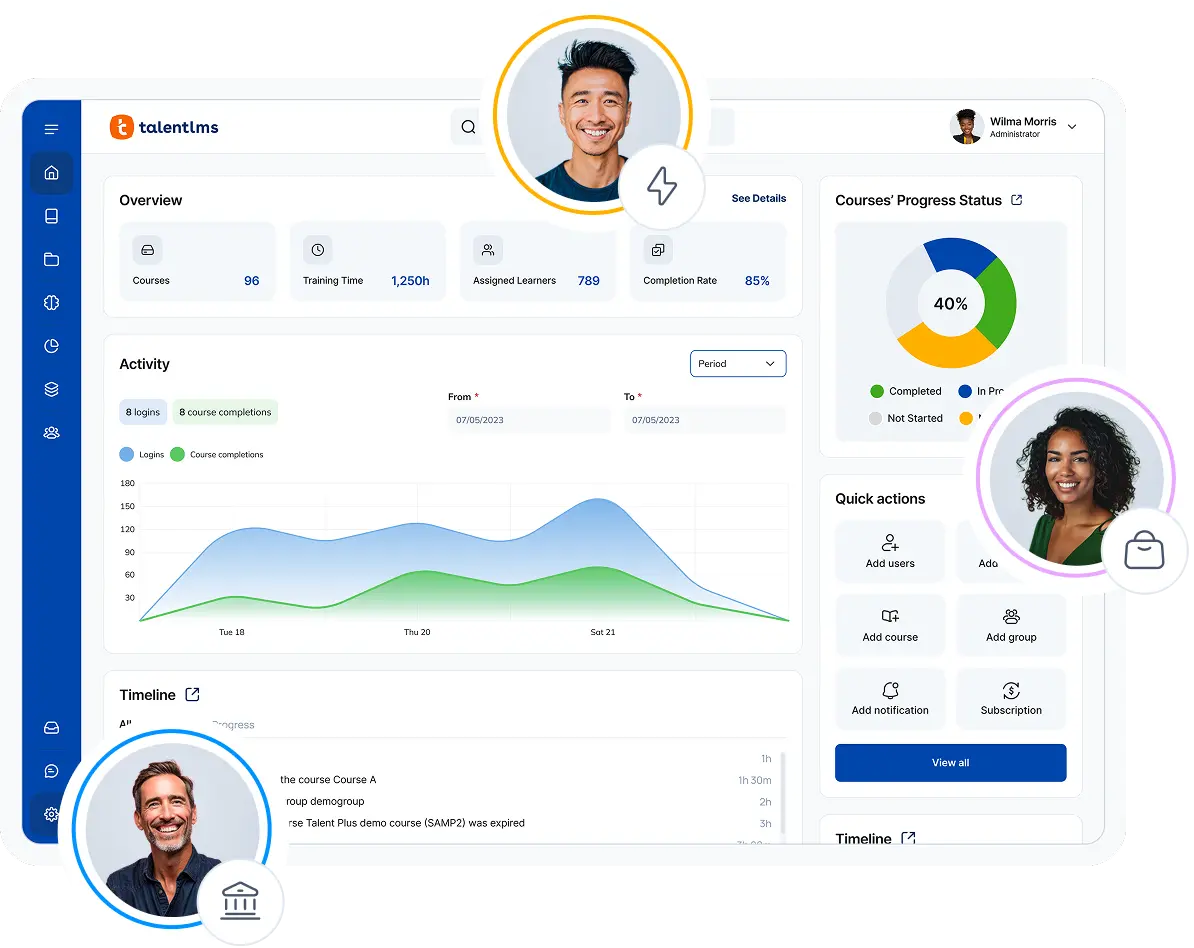
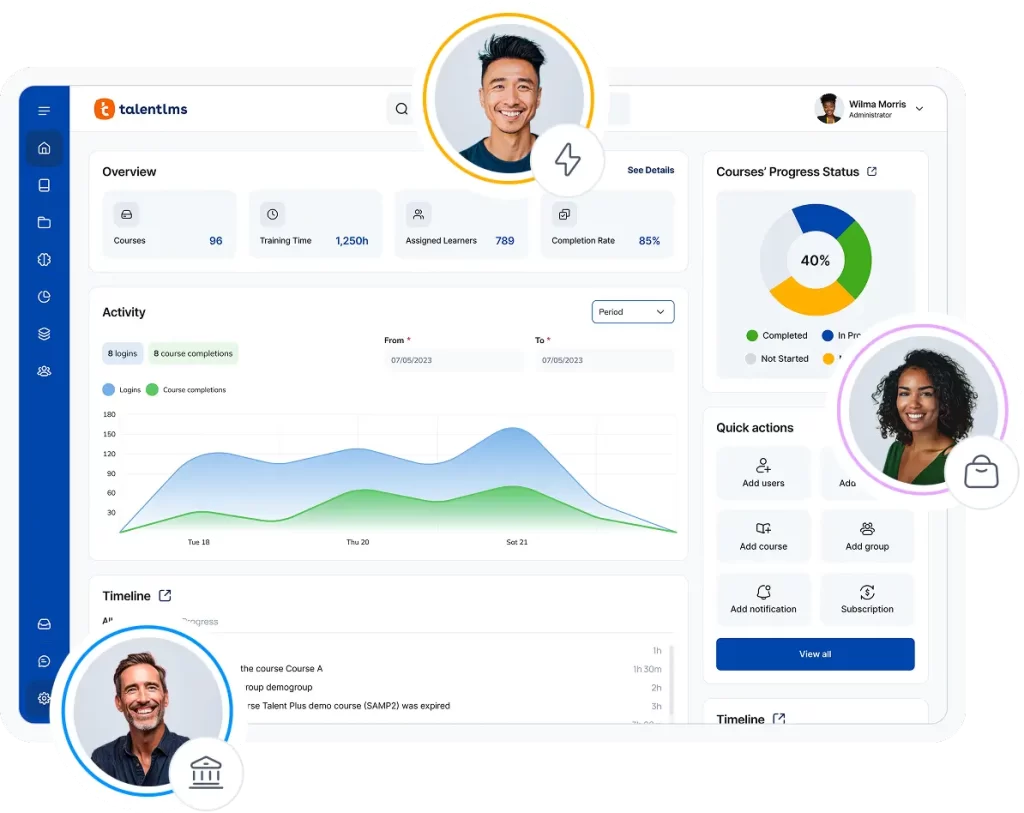
TalentLMS is an LMS for employee training designed for building, managing, and updating training easily, even without a dedicated L&D or IT team. It’s a great choice for teams looking for a user-friendly learning platform with AI-powered course creation, helping you launch fast.
It helps employees put what they’ve learned into practice with Learning Playground: A dedicated space to safely practice new skills and work through realistic work scenarios. A mobile app with offline access also makes it an ideal choice for distributed and deskless teams.
Why we picked it
Keeping employee training relevant as business needs change can be challenging, especially for L&D teams with limited time and resources. TalentLMS helps you keep learning consistent and up-to-date without extra admin.
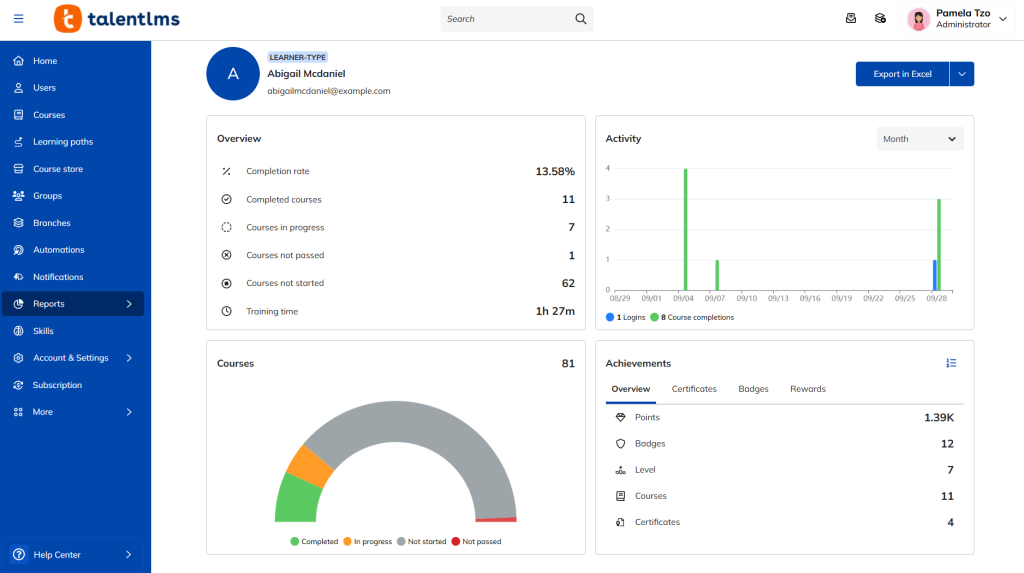
Create new modules or update old ones with TalentCraft, its AI-powered course creator. You’re able to add images, charts, quizzes, and interactive flashcards. To make learning more engaging, you can also create AI avatar videos within your courses. For multilingual teams, AI translation makes courses more localized. Clear, custom Reports also help you be audit-ready and stay on track of completions.
If you’re looking to standardize training without creating content from scratch, TalentLibrary™ gives you access to over 1,000 courses. To save you time, automations trigger the next course assignment after completion or when a certificate expires. Mass actions allow you to bulk enroll groups into necessary training.
Branches divide training by teams or departments, while white labeling keeps the learning environment familiar. This way learners focus on their goals and personal development without unnecessary distractions.
Pros
- User-friendly and quick to implement
- Start easily with transparent pricing and a free plan available
- Keep employee training consistent as your organization scales
- Create training quickly and support learners’ development with built-in AI capabilities
Cons
- Educational institutions with academic-specific requirements may need a more specialized platform
- May not be the best fit for complex enterprise setups
Key features:
- AI Coach
- AI-powered course creation
- Skills management
- Analytics and reports
- Learning Paths
- Branches for different audiences
- Learning Playground
- Certifications
- Automations
- TalentLibrary™
- Gamification
- Mobile learning
- SCORM 1.2, xAPI, cmi5, and LTI 1.3 support
Pricing: A free plan and premium trial. Paid plans start from $119/month for 40 users.
What users are saying on G2
The Good
“I love the ability to use AI and also have free range for customization. There are so many areas that we can leverage to enhance the training we provide. The reporting has been extremely beneficial and provides helpful data. We were able to implement the content easily and quickly with an extremely high adoption rate. We had no issues transitioning from our prior platform to TalentLMS and it has already saved us hours of training time.” — Katrina L., Director of Training, Mid-Market, 5/5
The Room for Improvement
“I wish I could edit and save a default view for the Course and User pages.” – Danielle B., HR Director, Mid-Market, 4/5
How Trans Ash cut onboarding to half a day with TalentLMS
For Trans Ash, training nearly 1,000 office and field employees meant spending too much time helping people use an outdated LMS. Training and Development Manager Sierra Sanders needed a platform employees could navigate independently, allowing her more time to improve the training itself.
After evaluating more than 300 LMS platforms, they finally switched to TalentLMS. Trans Ash used mass import tools to migrate training records and TalentCraft to help rebuild courses. A redesigned orientation program shortened onboarding from more than two days to about half a day. Requests for help accessing training became rare, while the team kept its attention on what employees were able to do afterward. As Sanders explains, “our biggest KPI is seeing employees apply what they’ve learned in the field.”
Best LMS for employee training #2: Docebo
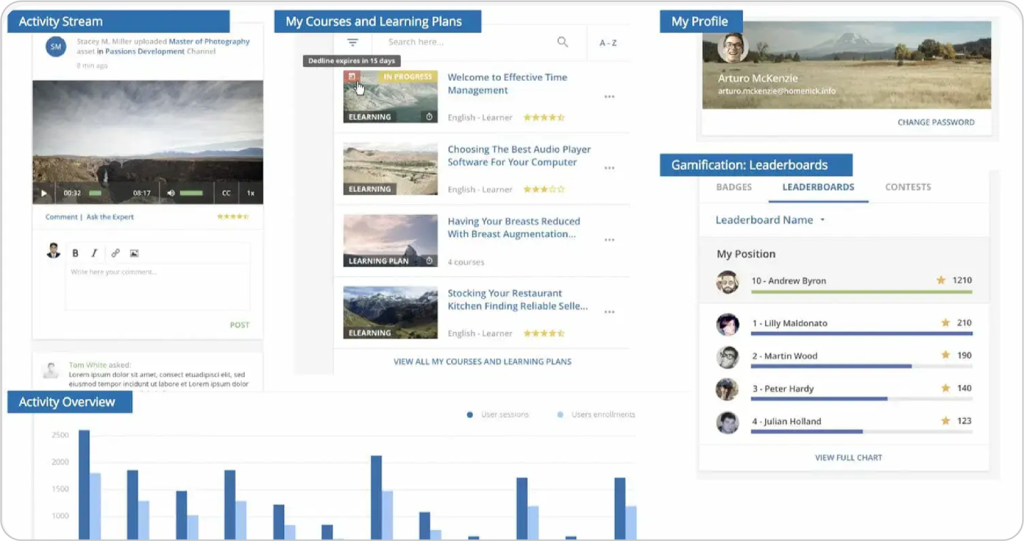
Docebo is an LMS for employee training built around creating ongoing talent development programs. It places an emphasis on upskilling and personalized training for employees looking for dynamic growth opportunities. To that end, Docebo uses AI-powered learning paths and learner data to help instructors chart the training journey for each employee without having to put it all in place manually.
Using this learning management software, you can gamify your employees’ training and gather valuable feedback from them as they engage with your training courses. This also allows you to refine your content as you go and find the perfect sweet spot. Paired with Single-Sign-On (SSO), it’s a great choice for training a large workforce that relies on other apps and systems.
Why we picked it
Beyond allowing you to create your own content, Docebo provides AI-powered assessments, learning tools, and an AI assistant. These help employees find answers and access extra support as they go through training materials. Its AI Tutor can also explain concepts and summarize course content, helping employees revisit what they need without starting from scratch.
Docebo’s reporting and analytics help training teams monitor progress and identify areas where additional support is needed. Admins can also check compliance progress using conversational analytics, without having to manually build reports. Docebo is a solid choice for teams that want to personalize their learning experience at scale and connect training more closely to everyday work.
Pros
- Personalize learning at scale with AI-powered features
- Connect training with other existing tools through integrations
- Automate training workflows to reduce manual admin
Cons
- More time required to configure advanced workflows
- May offer more functionality than smaller teams need
- Requires a custom quote, making costs harder to compare upfront
Key features:
- AI-guided learning
- Certifications
- Social learning
- Gamification
- Surveys
- Mobile training
- Ready-made course library
- SCORM compliant
- Reports and analytics
- Automated enrollment
Pricing: No free trial. Custom pricing based on tier and user model. Elevate and Enterprise plans, with optional add-ons.
What users are saying on G2
The Good
“Docebo is a very powerful and flexible learning experience platform. It makes it possible to customize your platform for a variety of use cases and business needs.” — Verified User in Marketing and Advertising, Enterprise, 5/5
The Room for Improvement
“While it covers all the essential functions an LMS needs, some of its modules are limited or underdeveloped, and I find they don’t often think about how the different components interact with each other or in real-world use cases.” — Suzy S., Enterprise, 4/5
Best LMS for employee training #3: Trainual
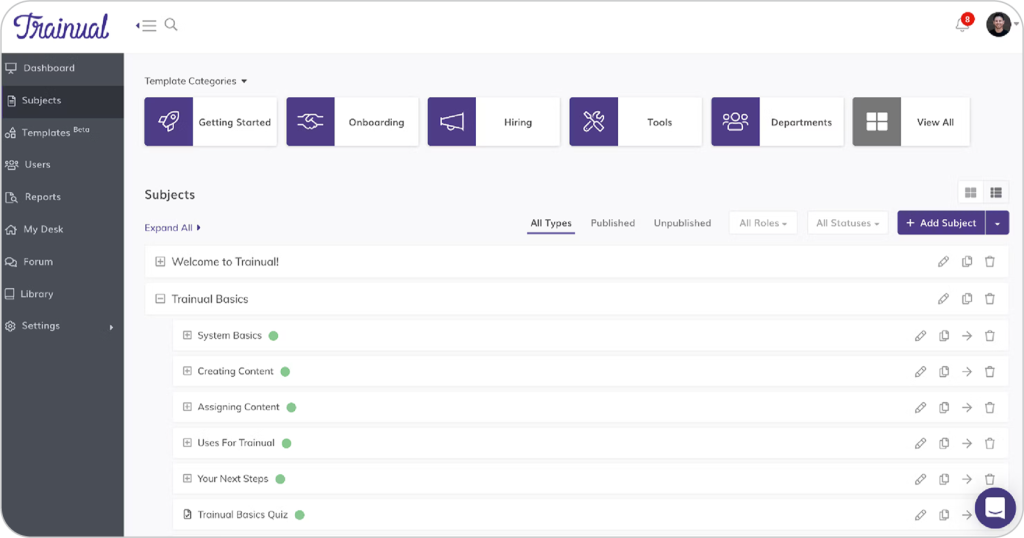
Trainual is a good choice for teams needing extensive document management features to track workflow and standardize processes. With e-signatures, you document policies and SOPs and make sure they’re all up-to-date and approved. This works alongside Trainual’s role management features, which let admins build training paths for different roles and departments.
Trainual also supports various training use cases, from onboarding to upskilling and reskilling, as well as policy and compliance training. You can use different training content types, including videos, screen recordings, and quizzes. This way employees enjoy a dynamic learning experience that’ll keep them engaged throughout.
Why we picked it
Trainual emphasizes role-based training. Its features are built around each role’s specific responsibilities and learning needs. Employees can understand the company structure and different roles, with a team directory and organizational charts. Company processes and documents are also easy to find using a searchable knowledge base within the LMS.
Pros
- Centralize employee training, policies, and SOPs in one searchable platform
- Standardize onboarding and role-specific training across different teams
- Help employees find answers to day-to-day questions without having to ask managers
Cons
- Less suitable for organizations needing a more traditional LMS
- Pricing details require contacting the vendor, making comparing costs harder
Key features:
- AI-assisted documentation and content creation
- E-signatures
- SOPs management
- Advanced documentation management
- Screen recording
- Mobile training
- White labeling
- Organizational and role charts
- Integrations
- Progress reports and completion tracking
Pricing: No public pricing. Custom quotes.
What users are saying on G2
The Good
“It is great for sending out SOP and training content to our team. Helps us standardize and streamline policy updates, checkout processes, and more.” — Ashley R., Project Coordinator, Mid-Market, 4.5/5
The Room for Improvement
“The AI features of Trainual are not as good as the others. There’s no way to create custom categories for the subjects. If you’re editing the subjects, there’s no feature to add comments inside the subject itself.” — Gillian E., Consultant, Mid-Market, 4/5
Best LMS for employee training #4: Absorb LMS
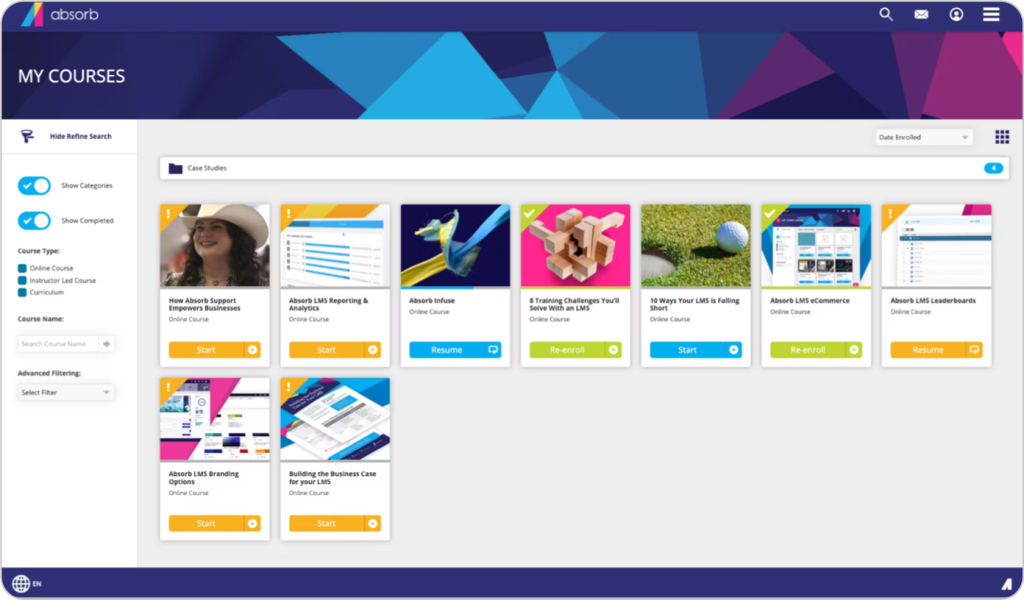
Absorb LMS focuses on multi-audience training at scale. It helps admins and instructors do more than just set up training courses and move on. You can deliver training through branded learner portals, while managing assignments and progress centrally. Automated enrollments and reminders help reduce the follow-up involved in keeping different groups on track.
AI is a key part of Absorb LMS. It’s used to guide employees in the right direction based on their performance, roles, and learning styles. Absorb LMS also supports learner engagement through gamification, leaderboards, social learning, and personalized course recommendations.
Why we picked it
Absorb connects training with the systems and information employees already use every day. Its HRIS connectors help you keep employee and training records aligned. This also makes it a good choice for companies with heavy compliance training needs.
Its Aura Learn assistant also helps employees revisit training while they’re working. They can ask questions and get answers aligned with their courses. Absorb Create also allows you to generate course content, quizzes, translations, and voice-overs to speed up the training creation process.
Pros
- Personalize the learner experience with branded learner dashboards
- Cut admin time by automating enrollments and reminders
- Connect employee and training data through enterprise integrations
Cons
- Setup can be challenging for non-technical or smaller teams
Implementation could take longer than a lighter LMS - Some engagement features come as add-ons
Key features:
- AI-powered course recommendations
- Training and enrollment automations
- Social learning
- Mobile training
- SCORM compliant
- Reports and analytics
- Gamification
- Integrations
- E-signatures
Pricing: No public pricing; subscription, quote-based enterprise pricing that varies by users and features.
What users are saying on G2
The Good
“We are using it to support onboarding, role-specific development, leadership training, professional skills, and access to job-related resources. It also gives us the flexibility to support multiple departments and potentially expand training to affiliated companies in the future.” — Stephanie P., Senior HR Generalist, Mid-Market, 5/5
The Room for Improvement
“Some functions can be confusing or take multiple steps to complete. The least helpful aspect is the limited customization available for course layouts and reporting, which can restrict how information is displayed or tracked.” — Rosetta B., LMS Specialist, Enterprise, 5/5
Best LMS for employee training #5: CYPHER Learning
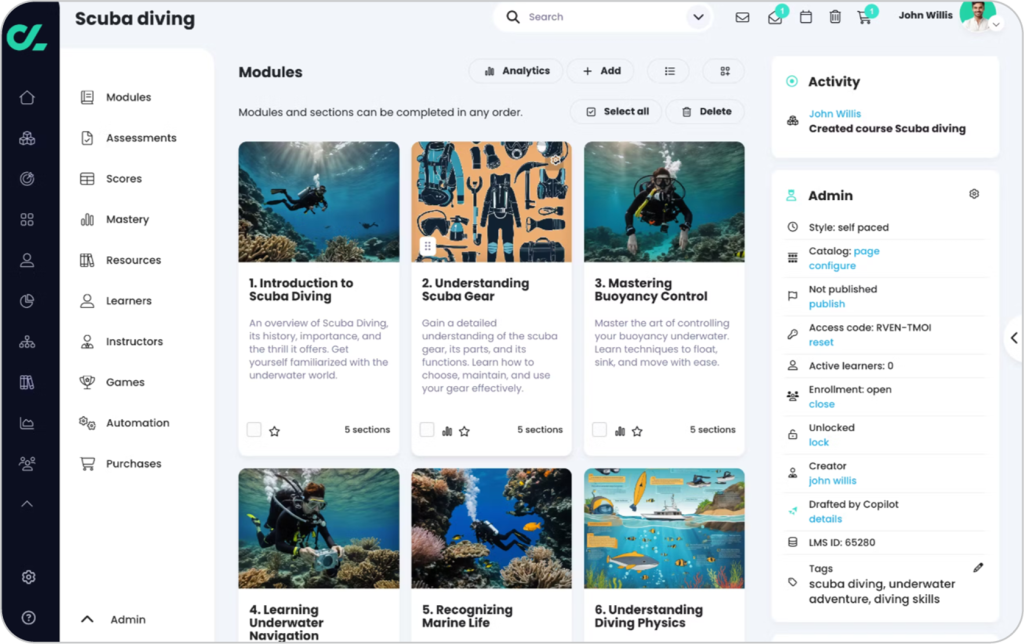
CYPHER Learning offers a specialized LMS that connects with the company’s broader ecosystem. Its platform for employee training is ready to use out-of-the-box, making setup smooth for teams that need to launch training at scale.
Paired with CYPHER Agent, the platform’s AI tool, instructors build courses tailored to each learner based on company knowledge. CYPHER Learning also uses personal, context-aware AI agents to deliver individualized support and skills mapping at the module level. This supports businesses designing adaptive, skill-based learning programs. It also offers AI Crosscheck, which uses a second, independent AI model to double-check generated content and help cut inaccuracies.
Why we picked it
CYPHER Learning focuses on making learning more personal. Its AI tools analyze learner data to suggest courses, measure engagement, and refine training paths. Instructors localize messages, run discussions, and host interactive sessions, keeping training inclusive and relevant.
Pros
- Connect training to skill development through assessments, skills mapping, and reporting.
- Speed up course creation by using AI to develop training from existing company materials.
- Personalize learning at scale with role-based paths and skills-aligned training.
Cons
- Advanced enterprise requirements may need additional configuration, integrations, or support.
- Key features priced as paid add-ons
- Some reporting features lack depth and customization.
Key features:
- Content authoring
- Content localization
- Learner assessments
- Personalized learning paths
- Mobile app
- Social learning
- Skills-based learning
- Gamification
- Automations
- Reports and analytics
- Skills mapping
- Content verification with AI Crosscheck
- Compliance training and certifications
Pricing: No public prices. Custom pricing based on feature requirements.
What users are saying on G2
The Good
“The ability to customize student assignments according to their interests and their level of understanding and assimilation of the subject.” — Verified User in Primary/Secondary Education, Mid-Market, 4.5/5
The Room for Improvement
“Not my favorite Online Learning Platform because it is very clunky and not the most user friendly but it’s very robust” — Sarah R., Social Media and Digital Marketing Specialist, Small Business, 3/5
Best LMS for employee training #6: Litmos
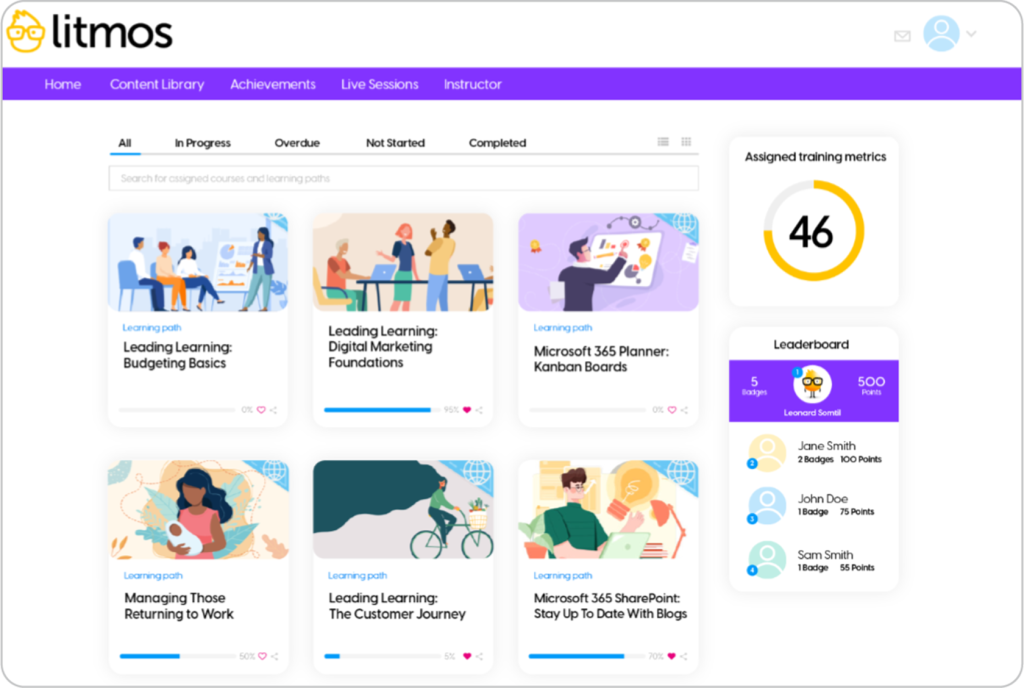
Litmos combines a ready-made catalog of courses with employee, customer, and partner education. It allows instructors to create and update content using built-in authoring tools. Then, they can deliver it through blended training, combining online sessions with classroom learning. Litmos is accessed on any device as well as offline, making it suitable for distributed teams.
Its AI-powered video assessments let learners practice workplace scenarios, such as sales conversations, and receive automated feedback. With its gamification features, Litmos enables instructors to build healthy competition among learners through leaderboards. The LMS also supports custom branding. This way you adapt the learning environment to your brand, making it a natural part of your employees’ experience.
Why we picked it
Litmos is designed for a relatively quick implementation process that’ll have you up and running without needing extensive technical support. This makes it a solid option for smaller L&D teams, inexperienced administrators, and instructional designers getting started. Its built-in content library includes compliance and professional development courses. Combined with automated actions like enrollment, certification workflows, and reporting, Litmos alleviates instructors’ workload and allows for a smooth training deployment.
Pros
- Speed up course creation with built-in authoring tools and AI-assisted content generation.
- Support compliance at scale with automated assignments, certification workflows, and progress tracking.
- Make training more practical and interactive through video assessments, gamification, and blended learning.
Cons
- Reporting can feel restrictive for administrators who need highly customized reports.
- Pricing is less straightforward to compare upfront.
- Add-ons increase total cost and complexity.
Key features:
- Content authoring
- Built-in content library
- Mobile learning
- Video assessments
- Learning paths
- Automations
- Gamification
- Gradebook
- White labeling
- Reports and analytics
- Certification management
Pricing: Plans start from $8k per year.
What users are saying on G2
The Good
“The Litmos platform has been ideal for supporting both our new franchisee onboarding and internal compliance training. We particularly value how easy it is to create, assign, and track learning content across our large and diverse network of both our franchisees and colleagues. It’s customisation features are excellent and help make it feel part of our own tech offering.” — Ben C., Product Owner Digital Learning, Mid-Market, 5/5
The Room for Improvement
“Some of the functionality such as quirky escalation rules means you cannot select all users and must go through each individual page to reset some – in a recent case 35 pages was needed to select all users.” — John M., L&D Specialist, Mid-Market, 3.5/5
Best LMS for employee training #7: Adobe Learning Manager
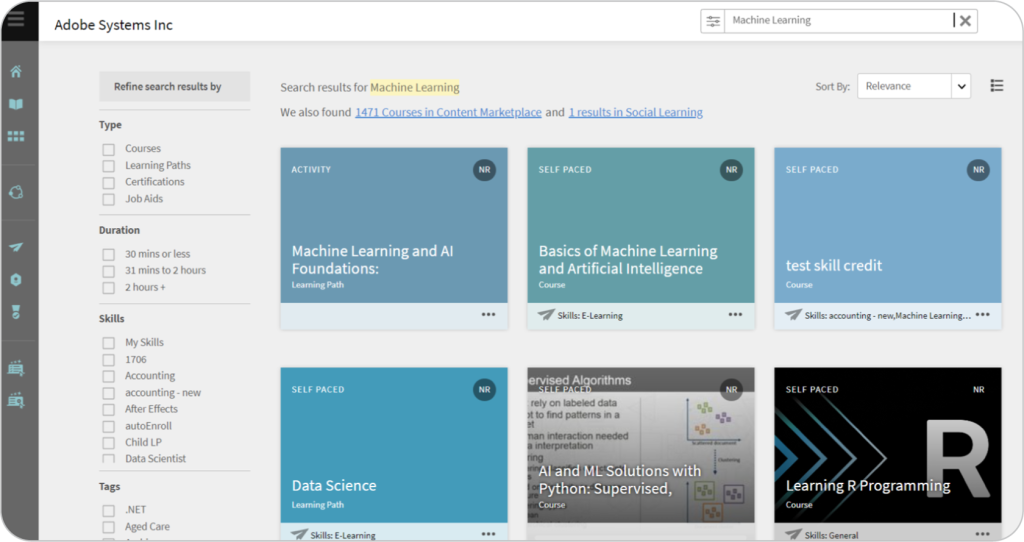
Adobe Learning Manager is an LMS for employee training built for enterprise organizations with continuous growth in mind. It enables curated, timely employee reskilling based on AI-powered recommendations and learner data. It supports instructors with both ILT functionality and self-paced learning to allow for an engaging mix. AI personalization suggestions and adaptive learning paths help employees take relevant courses based on their roles, interests, and skills.
Paired with skills gap analysis, this gives instructors a range of options when it comes to addressing learner needs. It also offers you access to a marketplace of third-party course providers, alongside tools for creating custom training courses.
Why we picked it
It features “headless” content delivery, meaning you embed learning into your own websites, apps, and other digital experiences. Your learners then jump into their training whenever and wherever they want. Admins, on the other hand, track progress through learning paths, learning plans, certifications, and reporting tools. Adobe Learning Manager natively integrates with other Adobe products, making it useful if you’re already using other tools within the Adobe ecosystem.
Pros
- Help identify knowledge gaps with skills analysis.
- Personalize learning by combining self-paced courses with instructor-led sessions.
- Integrate your LMS with Adobe’s ecosystem.
Cons
- Pricing is more focused on enterprise-level customers.
- Difficult to adopt without prior instructional experience or IT support.
Key features:
- Learning paths
- Learning plans
- AI-powered recommendations
- Blended learning
- Mobile training
- Microlearning
- Skill matrix
- Gamification
- Integrations
- Social learning
- Third-party content marketplace
- Reporting and analytics
Pricing: No published pricing. Requires a custom quote.
What users are saying on G2
The Good
“The ability to create custom users within the ALM is a bonus for our teams; I am able to create administrators for specific team content and modify the access based on what is needed. It keeps individuals that are less knowledgeable about the system from being overwhelmed.” — Courtney P., Mid-Market, 4/5
The Room for Improvement
“The Admin and Author tools are overengineered; you often need to toggle between multiple roles to accomplish one simple task, such as uploading an asset or setting up a course.” — Verified User in Hospitality, Enterprise, 2.5/5
Best LMS for employee training #8: Cornerstone Learning
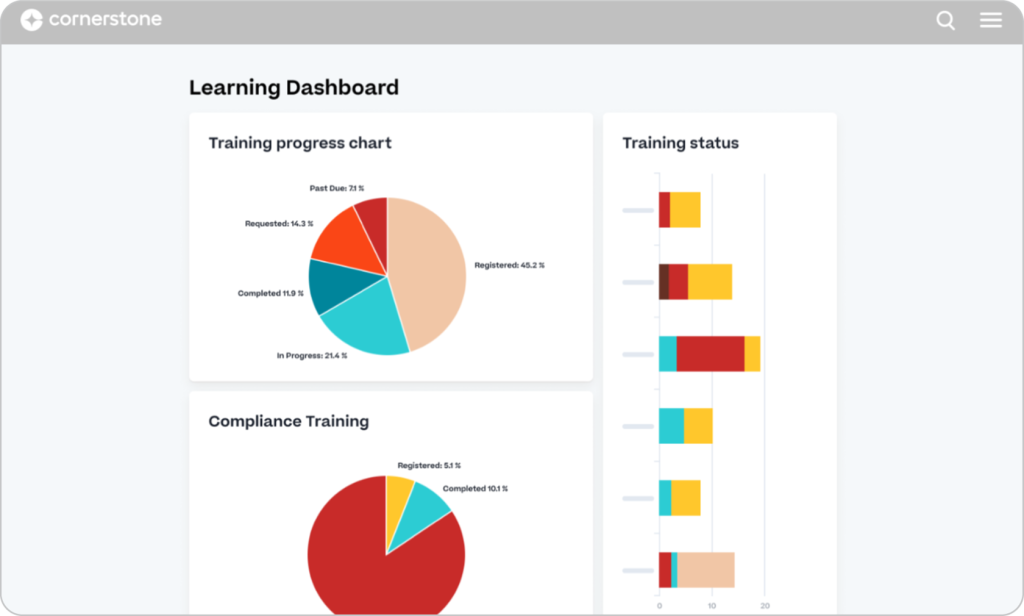
Cornerstone Learning is an enterprise Learning Management System for talent development. It suits organizations that need to manage employee training across multiple roles, locations, and regulatory requirements. Its enterprise reporting capabilities make it a good fit for organizations in heavily regulated industries such as healthcare or pharmaceuticals.
To reduce admin burden, Cornerstone Learning relies on automations from assignments, certifications, and recertifications to auto-generated audits and renewal triggers. Its AI-powered features also connect each employee’s role and skills with relevant training. These allow you to identify workforce gaps sooner and to build workforce development plans and support them with upskilling and reskilling programs.
Why we picked it
Its strength is in balancing compliance requirements with ongoing employee development. Its AI-powered Course Assistant also answers learners’ questions and clarifies concepts. This is embedded inside the media player, so employees access it while taking a course without having to interrupt the learning flow. When it comes to social learning, Cornerstone Learning features a peer-based knowledge base.
Pros
- Tailor learning to employees’ roles, skills, and development needs
- Deliver consistent learning across large, distributed workforces
- Give employees realistic practice through AI-powered role-play and simulations
Cons
- Steep learning curve for admins and instructors
- It could be more complex than what smaller teams need
Key features:
- Automated compliance assignments
- Certification renewals
- AI-powered course recommendations
- AI Course Assistant
- Surveys
- Gamification
- Integrations
- Enterprise analytics
- Mobile training
Pricing: No published pricing. Custom quotes based on user count, organization size, and selected modules.
What users are saying on G2
The Good
“The content organization and curriculum management tools are solid. Being able to structure learning paths by role, product area, or certification level gives learners a clear sense of progression, and it keeps the admin experience manageable even as the catalog grows.” — Marco M., Senior Project & Program Manager, Enterprise, 4/5
The Room for Improvement
“The cost was a bit high and sometimes we had trouble getting support on problems from the Cornerstone team. Just slow reply or incomplete answers.” — Tim C., Sr. HRIS Analyst, Enterprise, 3.5/5
Best LMS for employee training #9: LearnWorlds
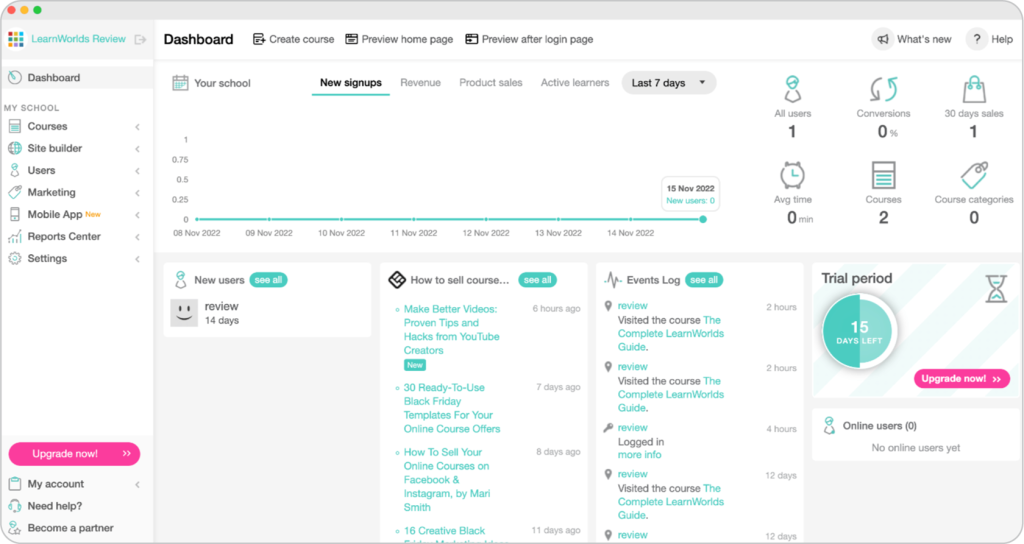
LearnWorlds is an all-in-one LMS for employee training as well as creating, selling, and marketing online courses. Its platform supports blended learning, combining self-paced modules with live online sessions and instructor-led training.
You can monitor progress and address learning gaps with LearnWorlds’ assessment options. These include exams, quizzes, surveys, and video or audio responses. Its advanced gradebook also lets instructors review results and provide detailed feedback.
Why we picked it
LearnWorlds goes beyond the standard course catalog. Its no-code website builder and white labeling allow you to build a branded training academy, making the learning space more familiar to your employees. You create your academy from scratch using drag-and-drop builders or ready-made templates.
This is particularly useful for companies with distributed teams or employees with different compliance requirements. It provides a consistent learning experience while allowing training to be organized by roles and departments. Support for SCORM packages and integrations help you bring existing learning materials and tools into the platform. At the same time, to reduce manual work, admins can also create course outlines, learning activities, translations, and assessments using LearnWorlds AI.
Pros
- Create branded learning academies with a drag-and-drop builder.
- Speed up course development with AI-assisted content creation.
- Public pricing with a low entry point.
Cons
- More geared toward training businesses and course sellers than internal training-only teams.
- The range of features may require more setup time than a conventional LMS.
Key features:
- AI-powered content creation
- AI-generated assessments
- Blended learning
- Mobile training
- Integrations
- ILT
- SCORM
- Surveys
- Reports and analytics
- Website builder
- White labeling
Pricing: Free trial available. Pricing starts at $44/month when billed annually, with custom pricing for the Corporate plan.
What users are saying on G2
The Good
“I like the tools available, just the layout, and how it helps me work out the courses. The AI support and interactive video capabilities are exciting.” – Paul C., Small Business, 4/5
The Room for Improvement
“I think learning pathways could be a little easier to use, and the way pathways and programs are presented could have more options. There are limited ways to present them.” — Chris K., Co-Founder, Small Business, 4.5/5
Best LMS for employee training #10: LearnUpon
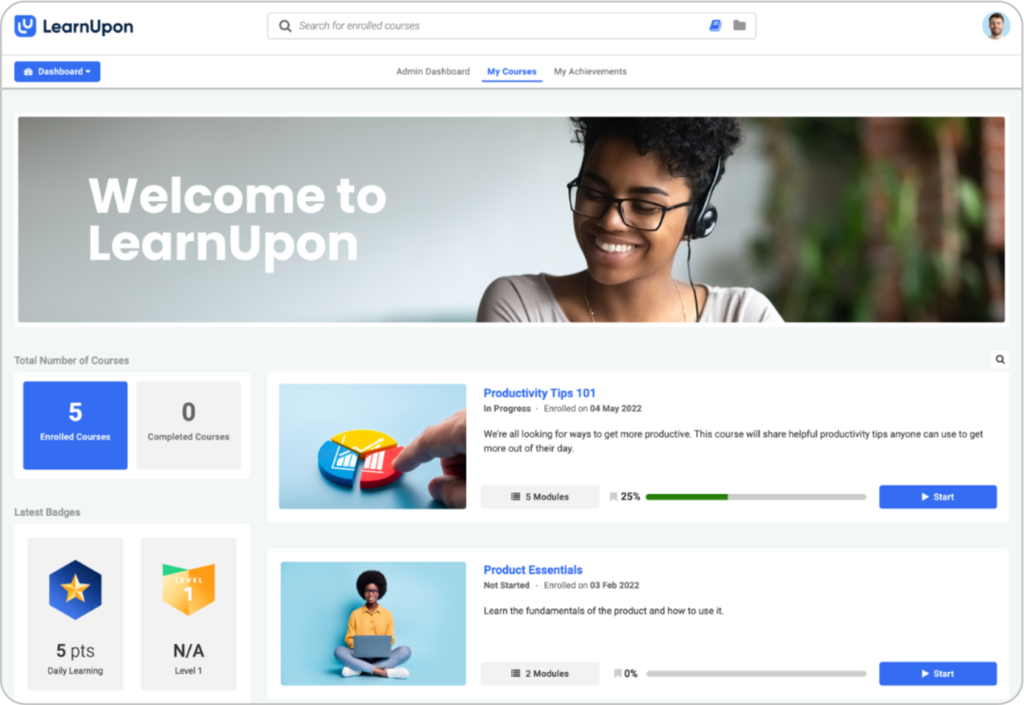
LearnUpon is an LMS for employee training, alongside customer and partner education. Instructors bulk-assign courses and create automated enrollment flows based on different job roles. They then use the LMS’s feedback tools to get learners’ thoughts and adjust their training programs accordingly.
Knowledge checks are added throughout to assess understanding and learner progress before course completion. This way you create a more interactive learning process for your employees to boost engagement.
Why we picked it
LearnUpon features extensive automations that reduce admin work involved in managing employee training. Instructors set up enrollments once, build structured Learning Journeys, and use branching rules to direct employees automatically toward training relevant to their needs.
Its Agentic Learning Platform also brings AI into more parts of the learning process. With Create+, admins turn existing materials into professional, interactive courses. To make learning more accessible, AI-powered tools translate and narrate learning content.
Pros
- Personalize learning by creating structured learning journeys for different groups.
- Speed up content creation by turning existing materials into courses.
- Set an enrollment rule once, and it keeps running as roles change.
Cons
- No clear pricing makes cost comparison harder.
- Not designed for organizations training fewer than 100 users.
Key features:
- AI-powered course authoring with Create+
- Learning Journeys
- Skills management
- Automations
- Surveys
- Gamification
- Portals
- Reports
- Integrations and API
Pricing: No public pricing.
What users are saying on G2
The Good
“Automations like enrollment rules, reminders, and progress tracking help reduce manual follow-up and keep learners accountable.” — Verified User, 5/5 stars
The Room for Improvement
“The messaging feature isn’t the best. There isn’t a good way for all people to see message threads and if you forward a message within LearnUpon it doesn’t give all relevant information.” — Verified User in Higher Education, Small-Business, 3.5/5
Best LMS for employee training #11: 360Learning
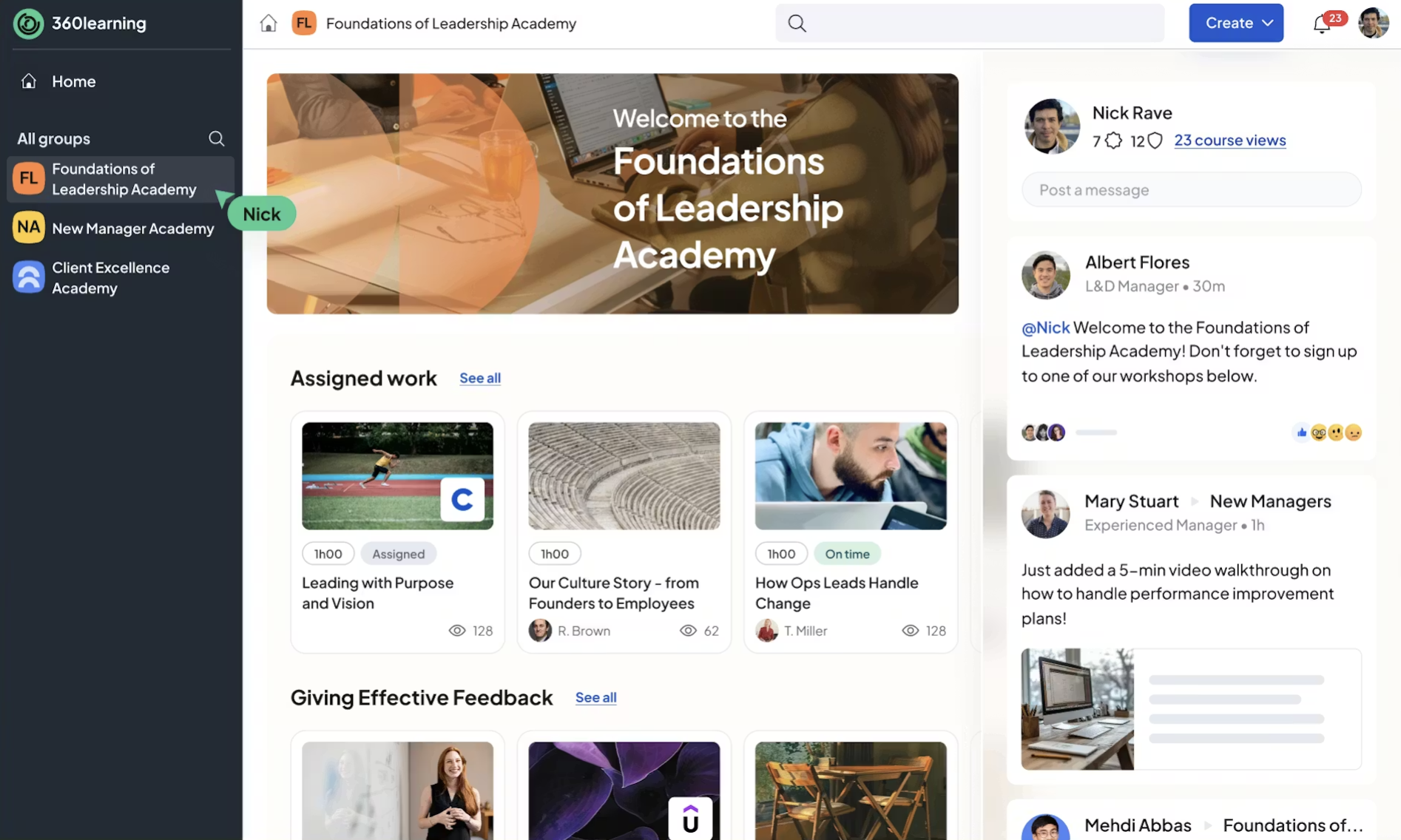
360Learning is a Learning Management System built around sharing knowledge from within your organization. It lets subject matter experts create and update courses, so training reflects how your teams work. For example, a sales manager contributes product knowledge, while L&D reviews the content before it reaches employees.
Its AI Content Builder turns existing documents or prompts into course drafts and generates questions to check understanding. Co-authoring and review tools then help your experts refine the material without leaving L&D to build everything themselves.
Why we picked it
360Learning gives employees a say in what they need to learn. They submit training requests, upvote shared needs, and suggest colleagues who could help. This gives training teams a practical starting point for deciding what to create next. That feedback continues inside courses. Learners can ask questions, flag outdated information, and tell authors whether the material is useful. If a process changes, these signals help your team spot which lessons need attention. For organizations building training around internal expertise, this approach makes knowledge sharing part of maintaining the program.
Pros
- Capture what your in-house experts know and turn it into training.
- Keep fast-changing internal knowledge current.
- Engage learners with discussions and feedback loops.
Cons
- Its interface can take some time to learn.
- No native off-the-shelf content library.
- Advanced customization may require developer or admin support.
Key features
- Collaborative course creation
- AI-powered course and quiz generation
- Discussion forums
- Learning academies
- Video assessments
- Blended learning
- Surveys
- Reports and analytics
- Mobile learning
Pricing: A free trial is available. The Team plan starts at $8/user/month for up to 100 users. Business and Enterprise plans require a custom quote.
What users are saying on G2
The Good
“360Learning allows us to provide our employees with numerous training courses on various and diverse topics, accessible whenever they wish, so they can train in their free time and progress on subjects related to their positions or even on more personal topics.” — Mathilde C., Digital Communication & Training Manager, Small-Business, 4.5/5
The Room for Improvement
“The way to retrieve the results is not practical. I have set up modules that serve as aptitude quizzes, but it is really tedious to go check each person’s results one by one. Otherwise, we only see the average score, without the details question by question.” — Axel S., Enterprise, 4/5
Best LMS for employee training #12: iSpring LMS
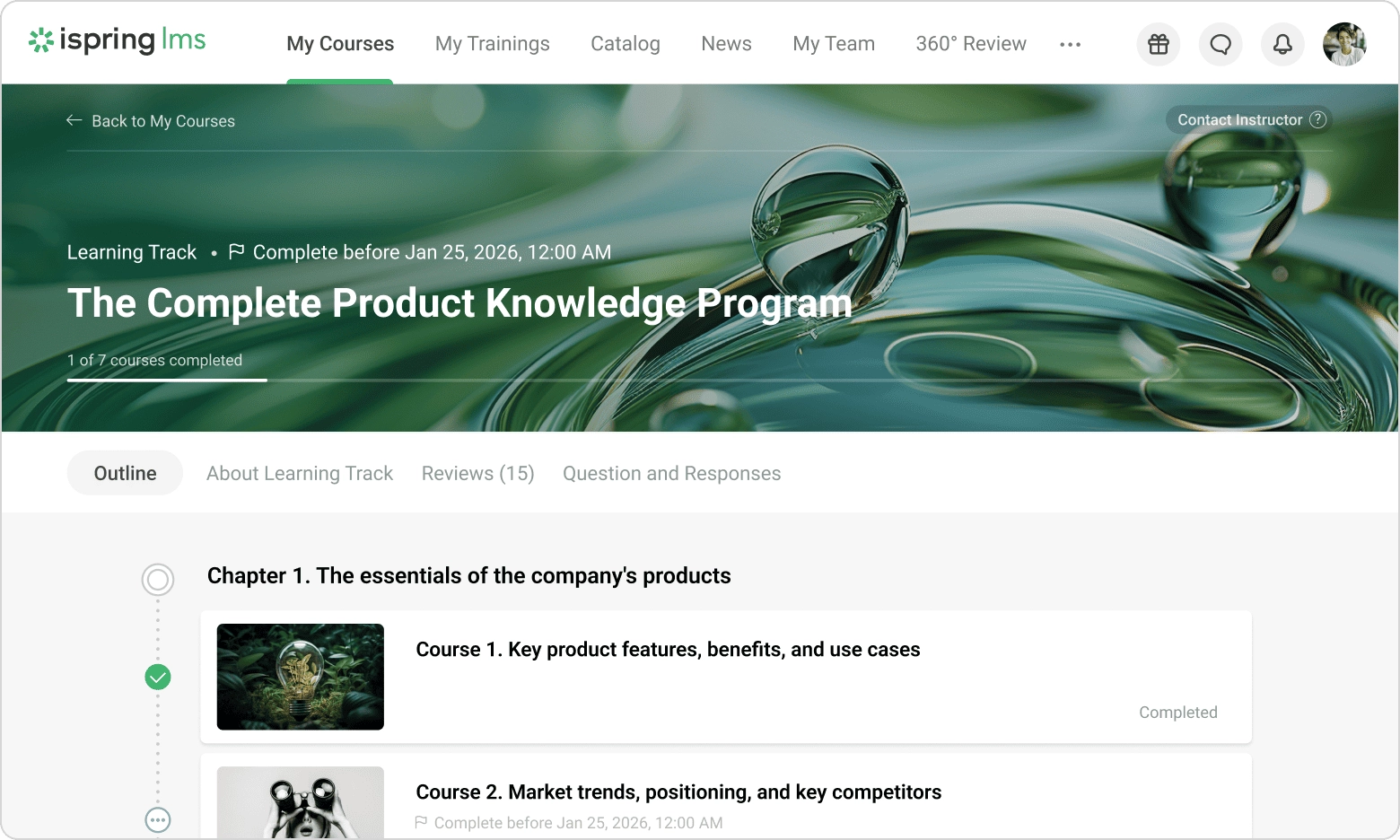
iSpring LMS helps teams organize employee training into clear, structured programs. You combine courses, assessments, and other materials into learning tracks, then guide employees through them in a set order. This makes it useful for onboarding, where new hires need to build their knowledge step by step.
Its built-in AI tools help you turn existing documents into course drafts, generate quizzes, and translate content. For PowerPoint-based training, iSpring Suite works alongside the LMS to create interactive courses and role-play simulations. You then publish these directly to iSpring LMS, keeping things familiar for your employees.
Why we picked it
iSpring LMS connects online training with practice on the job. Its observation checklists help supervisors assess how employees apply what they’ve learned. A new hire could complete a course on a workplace procedure, then show their supervisor they’re able to carry it out.
Individual development plans also let managers assign practical tasks and provide guidance as employees build their skills. A searchable knowledge base keeps guides, product information, and SOPs available when someone needs a refresher.
For distributed teams, the mobile app supports offline learning and syncs progress when employees reconnect. This helps keep training accessible for people whose work takes them away from a desk.
Pros
- Give employees a clear sequence to follow through onboarding and ongoing training.
- Keep costs down by only paying for users actively using the platform.
- Create and deliver training using familiar PowerPoint workflows.
Cons
- Teams with fewer than 100 users need a custom pricing quote.
- Teams that do not use PowerPoint may get less value from its authoring approach.
Key features
- Drag-and-drop course builder
- AI-powered quiz creation and translation
- SCORM/xAPI
- Mobile learning
- Learning tracks
- Reporting
- Certifications
- Knowledge base
- PowerPoint-based authoring
Pricing: Pricing starts at $6.91/user/month for 100 active users billed annually. Teams with fewer than 100 users require a custom quote.
What users are saying on G2
The Good
“You can upload courses, assign training, track completion, and generate reports without needing technical knowledge or ongoing admin overhead.” — Peter D., Training Manager, Small Business, 5/5
The Room for Improvement
“The admin navigation in iSpring LMS is a bit unintuitive. It takes a while to get used to where everything is and to know what buttons to click and when to click them. Also, the initial setup is labor-intensive, requiring a fair amount of effort and resources to build out all the courses. However, once it is set up, it becomes easier to maintain.” — Verified User, Mid-Market, 4/5
Use cases of a Learning Management System (LMS) for employee training
An LMS for employee training can be used at different stages of work: From learning the basics to getting ready for a new role or greater responsibilities. Here’s how employee training systems support three common training needs.
Onboarding training
A new customer support agent and a software engineer need different prep. Both need an introduction to the company, but guidance on tools, processes, and responsibilities needs to be tailored to their roles.
A best-rated LMS for employee training will help you organize standard SOPs and combine them with role-specific modules. This keeps shared company knowledge consistent and accessible, while admins track individual progress. Automated enrollments, certifications, and Learning Paths make it easier to manage onboarding without repetitive manual processes.
Upskilling and reskilling
As your teams grow and your business needs change, employees may need to strengthen their current skills or build new ones. A support agent takes on escalations, a team lead starts running reviews, and both need a skill they haven’t been trained on yet.
An LMS helps you organize relevant courses, so employees know what they need to learn next. Training can also connect with scenario-based practice. Employees can review real customer interactions or practice how to handle complaints. This way they safely practice new skills and build confidence.
Compliance training
In regulated industries, employee training isn’t just about completing a course or reading a PDF. When an audit is approaching, you need clear, accessible training records and up-to-date certificates.
An LMS for employee training helps you keep track of everything centrally: You assign courses by group, department, role, or location. You then monitor deadlines, send reminders, and manage recertifications with less manual follow-up. Reports and analytics also offer you a clear view into individual and team performance, so you can spot gaps before they become compliance risks.
Finding the best employee training LMS for 2027
When choosing the best LMS for employee training, a useful starting point is the learning you need to deliver next. That might be onboarding new hires, updating a safety procedure, or helping managers practice difficult conversations. Use that task to test your shortlist: How much work does setup take, what can employees practice, and how will you know the training helped?
For growing businesses, TalentLMS is a Learning Management System that brings together straightforward setup, AI-assisted course creation, and published pricing, with a free plan to get started. It supports employee, customer, and partner training without requiring a dedicated IT team. It’s one of the best LMS for employee training that grows with your team and keeps learning simple, engaging, and measurable.
FAQs
What’s the difference between an LMS and a learning experience platform (LXP)?
An LMS manages and delivers training, while an LXP personalizes how learners engage with it. Many modern systems now blend both, giving teams the structure of an LMS with the engagement and discovery tools of an LXP.
How do AI features in modern LMS platforms actually help training teams?
AI tools in LMS platforms save time and make learning more relevant. They can translate content automatically, recommend courses based on learner performance, or even generate quizzes and lessons from existing material.
What’s the best way to roll out an LMS to employees for the first time?
Start small with a pilot group, gather feedback, and fine-tune before a full rollout. Introduce the platform as part of your company’s workflow, not a separate system, and clearly explain its benefits for each role.
How long does setting up new employee training software usually take?
Setting up new employee training software usually takes between a few days and a few weeks. Larger implementations could take one to three months or longer, depending on content migration, integrations, and rollout needs.
How much does an employee training LMS cost?
Employee training LMS costs vary by user count, features needed, implementation costs, add-ons, and billing models. Options include limited free plans, per-user subscriptions, and custom enterprise pricing. Compare setup, content, integrations, and support costs, and check whether monthly rates require annual billing.