
For example, with features like blended learning, gamification, and feedback systems, your LMS transforms passive students into active, engaged learners.
So, let’s explore the must-have LMS features to implement learner engagement strategies effectively, boost learning engagement and, ultimately, drive results.
10 features your LMS must have to boost learner engagement
Artificial Intelligence (AI) is revolutionizing learning. An AI LMS can further boost learner engagement by providing personalized learning experiences. And while there are many LMS features that can boost learner engagement, some have more of an impact than others.
Here’s a look at the most important features for increasing learner engagement.
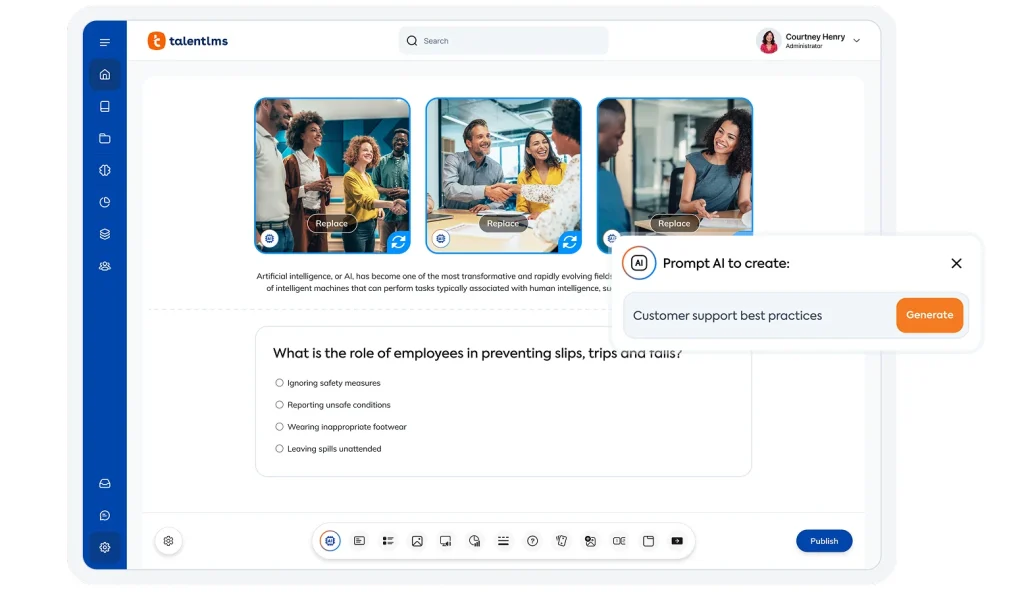
1. AI course creator: Get quality training off the ground, faster
Creating engaging courses takes time, especially when you’re tailoring content to different learner needs. But there’s a solution: an AI course creator.
Some tools focus on the basics, offering quick ways to build text-based lessons. These can be a great fit for straightforward content or teams just getting started. Others, like TalentCraft by TalentLMS, offer more flexibility—supporting different content types, tone adjustments, translations, visuals, assessments, and layout variations, all within the same environment. This added range can be helpful when building content at scale or when trying to tailor learning experiences for different roles or audiences.
Tagmarshal used TalentCraft to build their internal and external training programs from scratch. With one-person L&D team and limited resources, they were able to quickly create polished, branded courses—improving completion rates by 600%, boosting sign ups by 350%, and most importantly, saving 180+ hours on one-on-one training.
The right AI course creator depends on your training goals. Whether you need something simple or more full-featured, the key is choosing a tool that supports your workflow—and lets your expertise shine through content that learners can connect with.
2. AI Coach: The 24/7, on-demand support learners need
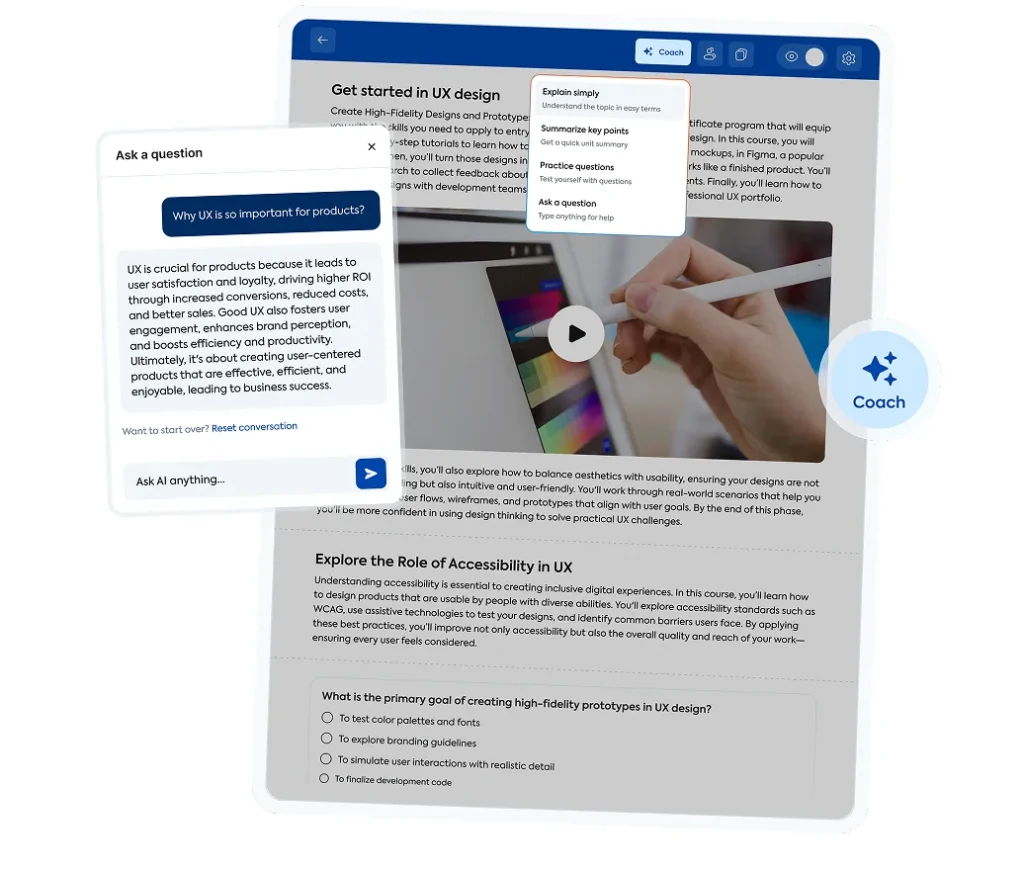
Even with well-designed courses, learners can hit roadblocks. They might miss a key point, need something explained differently, or want to check their understanding before moving on. But when support isn’t available, progress slows—and engagement can drop.
An AI Coach offers personalized help in the moment. It can summarize key points, explain concepts when learners are stuck, or offer practice questions based on what’s just been covered.
In TalentLMS, the AI Coach responds directly within the learning environment. Whether learners need a quick recap or a confidence boost before the next module, the support is there—right when they need it.
This kind of real-time help keeps the learning experience moving. And when learners feel supported, they’re more likely to stay engaged and complete their training.
3. Learning Paths: Structured training that builds skills over time
When training feels scattered, it’s harder for learners to stay on track. Learning Paths help by turning individual courses into structured, goal-based journeys.
A Learning Path is a sequence of courses arranged in a specific order. Learners unlock each course as they go, building knowledge step by step. This helps reduce confusion and gives learners a clearer sense of progress.
In TalentLMS, Learning Paths let you guide individuals or teams through training that aligns with their roles or goals. You can set the pace, define what counts as complete, and assign paths with just a few clicks. Whether you’re onboarding new hires, delivering compliance training, or supporting internal mobility, Learning Paths help organize the experience and keep everyone moving in the right direction.
For learners, the experience is straightforward. They know what’s next, can track their progress, and feel more confident about reaching their training goals.
4. Interactive content: The power of SCORM and xAPI
SCORM stands for Shareable Content Object Reference Model (SCORM). It is a set of technical standards for presenting content on online training platforms and LMSs.
TalentLMS allows for a wide variety of content to be created using SCORM, including presentations, videos, interactive activities, and assessments. SCORM authoring tools also allow instructional designers to create content that is even more advanced, tailored to a course’s learning outcomes and given audience.
The most important takeaway here is to choose an LMS that is SCORM-compliant, like TalentLMS. Creative, engaging content created with a SCORM authoring tool can be imported to your eLearning portal seamlessly, ready to be accessed by learners.
Today, an even more advanced tool called xAPI is gaining favor with instructional designers. xAPI does things that SCORM cannot, like produce in-depth test results, work outside a learning management system, and transition between different platforms.
5. Gamification: Learner motivation through fun
Gamification is a must-have for engaging online learners. Some of the best-known gamification features include:
● Points for progress or achievement
● Badges for learning milestones
● Leaderboards for healthy peer and team competition
● Levels to “unlock” as a learner progresses through a course
Features like points, badges, and leaderboards motivate online learners to compete for recognition, thereby increasing emotional and social engagement. Other features like course levels that have to be unlocked by meeting performance standards appeal to the learners’ curiosity and quest for knowledge.
Many organizations have found gamification to be one of the most effective ways to motivate learners. For example, gamification can be used to engage and motivate learners by creating competition between different companies under the same organizational umbrella or various departments within a business.
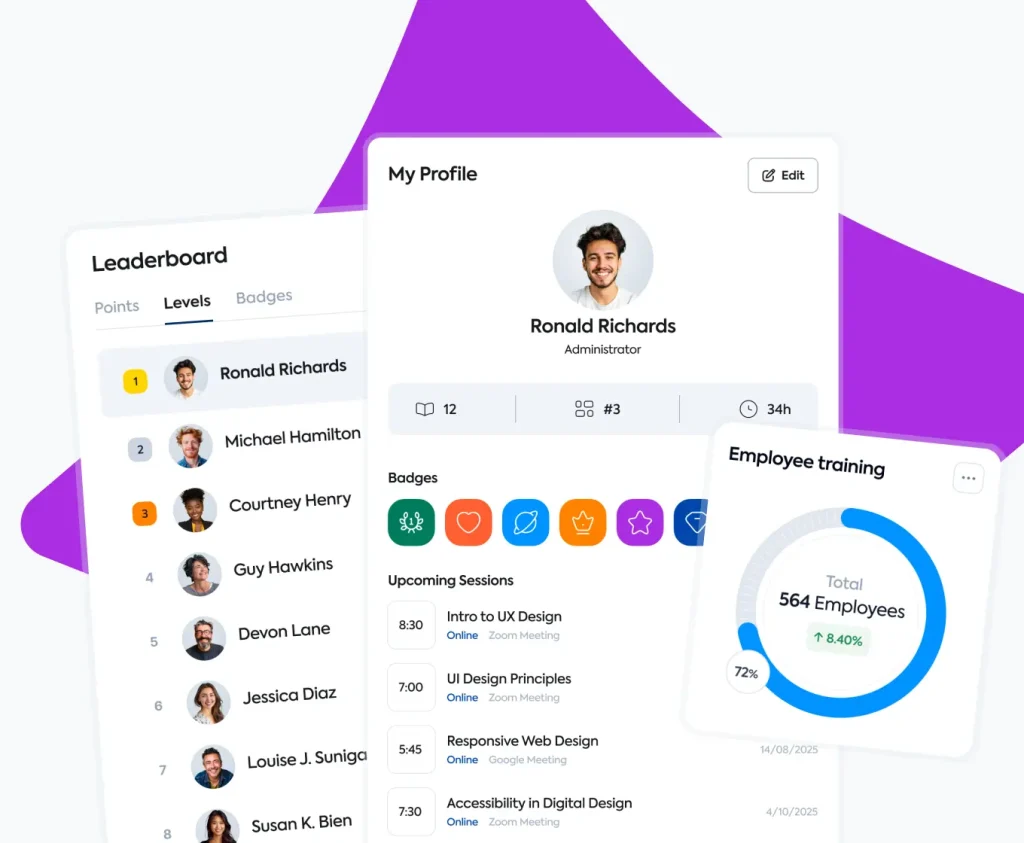
Armstrong Transport Group successfully used gamification on TalentLMS to boost engagement in learning. By assigning points to learner activities and displaying rankings on leaderboards, they encouraged friendly competition among learners. This approach made learners more motivated to complete their training on time. Monthly shoutouts and a rotating trophy for the top learner further strengthened engagement, recognizing learners’ efforts and keeping them committed.
According to Stephen from Armstrong, “TalentLMS’s gamification has created a healthy competition among our learners,” leading to higher levels of participation and investment in the learning process.
But remember, not all rewards are created equal. It’s important to ensure that the rewards you offer through gamification are meaningful and relevant to your learners. For example, badges should signify real achievements, and points should be tied to specific learning objectives. When learners see that their efforts are recognized in a meaningful way, they’re far more likely to stay engaged.
6. Social learning: Building an engaged learner community
Social learning is a powerful tool for reducing isolation and engaging learners emotionally.
On a learning platform, learners like to feel represented and heard. Therefore, TalentLMS’s features that support social engagement can make all the difference in boosting learner motivation:
● User profiles: Profiles allow learners to share information about themselves and feel more personably represented on the platform. By choosing an avatar to represent themselves on the LMS and writing a short bio containing their experience, personality, and expectations, learners become more invested in the learning community.
● Discussions: Discussions remain a staple of any LMS worth its salt. Learners can share their opinions, observations, and experiences there in both structured and unstructured conversations. Instructors can lead focused topics firmly related to learning outcomes, and learners can start their own threads for casual discussion.
● Certificates: Another social feature is the ability to share Certifications earned on the LMS via social media platforms, like LinkedIn. That can be a meaningful reward for completing the course, especially for adult learners seeking recognition in their professional community.
7. Mobile learning: Engage learners anytime, anywhere
Convenience is undoubtedly one of the top learner engagement tools and strategies today. Who doesn’t want learning to be readily accessible at their fingertips?
Mobile learning is accessible anytime, anywhere via polished learning management systems that support a wide variety of smartphone and tablet formats.
TalentLMS’s native mobile apps for Android and iOS provide learners with the flexibility they search for. And when learners are allowed to complete their courses in the comfort of their own home, on their way to work or even on lunch breaks, their engagement is bound to improve.
One of the best ways to motivate learners is to provide content that is interactive, eye-catching, and stimulating. SCORM content is widely used in the eLearning and online training industries.
8. Blended and hybrid learning: The best of both worlds
Blended learning combines online training and traditional classroom teaching. Hybrid learning, on the other hand, offers a flexible mix of in-person and remote learning happening at the same time. Both approaches can be adapted to meet diverse training needs.
For example, an LMS that offers online conferencing and webinar features, like TalentLMS, can make all the difference. How? It allows online training to be paired with on-site or hybrid assessments. Testing learners can take place online with your LMS assessment features. Briefing sessions and collaborative workshops can be held either face-to-face or in a hybrid format with the help of the software.
Both blended and hybrid learning work wonders for motivating learners. They make the learning experience more diverse. This helps prevent boredom, reduces the in-person time required to complete a course, and offer more flexibility through hybrid components.
Finally, these methods provide learners with more opportunities to socialize and bond with their peers, whether online, on-site, or a blend of both. This, in turn, boosts emotional engagement and strengthens their connection to the learning experience.
9. Portal customization: Personalize the learning experience
We all have our favorite websites that we visit many times over. Those websites often attract us because they combine a unique visual identity with a user-friendly layout.
A learning environment that is customized to match the organization or a specific course further invites learners to engage with the platform. Keep in mind that learners spend a significant amount of time on an LMS. Therefore, the platform’s design and layout are crucial to maintaining the interest of learners.
Branding can be a key factor for engaging online learners. Not only do customized interfaces look better, but they also leave a lasting impression. That’s why TalentLMS offers a broad range of options for creating a unique look and feel. That includes the ability to create separate training portals (Branches), each with its own unique logo, theme, color scheme, and more.
10. Feedback: Giving learners a voice with surveys and rating systems
We all want to know what learners truly think about their learning experience. Providing an opportunity to voice opinions and be heard on the LMS is one of the key ways to motivate learners.
Tools like surveys can help determine how successful a particular module or content component has been in engaging learners. Or provide constructive criticism to help improve what doesn’t seem to work.
TalentLMS also provides a rating feature where learners are prompted to rate a course on a scale of one to five stars. That feature provides instructional designers and trainers with a quick overview of learner experience. It can also be set so that learners can see how their peers have rated the course.
Open post-training feedback from learners is highly effective for boosting learner engagement. Also, it provides trainers and instructional designers with useful information for course improvement and fine-tuning your learner engagement strategy.
Choosing the best LMS for engaging online learners
By using your LMS to its full potential, you can achieve and maintain increased learner engagement, overcome the barriers to learning, and employ the best strategies for motivating learners.
The TalentLMS features listed here all provide effective ways to motivate learners—from AI-powered course creation and learner support, to gamification, to honest feedback, and learning paths—are designed to make training more relevant, motivating, and easy to follow.
AI in particular is no longer a future-facing concept. It’s already reshaping how courses are built, delivered, and personalized. When used thoughtfully, AI in L&D can save time, reduce manual effort, and help create more tailored learning experiences. And while it plays a key role in boosting learner engagement, its real value lies in supporting the overall success of your training program.
So when evaluating an LMS, it’s worth looking beyond the basics. Consider whether the platform gives you the flexibility, structure, and tools needed to support meaningful learning experiences—at scale and over time.