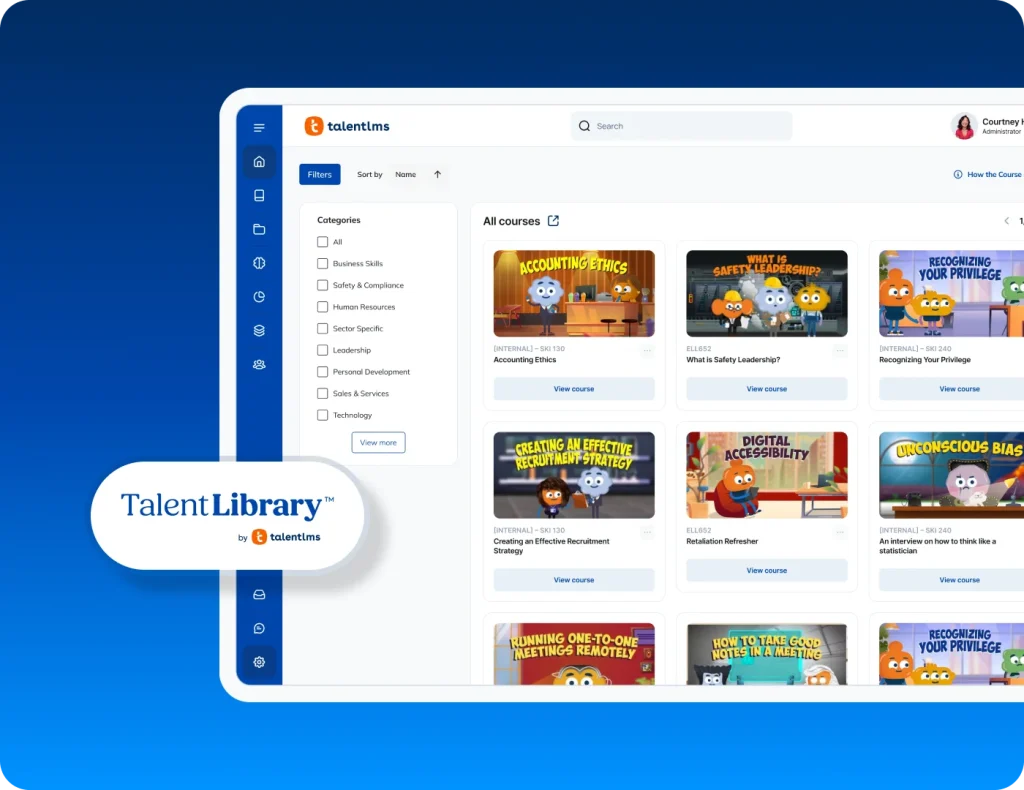
Why we use animation and humor in TalentLibrary™
The gist of it? Because your brain loves it (and science agrees)
Why most training fails to engage learners
Most training is designed to check a box, not change behavior. Long slides, dense text, and passive instruction leave learners disengaged and companies disappointed. TalentLibrary™ takes the opposite approach. We create courses people want to take and actively remember.
| With TalentLibrary™ | Without TalentLibrary™ |
|---|---|
| Visual, story-driven | Text-heavy & lecture-driven |
| Works with how the brain naturally learns | Overloads the brain with information |
| Highly engaging through humor & scenarios | Low engagement & high drop-off |
| Designed for clarity, recall & real-world use | Hard to remember & apply |
| Multiple channels: visual, auditory, contextual | One-dimensional learning approach |
| Feels inviting & enjoyable | Feels compulsory |

Our philosophy
“When we started TalentLibrary™, we had a bold vision of creating something unique: A vast library of soft skill courses that are witty, ultra high-quality, easily digestible, applicable to all companies, quickly accessible, and affordable.”

The creative vision behind TalentLibrary™
We don’t believe in dull training. Every animation, line of dialogue, and moment of humor is intentional. It is crafted to make learning feel human and relatable, so people stay engaged and absorb the message.
Learning should spark curiosity, empathy, and connection. When content resonates, people remember it and apply it in real conversations, decisions, and team interactions. Those everyday moments of better behavior are what shape and strengthen your company’s culture over time.

What makes TalentLibrary™ training more engaging
Here’s the thing about humor in learning: It works. Research shows that positive and relevant humor lowers stress, improves focus, and boosts recall.
Purposeful humor strengthens attention
When humor is relevant to the lesson, test scores improve significantly. It creates more psychologically safe learning environments. When learners enjoy the experience, they come back willingly.
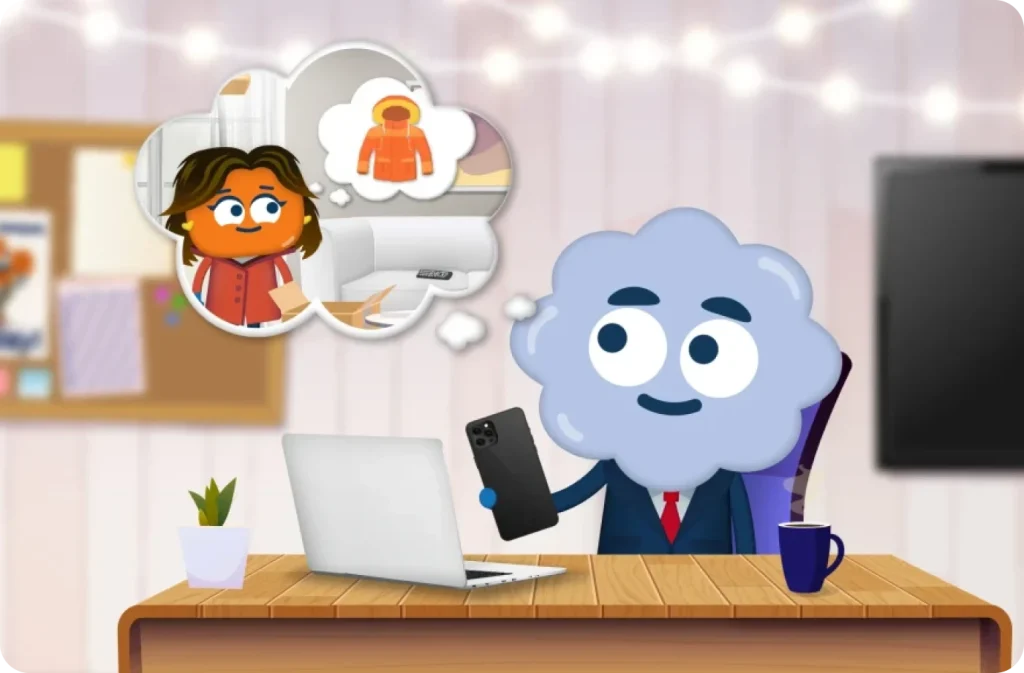
Think about it this way: What sticks better, a dry list of customer service tips or a humorous scene where a character fumbles through a difficult call and learns from it? Most people remember the scene because humor makes the moment relatable and easier to recall.

Animation brings clarity to complex ideas
Animation is everywhere, from product explainers to onboarding videos and app tutorials. Companies use it because it works.
When visuals and audio are presented simultaneously, the brain processes and stores information through multiple channels. That is dual coding theory in action, and it’s why animation improves understanding and recall. It breaks down complex ideas into simple, visual moments your brain can absorb quickly.
Visuals stick long after words fade
Harvard research confirms what most of us already sense. Humans are visual thinkers, even when we try to think in words. This is called the Picture Superiority Effect.
Images are encoded into memory twice—once as a verbal code and once as an image. Words only create a verbal code. That’s double the memory power. Humans remember visuals far better than text because the brain stores images twice, making visual learning faster, easier, and more memorable.


Storytelling makes skills practical
Stories are how humans have shared knowledge since the beginning of time. Stories forge connections, build trust, and make abstract concepts concrete and relatable.
When learners watch a character handle conflict, navigate feedback, or make a tough decision, they create emotional engagement instead of trying to decode a theory. The recognition turns learning into practical behavior.
Cognitive psychologist, Jerome Bruner’s research suggest that facts are 20 times more likely to be remembered if they’re part of a story.
What sets TalentLibrary™ apart
Training that sticks, skills that people use on the job, and teams that keep coming back for more.
We use animation and humor as a learning strategy, not just style. The format works for people who learn by watching, listening, or experiencing scenarios play out, which makes the content more inclusive, engaging, and memorable.