Duration: 36 minutes
Season 3
Episode 7
L&D in 2026: Learning debt, AI, and transformation
As work continues to transform, L&D in 2026 is being forced to rethink how it supports people on the job. In this episode, we sit down with David Kelly – longtime industry analyst and influential L&D thinker – to dig into our Annual TalentLMS Benchmark Report.
We unpack why learning debt is rising, why legacy L&D models are breaking under modern work demands, how AI should raise the ceiling of human work, and why skills matter more than job titles.

Key takeaways:
Align L&D transformation with workplace change. As roles and workflows evolve, learning strategies need to evolve with them. Effective programs should mirror how work actually happens now, not how it happened in the past.
Prioritize performance support over content delivery. Solving capability problems matters more than pushing content. Rather than defaulting to a course, training teams should focus on the most direct path to improvement.
Embed learning into the workflow. The most valuable learning happens during real work, not outside of it. Support should be built into the flow of tasks, not layered on top.
Create room for discomfort and growth. Stretch zones lead to growth. Encouraging experimentation—even failure—helps people develop new skills and adjust with confidence.
Support learning through everyday tool use. Digital tools are becoming learning environments in their own right. Skill-building now happens through hands-on use, not just formal instruction. Use AI as a coach, not just a content creator.
Close the gap between AI execution and oversight. AI can handle tasks, but requires human expertise (and experience) to provide sign-off. Without foundational or even intermediary knowledge in their field, the next generation may lack the judgment needed to manage these tools effectively.
Use AI to amplify, not replace, people. With generative tech, the goal isn’t just automation, it’s elevation. AI works best when it enhances human creativity, quality, and decision-making as well as speed.
Redesign internal mobility around skills, not roles. Many career pathways are built for systems, not people. Shifting focus to capability over titles creates more meaningful opportunities for growth and retention.
Rethink language and let go of vanity metrics. Move beyond outdated labels and surface-level metrics that no longer reflect impact. Shifting language (for example, from “learners” to “doers”) can expand how teams define value and unlock solutions.

David Kelly
About our guest:
David Kelly constantly explores the convergence of learning and technology, demonstrating a profound commitment to transforming workplaces and enriching lives through innovative learning strategies.
With over two decades of experience in learning and performance leadership and consulting, he brings his passion to life in his daily work as a dynamic strategist, speaker, & writer, inspiring others to view their work through a fresh, technology-enhanced lens. He is the SVP of Strategy & Transformation for Bluewater Learning and the former Chairman & CEO of the Learning Guild.
Available on


Share episode
Want more resources on this topic?

Learning and development in 2025: Key insights and actions

The TalentLMS 2026 annual L&D benchmark report

13 AI skills to equip your workforce for an AI-driven future
More episodes we think you’ll love
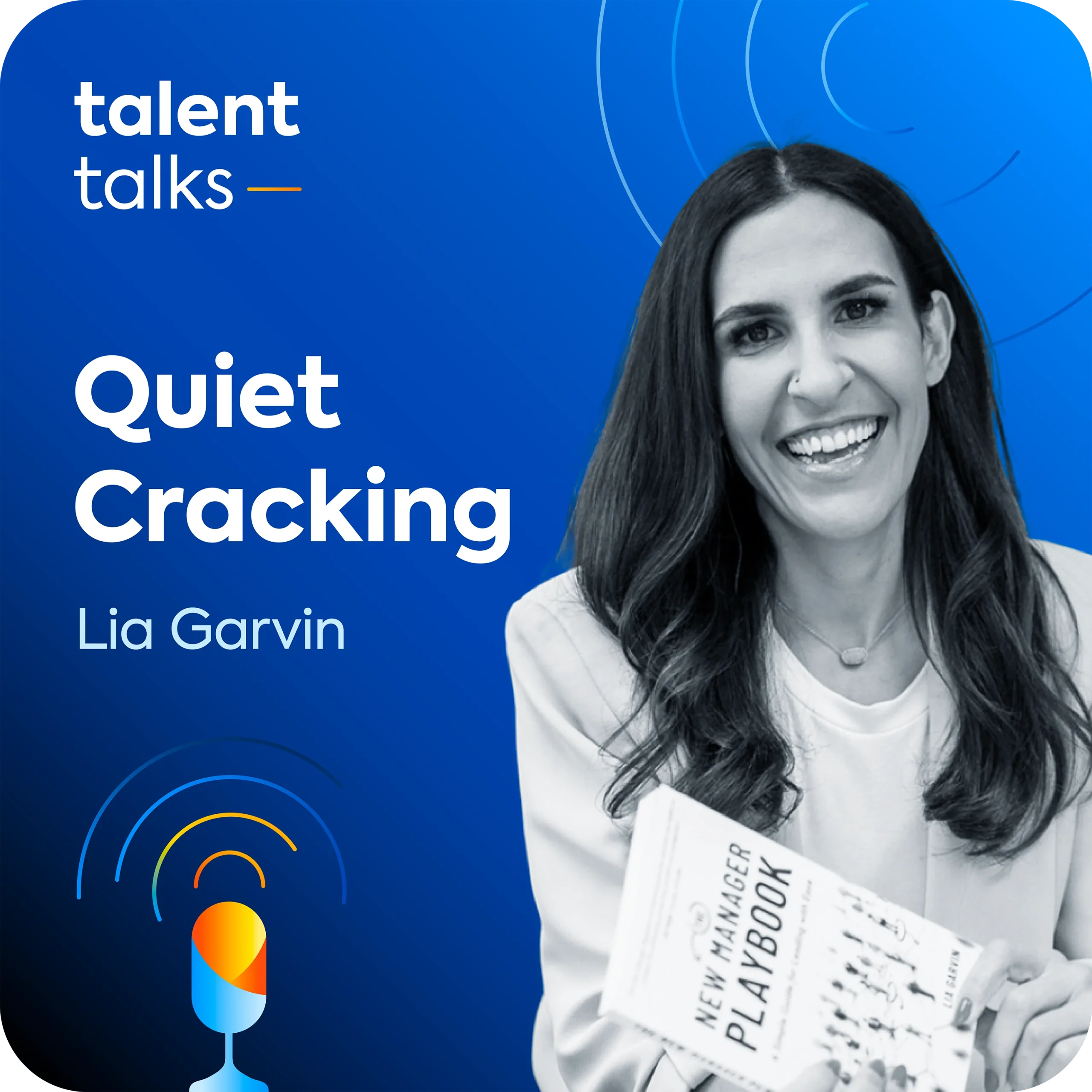
You’ve heard of Quiet Quitting—but what about Quiet Cracking? We talk to Leadership Expert Lia Garvin about the growing number of employees who are still showing up but quietly coming undone.
Drawing on data from our survey that coined the term, we explore what’s driving this pressure — from AI disruption to economic instability — and how companies can respond.
Go to episode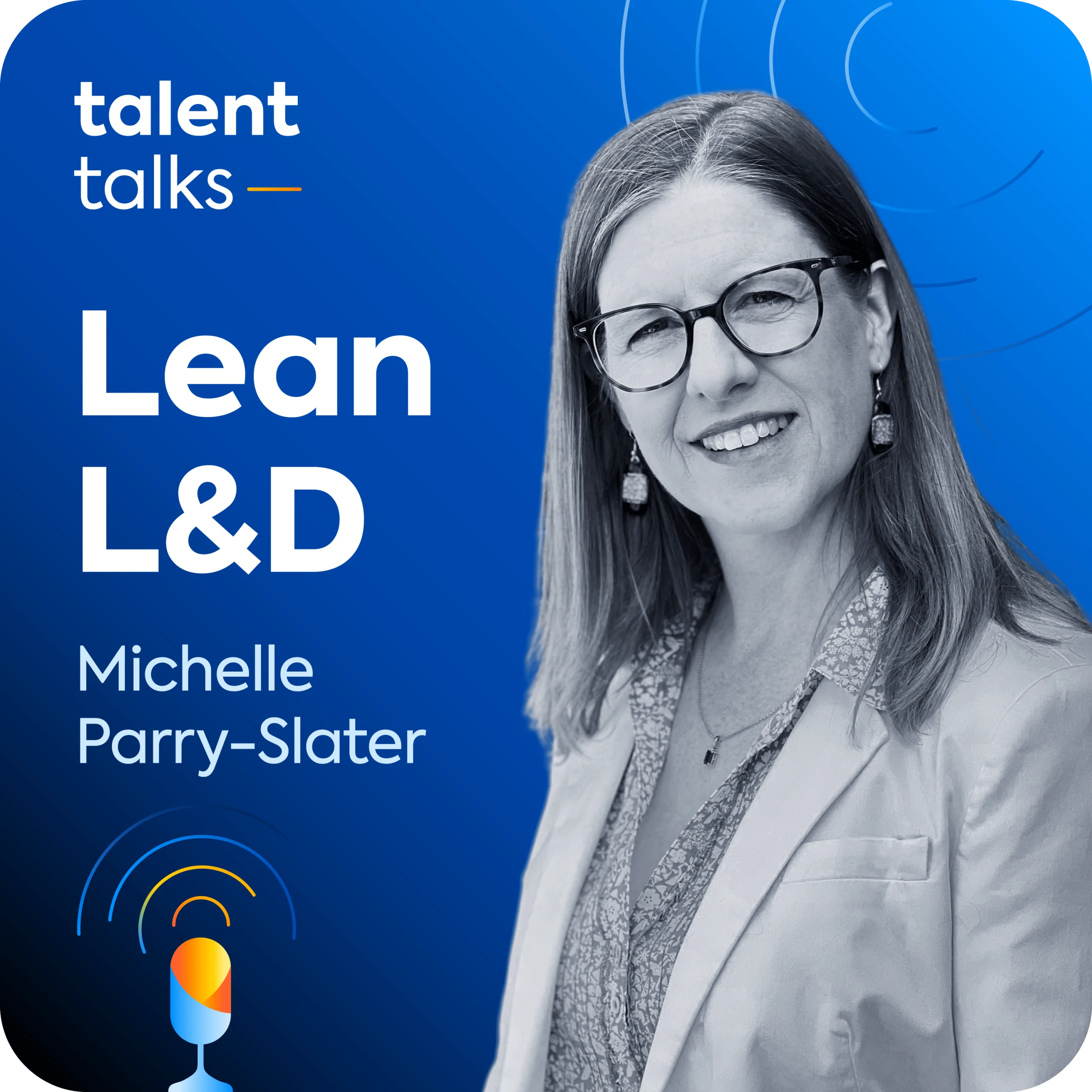
When resources are tight but the demand for learning is high, strategy matters more than spend. In this episode, we’re joined by Michelle Parry-Slater, author of The Learning and Development Handbook and Director at Kairos modern learning.
We explore how L&D teams can build learning programs that actually drive business results. And Michelle shares how to create real impact even when budgets are lean.
Go to episode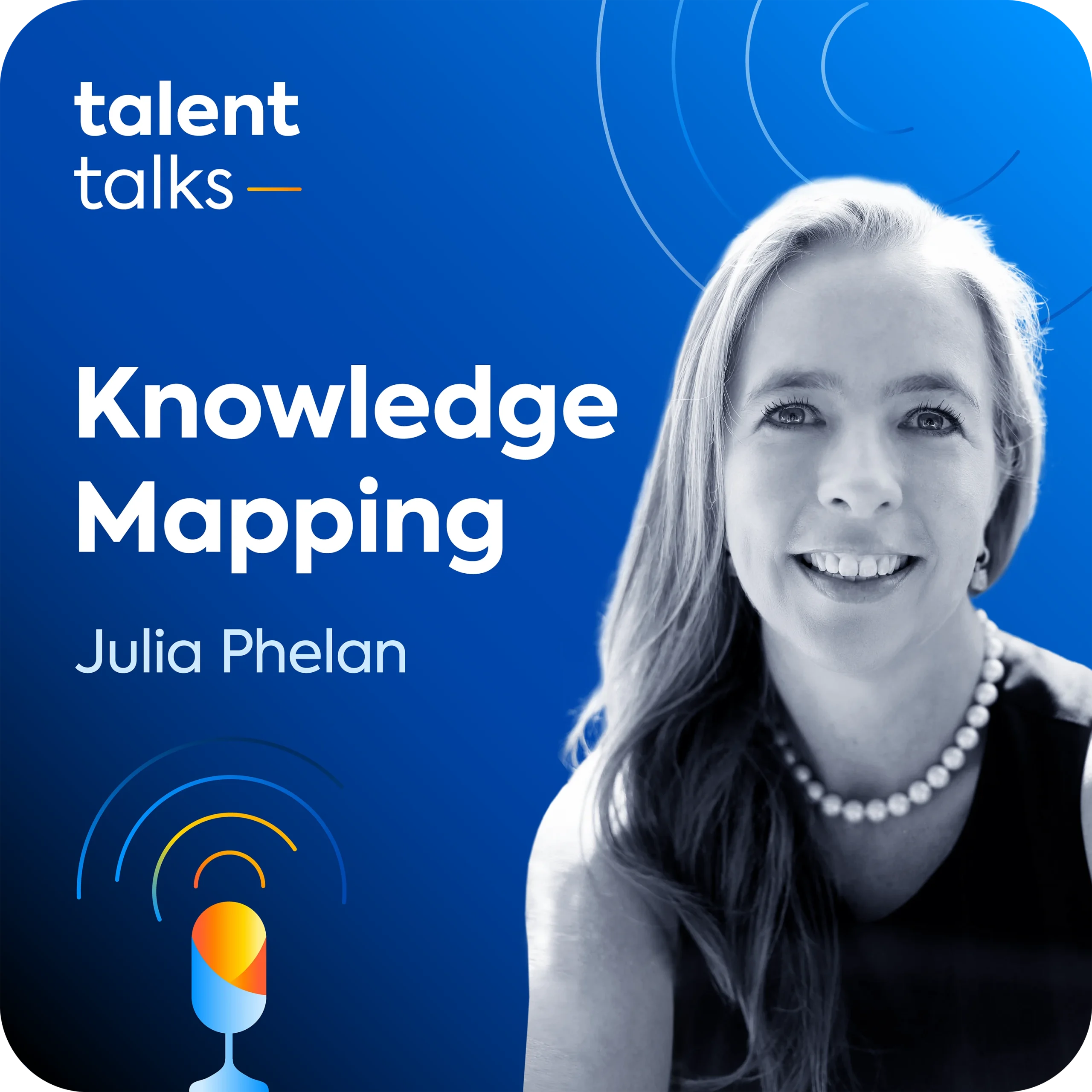
What if your team’s most valuable skills aren’t written down and the people who have them don’t even realize it? In this episode, learning strategist Julia Phelan joins us to unpack knowledge mapping — a practical way to uncover hidden employee skills.
Learn how mapping your organization’s knowledge can streamline onboarding, open avenues for internal mobility, and create a more transparent company culture.
Go to episode
Never miss an episode! Get every new drop right in your inbox
By clicking the Subscribe button, you accept and consent to receive the type of content mentioned above. Please review the TalentLMS Privacy Policy for further information.
Full Episode Transcript
Host: [00:00:00] Welcome to Talent Talks, the L&D podcast about the future of work and the talent driving it forward. The world of work is changing fast from AI reshaping strategies to new definitions of success, and the push for people-first mindsets. Learning leaders are being asked to do more, do it better, and do it faster than ever before.
Together. Let’s learn, relearn, and sometimes even unlearn what L&D can look like in today’s world. I’m your host, Gina Lionatos, and this is Talent Talks.
Talent Talks is brought to you by TalentLMS, the easy-to-use training platform that delivers real business results from day one. Learn more at talentlms.com
[00:01:00] On today’s episode,
David Kelly: What’s gonna happen to the next generation of users? That apprentice level where you learned how to build the skills that you are gonna need to effectively oversee the AI, where are they building the skills necessary to provide proper oversight to these tools? That’s a gap that workplaces are gonna need to address pretty quickly.
Host: I’m joined by longtime L&D leader and industry analyst, David Kelly, whose decades of experience have shaped many of the conversations happening in workplace learning today. Together, we’re looking at the year ahead through the lens of the TalentLMS Annual L&D Benchmark Report. We’ll unpack the insights, explore the workforce trends of the coming year, and discuss how L&D teams can stay ahead of the curve.
If you’re interested in any of the insights you hear today, the full report is available at [00:02:00] talentlms.com.
David, welcome. It’s great to have you with us on Talent Talks.
David Kelly: Thanks for having me. I’m looking forward to our conversation.
Host: So, I am really excited to jump into some of the findings from our Annual Benchmark Report. It’s something that we do every year here at TalentLMS, and there are always some super interesting and sometimes quite surprising insights that we uncover.
For the purpose of this report, we actually surveyed over a thousand employees and 100 HR managers in the US. So it’s really a useful resource when it comes to workplace trends, employee sentiment, and essentially the state of L&D in 2026. But before we dive into all of those trends and findings in detail, I wanted to get your take and simply ask from your perspective, what’s your headline for L&D going into this new year?
David Kelly: For me, it feels like we’re at a really vital moment, and I’d love to [00:03:00] hear your thoughts on that.
Sure, if I could sum it up in one word, and I’m a little hesitant to use the word ’cause it’s a buzzword and I hate buzzwords, it would probably be transformation. Now I kind of feel like I need a disclaimer attached to that.
’cause we’ve been talking about transformation in some way, shape, or form for probably longer than I’ve been in this field. It’s just a term that we use very often to the point that it’s cliché. But I do think that ‘26 is going to be transformative. Not necessarily localized to L&D, but it’s gonna be transformative to the workplace.
We’re entering a space where, you know, this idea of this promise of the future of work is very real to us right now, and how work gets done and what it means to individual workers that is transforming, that’s happening around us on a daily basis. It is a truly transformative moment that applies to everyone in the workplace, including L&D, but if you wanna localize it in the context of L&D, if our job is ultimately to support the workforce and the people who are doing it [00:04:00] and their work is being transformed, then by definition, the work of L&D should be being transformed as well.
Host: Yeah, absolutely. Makes total sense. So, diving into some of the findings, and I’m really excited to get your take on some of them as well. One of the loudest signals from our report is around time constraints.
More than 50% of employees and more than 50% of HR managers say they simply don’t have time for training, and that’s feeding directly into what we’ve named in the report as learning debt. I believe you’re in the camp of day-to-day work, being a great learning environment, if not the greatest learning environment we have.
But through our survey, we found things like. Almost two-thirds of employees experienced rising performance expectations, and 45% felt pushed to deliver more. So workforces are certainly feeling, in a word, stretched. Realistically, how can we build learning into the flow of [00:05:00] work when employees are telling us that they don’t always have time to even do the work, let alone learn while they’re doing it?
David Kelly: Well, two things I would say. First, I love the phrase learning debt. I like that phrase, and I like the way you’ve defined it in the report. Scarcity is not a new thing I’ve mentioned. I’ve been in this field for a while. I never put a number on it. I usually just say, I’ve been in for a couple of hair colors.
I’ve always been hearing that there’s not enough time. There’s never been enough time. But I think what’s different now is the complexity of the workplace itself and how much as you said people have on their plates, there is more scarcity, but I think it’s less around the scarcity that is the issue as the models that we have leg, the legacy models that we continue to use in L&D no longer match up with the way that work is getting done and the availability that people have.
We do need to find new ways to do things. And I think that finding [00:06:00] ways to get our solutions closer to the world of work itself, so that, you know, I, I mean, I started in this field. Literally, I was a classroom trainer. That was the only option that we had, and it was the most disruptive option that was available.
If you wanted to learn how to do something, you had to stop work to go learn so that you could come back and apply it. E-learning got us a little closer to the workplace, but it was still stop work, do this. But now we’ve got resources that are getting us closer to the ability to, that’s one of the things that really excites me about technology today, is technology has now finally caught up to the promise of performance support and workflow learning, where we have the ability to do this.
I do think it’s gonna require a fundamental mindset shift for a lot of people in L&D around what their work is and what it looks like and how it gets done. It’s not necessarily about building a course anymore, it’s about finding a solution to a performance problem. Kind of always it was, should have been that way.
But we had a default [00:07:00] model of that was very course-based. That was our mindset, and it worked, but it’s not working as well as it has in the past, and the workplace is moving in a different direction. So I think that we need to really start questioning how we approach our solution so that we can get closer to the workplace and be less disruptive in the solutions that we provide.
Host: Yeah, I certainly hear you on the mindset shift needed within the L&D discipline. What do you think about changes and mindset shifts that may be needed more culturally within organizations? Do you think there’s something to be said for that?
David Kelly: My, my hesitancy around that is, it is, it’s very, there’s a lot of different context that would attach to that.
I think that from an L&D perspective, in some organizations, they may have a mature learning culture that supports this idea of learning in the flow of work. And we tend to think of learning, like even our learning in the flow of work standpoint in a [00:08:00] mature learning culture. It’s a good thing, but it’s still to me.
Carries a little bit of legacy baggage of it. Still create content to do the solution as compared to building solutions with problem-solving in mind. Good. A good example that I like, um, because I’m a gamer, is the world of gaming. Sometimes you have a game that has a tutorial, but most games these days, there is no tutorial, there’s no instruction manual.
I remember when I got Pacman when I was a kid, it had an instruction manual, which I’d love to go back and read. I’d like to know what the instructions said in a 12-page package on how to play Pacman.
Host: Eat the dots. Eat the dots, and eat everyone.
David Kelly: Exactly. And just repeat and repeat the, but you have these very complex games with button controllers that have 19 buttons, and there’s no instructions.
What it does is it recognizes the game, recognizes through good design, leveling up. It gives you a little skill, lets you build on it, but it also recognizes, and this is where the workplace, this is where the mindset shift comes for me. The very design of it [00:09:00] recognizes when someone has a performance problem.
And find support way and inserts support into that moment to recognize that someone’s struggling with a particular task that they’re doing within the game, and the design of it recognizes that and provides a layer of support. That’s the mindset shift that we have to go into in L&D and we have to get out of our own ecosystem and find, it’s not a matter of of just finding the resource in the course.
It’s a matter of finding the resource in the work and finding ways that we can play more in that space.
Host: Finding the resource in the work. Very interesting. I’m trying to think how that might look in practice. If we move beyond gaming just for a moment and move into the workplace, could you share a great example of what that might look like?
And not only a great example, but perhaps an achievable example?
David Kelly: Sure. So I’ve seen examples of organizations that have, even today, that have just taken their [00:10:00] SharePoint servers, all the stuff that’s on SharePoint, the answers are always there, but can you find them? And even something as simple, there’s a better user experience than this, but I’ve seen organizations that have just taken all of their knowledge stuff, put it behind a simple GPT type of a device, and it’s behind a firewall, so it’s protected to it.
They don’t have to worry about being public. But then people can just go into a search bar and ask a question, and it will find the answer for them. You know, a lot of times we talk in learning around needing to train people and build these skills. Sometimes people just need to find an answer to the prob- performance problem they have.
Give me, gimme the resource, and. It’s been difficult for us to do that in with the technology that was available to us, but some of the iterations and some of the advancements within AI are enabling us to just have all of that information in a central repository and have it be searchable, not so that the web is today where you’re inserting a topic and you get resources coming back where that topic is being addressed.
You’re asking a question, and it goes into the repository and gives you [00:11:00] the answer. And that’s real time. That’s not something that is gonna take someone time to find the resource in SharePoint. That’s asking a question. Having the AI do the work to find the answer for you and present it to you in real time, that’s transformative.
In terms of our ability to support people in the workflow, and there are organizations that are doing that today using simple tools, let alone some of the more advanced tools and functionality that’s available on the systems that we have today.
Host: Yeah, absolutely love this concept of an internal knowledge base, so to speak.
Absolutely achievable now with very little heavy lifting as well, which is really the beauty of AI. It’s like you read my mind of the next question. I wanted to, next area I wanted to kind of, uh, broach so something in theory that should free up a lot of that well-needed time that people are so short on at the moment, which is AI of course, now.
You’ve described L&D’s use of AI as stretching the rubber band of efficiency, [00:12:00] saying that we should be careful not to over-automate in case this elastic band snaps back, which I think is a great analogy. It also speaks to some of the findings from our survey. So we found that 47% of HR managers admit that their AI training is actually designed to automate jobs.
And on top of this, 37% of employees feel like gen AI is weakening their problem-solving skills. In the report, we named this shift as the move from AI co-learning towards perhaps a self-perpetuating learning system. In essence, systems that get smarter the more that people use them. So at the heart of it, I suppose there needs to be balance between harnessing the value of AI and becoming too dependent on the tech.
What kind of guardrails do you think we should be putting in place to make sure that we don’t snap that rubber [00:13:00] band of efficiency when it comes to learning and development?
David Kelly: Well, um. I’m trying to think of the most positive way to answer that question because I mean, on one level I do think that the rubber band’s gonna overstretch and snap back.
And I don’t necessarily think that in and of itself is a bad thing.
Host: Sure.
David Kelly: Because sometimes you wanna push beyond the comfort zone to discover where you should lie. I’ve often described it with managers that I’ve worked with in the sense of I will learn where the line is not to cross by you telling me I’ve crossed it.
Kind of the same sort of thing with the rubber band is we can’t know that we’ve stretched it too far until we stretch it too far and need to adjust. So I think the rubber band will naturally snap back. As far as it goes with L&D. And this is, this is L&D, but it’s also beyond L&D, ’cause AI is such a huge thing within the workplace.
Host: Of course.
David Kelly: I think that there is a concern around how these tools are gonna affect how people think, how people are learning. And I don’t [00:14:00] necessarily mean how people are being taught. I think there’s a difference between education and training, and how people are learning. Give you a quick example of what I mean with this difference there.
One of the earliest use cases that I had for these tools when they emerged in the consumer market was around writing. I write a lot in the work that I do, and if there’s anything that I’ve learned. From working with editors over the years, it’s that I’m a very wordy writer. I’ve never handed something over to an editor where the first feedback isn’t, oh my God, make this shorter.
So one of the first things I did in terms of playing with these tools is I took something that I wrote. And I put it in the chatGPT, and I said, make it 20% shorter or 30% shorter, I think was the first one that I did. And like it was that we all had those early use cases of where it was like magic. It was just like, oh my God, look it, it just did it.
But I didn’t stop there. Like I did it once and then I did it again. And the first time I did it, I just handed that over. I took, I, I took the 30% out, I handed it over to the other. The next time I did it, before I handed it over, I was like, what did you take out? And [00:15:00] then it brought it back and put it in.
And I said, all right, now then, and then another time I did. What did you take out and tell me why you took that?
Host: Why? Yeah.
David Kelly: And it said, well, I took out this sentence in here because it was redundant. Then I took out this paragraph ’cause it didn’t seem to be aligned to the main point of the article.
Interesting. Why? And I’m having this conversation with it. What did you think that, why wasn’t it aligned? What do you consider to be the main point of the article? Now it’s giving me feedback that not only made me go back to the article and make a couple of changes in here. And I started using it as this informal coach for my writing. And I discovered over time that first prompt that I did when I wrote something, I wrote in, instead of making it 30% shorter, I started doing, make it 20% shorter, make it 15% shorter. Now I don’t do that at all. And it dawned on me over time, over time, that just my usage of this tool without formally accepting it was I was learning to be a more concise writer based on the usage of this tool.
And how I was using it. I didn’t seek out a coach. I didn’t, it wasn’t part of a formal program. It was just the [00:16:00] emergence of a digital tool that I used as part of my writing, and the usage of that tool as part of my everyday life was teach. I was learning through the use of that tool, how to be a better writer or how to be a more concise writer.
In ways that I struggled all the time. And that, to me, is an example of the difference between training, and education, and learning. It’s just the emergence of this new digital tool that’s gonna, that’s become ubiquitous in terms of how we’re using, and we learn through the use of those tools. I often say, if you wanna understand how any new emerging technology is gonna change the way that we learn, you don’t look at education and training.
If you wanna understand how a new technology’s gonna change the way that we learn, you look at how that technology’s changing the way that we live.
Host: Absolutely, and you raised such a valid point around the impact, negative or positive of AI and the GPTs out there, really depending on the way that the individual chooses to interact.
So because you approached it with curiosity and then you actually applied your own critical [00:17:00] thinking, you then trained both the GPT and yourself to apply that critical thinking in the next round and the round that followed that. And I do think that’s why, on the topic of AI, the AI literacy just being an absolute must within organizations now.
David Kelly: Yeah, I think not only the literacy piece, the part of it that does give me a little bit of pause and a little bit of concern is. Not now, because I think now is so full of opportunity that people are just jumping and harnessing every opportunity that’s there. But you mentioned the critical thinking and, and the judgment that is required in the use of these tools effectively.
But part of that critical thinking and judgment that we are gonna be using in these tools is based on our experience. So, for instance, I’ll give you a very quick example. I’m in the process of doing a number of different, building some potential things that I might be working on individually around events and things of that sort.
I’m doing a lot of this on my own, and my ability to do [00:18:00] this on my own is transformed by the emergence of these tools. My ability to to launch a startup is enabled by the fact that I have agents and all these different things that would require me to have not only intelligence, but human labor to do in the past, but I’m only able to oversee these different agents and these tools that I think have based on my decades of experience doing this stuff myself, that I can offload it to an agent and get the stuff that it’s coming, that it’s done back.
Scan it and know that it did it well, and know what I need to tweak based on the experience that I got as an apprentice, that I got, as a, that, as a, as an intermediate user before I reached the level of expertise that I have today. What’s gonna happen to the next generation of users? That apprentice level where you learned how to build the skills that you are gonna need to effectively oversee the AI, where are they building the skills necessary to provide proper oversight to these tools?
That’s a gap that workplaces are gonna need to address pretty [00:19:00] quickly, and I think our, our rush to the gold mine right now is we’re so focused on the now and the opportunity that’s there and this race to the immediacy of, of AI, that that gap is, is gonna bite us sooner than later. And it’s gonna, and that’s, that’s gonna have a lot of impact on L&D professionals.
Host: I think there are many gaps that are already starting to show themselves and will certainly continue to show themselves. I think one that comes to mind in terms of uneven outcomes already it was recent Deloitte findings. I think that revealed AI tends to amplify existing skill levels, so top performers soar while newer or less confident employees struggle more.
So what role can L&D play, perhaps in preventing that divide from widening in 2026 and beyond?
David Kelly: I think anytime we have an opportunity to help people be more intentional and mindful [00:20:00] in the use of any tool, definitely AI tools are gonna be helpful. We never want to just be rote in our use of any tool we want.
We want to have the tool amplify the work that we do, not offload it. I mean, there are, if a computer can do something on its own. Better than a human, then I think we should offload that. But we should be using these tools. We should be partnering with these tools to make our output more effective and to amplify it, to raise it.
That’s one of the things that excites me, the use cases that I see, not about taking something off a human’s plate and throwing it away, or taking that, removing it from the human equation. That’s great. That’s efficiencies. But what really excites me is when the human output itself, the value of what we do as humans, that ceiling is being raised.
The ability for us to do things, I am able to not only increase the output that I am able to generate through the work that I do, but raise the ceiling of it through [00:21:00] research, through the feedback that I get from the use of these tools, by the ability to offload stuff to an agent, to give me the space to do more of that critical thinking.
More iterations, more experimentation. That’s where the true value of these tools is gonna be. I think L&D professionals should be modeling that within their organization. I think that’s a huge element of this is for us. For me, there’s all this talk in the AI space around what impact is it gonna have on jobs, and we should be having that conversation.
We should be mindful of that, both for our own careers and for the organization. But for me, that conversation is less around what’s being automated. And more around what are we doing with the space that’s being created? If that’s the risk to me is not around the automation. The risk to me is not leveraging the space that’s created by the automation and not leveraging the opportunity that’s there.
And that’s the space that I think we need to be helping people with is what do you do today? How are these tools gonna help you do it better? [00:22:00] And the time savings that you’re gonna have here, what new value are you gonna be able to create by doing that? Part of that is literally us helping people build those skills.
But part of that is also the modeling and finding opportunities in the work that we do to start creating that mindset.
Host: I do think that the, there tends to be a fear, perhaps, especially amongst those who perhaps don’t have the soft skills, the human skills at a level that helps them see the benefit. To them in this kind of day and age of AI, and I really do think that there needs to be a doubling down on the training around the human skills that AI cannot provide to help those who perhaps don’t have those human skills or at the level that ideally they would have them help them really see the benefit.
Of how they’re going to be able to have the space to really maximize those. So let’s take a little pause from AI. Obviously it is a huge topic in every discipline right [00:23:00] now, but we do, our report does go beyond AI, and there’s a lot more to dig into, so let’s take a break and move on from that all-encompassing topic.
One thing that almost every HR manager agreed on in our survey is that. Training boosts retention, no plot twist there. We’re all aware of that now, 95% say so, and around 73% of employees say that they’d stay longer with better L&D, and yet almost half of HR managers still prioritize hiring externally.
Why do you think internal mobility is still struggling to take hold and become more of a norm, even when the skills can and are being developed in-house?
David Kelly: Well, I think part of the issue is that most, most internal mobility strategies I think, are built for the system. Not for the people. They’re built around the job roles that that, that’s one of the reasons that we see this [00:24:00] growing conversation around skills.
A lot of the internal mobility is built around these job descriptions, that I can hire someone who fits into this job description, or I can take a chance on a person who’s not in this role. Thinking that they can do that. And that’s part of the reason, in my opinion. Sometimes you do, well, I, this person was already an assistant manager, so I can hire, I know that they can do this job because they had an assistant manager job title before, whereas this person was just an associate.
And yeah, they do a great job, but I don’t know that they’re gonna be a good assistant manager. And I don’t know that they have all of these skill sets here, that because we’re looking at it through the lens of a job description as compared to a skills-based ontology of understanding what are the specific skills that people need that are associated with particular roles and responsibilities that they might have.
And training, not to the job, but training to the skills. Because if you’re supporting people to the skills, now you’ve got the ability to say, this particular role that we wanna hire requires these skills. Who has these skills [00:25:00], and it’s a little bit clearer for the employee as well, around this job is gonna have these, this job that we, that you wanna work towards these skills.
These are the skills that you currently need to develop in order to qualify for that. And oh, by the way, these are the resources that we have that are available to you that match up against those skills that you have the availability to take. It creates more of a framework of understanding of what people can actually do and the skills that they have, rather than the arbitrary nature of a job description that we try to feel is right with someone.
But again, I think the baggage attached to that is the skills, the systems that support the skills. The future of what skills are gonna look like. They’re still emerging. There’s a, there’s systems that do it really, really well, and even the systems that are out there that do it really, really well, I kind of feel like there’s a maturity that the industry needs to go to around adapting to those technologies and those ecosystems in a way that leverages them. Just ’cause the technology can do something doesn’t necessarily mean that the industry is [00:26:00] ready to harness the potential of what those solutions do. So I think there’s a maturity that needs to be attached to that. But for me, the biggest gap is the legacy of how we’ve treated the ability to hire and bring people into roles around job descriptions and whether or not people have the experience in those job descriptions rather than looking at it through the skills that people can build that match up against a particular role in need.
Host: Yeah, I think, I think there’s kind of two camps of people, perhaps those who are okay with looking at just the next step, but perhaps those who also want to know the next step, where is that ultimately going to take me? Right. But moving on, because we still have more to cover. So at TalentLMS, we actually run reports throughout the course of the year, not just our Annual Benchmark Report.
And one pattern that we’ve spotted in a number of our studies is just how pivotal a force managers are in the employee lifecycle, from onboarding through periods [00:27:00] of organizational change, including the integration of AI. What do you think? Or rather, why do you think the manager’s role has become so central, and what does that mean for how we train and support new or emerging leaders moving forward?
David Kelly: Well, the manager’s role in, at least in a, in most organizational structures is the most critical role in, in the sense of, like we talk about organizational culture as an example. I don’t care how wonderful your organizational culture is. My culture is largely defined by my manager. I mean, I, I, I worked for an organization that, that had a wonderful culture, broadly wonderful, but I had a very toxic manager.
And that person shaped my experience. My culture within that organization was essentially the relationship that I have with the manager because that’s what my reality was on a daily basis, regardless of what the senior people [00:28:00] said and what the survey results said. And that’s the weight that managers have in most organizations.
So we need to be looking at them. We need to find ways to develop them. And I will separate the two worlds there because there are managers and there are leaders. Those are not synonyms. They are not synonyms in any way. We want our managers to be leaders, but you can be an effective manager and not necessarily be the greatest leader in the world, but you can be an effective manager.
They’re two separate skill sets. So I think that sometimes we conflate those. To its detriment when we really should be understanding what does it mean to effectively manage people, hold people accountable, make sure that the work gets done. What does it mean to lead people? Again, it goes back to the conversation we had around skills.
Those are two very different skillsets. I could make a list of how many people that were great individual contributors that did their job really well and were rewarded by making them a manager, and they were a horrible manager [00:29:00] because they just didn’t have the skillset. So we treat management.
Wrong sometimes in organizations, and I think that is an HR issue. It’s a cultural issue that I think organizations need to look at. But I also think that L&D plays a huge part of that. But HR needs to look at management and leadership a little differently in order for L&D to get the support that it needs to treat those as skills.
Host: Well, the great news is that great management skills can be taught, so
David Kelly: yes, they definitely can.
Host: That’s, that’s the silver lining. Now, to close the conversation with some positive news that came out of our survey. It appears that leadership buy-in for L&D is on the up. Now, we don’t always hear that, but we are really pleasantly surprised by this finding.
So something that we’ve discussed at length on this podcast is L&D’s importance in overall business strategy, and of course, we’re speaking of perceived importance in overall business [00:30:00] strategy.
David Kelly: Mm-hmm.
Host: Do you think now with the tools at our disposal and the undeniable importance of upskilling the workforce at this very moment, do you think this is why L&D is finally getting a seat at the executive table?
David Kelly: I think that there’s an opportunity to be invited to the table. And that’s a very intentional phrasing for me. You know, we, we, the, a lot of the seat at the table conversations that I’ve always been a part of is metaphorically us knocking at the door and being asked to be let in and feeling like we’re entitled to be in that room.
And I, in truth, I don’t believe we are. I think when you talk about the seat at the table, what that table is, it’s where the business is being shaped. It’s where the bus, the business decisions are being made. You get invited to that room, you don’t have, you’re not, no one’s entitled to be in that room. Do I think that L&D should be in that room?
Yes. We have to change our narrative and our mindset to how does the work that we do impact the [00:31:00] business? How does it provide business value? And when the organizations start, and senior leadership starts seeing us through that lens. Of this is an this, they’re gonna, they’re gonna build programs that are gonna support things that are important to the business, that are gonna help us grow, that are gonna help us be more efficient.
They’re gonna help us be more effective. That’s what gets you invited to that. So I think it’s good that we’re there. I think that there’s a, you, you talked about perception, which I think is an enormous word in this occasion, in this case. I think part of the reason that more people might be invited to that room is the understanding and the perception that senior leaders have around the need to upskill.
That is a growing need from a business perspective of why we need to be upskilling people, and that this is a good opportunity for us. We’re not necessarily being invited in that room because there was necessarily a perception change of the value of what we’re doing. There’s a perception change of we need to do this for our business.
We need to upskill, we need to reskill people. Who’s gonna do [00:32:00] that? We get invited to the room. That’s an enormous opportunity for us that is created by the work environment, and we can’t miss it.
Host: Absolutely. So we’re about to wrap up, and I wanted to ask something a bit more personal and perhaps more future-facing.
We’re looking ahead to a new year. Is there something that you’d like to see firstly left behind and not brought into 2026 when it comes to the world of L&D? And perhaps more importantly, do you have any New Year’s resolutions around what you’d really like to see or focus on or work on from your own perspective in the L&D space?
David Kelly: So what would I like to leave behind is probably some of our vanity metrics, our jargon, some of the stuff that we tell our story through. I’d like to leave some of that behind. I think that if we want to be a part of the future of work, then we need to understand how work [00:33:00] is changing. And the value that we generate that supports that direction that the future of work is going.
So the metrics that we have right now, they matter from a compliance training standpoint, and especially in highly regulated environments, they matter. We need to continue doing that. It’s not a matter of stop doing that to go do this other thing. It’s, it’s do this and do more, and to do these other things that are more mission-critical to the organization.
So, leaving behind some of the vanity metrics and the mindsets that are attached to those vanity metrics. What I try to do, I’ve been on this journey for a while. I continue to. Expected to wait in ‘26 and beyond. And I try to bring people along on, on this little journey that I, for lack of a better term, is the language that we use.
I’m a big proponent of language and being intentional about the language that we use. ’cause I think George Carlin famous American comedian once said, we think in language. So the quality of our thoughts and ideas can only be as good as the quality of our language. Um, and that shapes a lot of what I do.
I really focus on being intentional about the language that we use. And one of the popular things that I wrote [00:34:00] this year was around our use of the word learner and why do we call them learners? And what sort of baggage does calling someone a learner bring to the work that we do? Well, they need to learn something.
That in and of itself has a small, simple example of why I wanna be intentional about the language. Their goal is not to learn. Their goal is to do. And if we start from the standpoint of they’re a learner, then we kind of default to, they need to be taught. And that’s a paradigm, that’s a mindset. But if you say that there’s someone who needs to do something, then the options to support them doing suddenly are broader and, and I think that if we’re intentional about the language that we use and kind of shift it, the more we shift the way that we do it, the language that we use, the more we start shifting the way we think about the solutions that we do. We start bringing the blinders down that we don’t even realize we’re wearing, and we start seeing things through a broader lens of opportunity.
So for me, being more intentional about the language that we use so that we can arrive at better solutions and see things in a different way [00:35:00] is a big focus of mine in ‘26 and probably beyond.
Host: I’m looking forward to the David Kelly L&D dictionary moving forward. Um, that was the last question. So David.
Thank you. Thank you so much for being part of Talent Talks. I have really enjoyed the conversation. I think there is a lot for L&D professionals to look forward to and a lot of opportunities to kind of harness in 2026. And I think, uh, you, you’ve covered a lot of them really nicely. So thank you again for being part of today.
David Kelly: Thank you for inviting me. I enjoyed the conversation.
Host: Thanks for tuning in. In the next episode, we’re talking to EdTech veteran Donald Taylor about AI in L&D. You can find Talent Talks on all podcast platforms. Subscribe now so you don’t miss an episode.Talent [00:36:00] Talks is brought to you by TalentLMS, the easy-to-use training platform that delivers real business results from day one. Learn more at talentlms.com.
Train your people. Measure results. Drive growth.
TalentLMS gives you the tools to supercharge every step of your training.