

Imagine buying a gym membership, scanning your card at the door every day, but never lifting a weight or running on a treadmill. Sure, your attendance record is perfect, but are you getting any stronger?
Many organizations deliver training and assume it worked because employees ticked a box. But completion alone doesn’t show whether training changed how people work or improved performance.
There’s no single metric that tells you whether training is effective. You need to look at impact across different areas, including learner feedback, knowledge gain, engagement, behavior change, business performance, and ROI.
This article covers six practical ways to measure training effectiveness, from early learner signals to whether training changes how people work and improves business results.
TL;DR
- Training effectiveness is about impact, not completion. Completion data tells you who finished training, not whether it worked.
- Measure at different levels. Combine learner feedback and knowledge data with evidence of behavior change and business performance.
- Use a framework to connect the dots. The Kirkpatrick Model can help you move from reaction and learning through to behavior and results.
- Look beyond the LMS. Performance data, manager observations, and business metrics can help show whether learning is transferring to the job.
- Connect results back to business goals. The strongest measures show not just that employees learned but also what changed as a result.
What does training effectiveness actually mean?
Across the employee training lifecycle, completion, engagement, and effectiveness tell you different things. The key difference is whether learning leads to changes in how people work.
Term
Training completion
Training engagement
Training effectiveness
What it means
Employees finished the course.
Employees actively participated.
Employees learned, applied new skills, and improved performance.
To assess training effectiveness, L&D teams often use the Kirkpatrick Model, which looks at four levels:
- Level 1: Reaction – Did learners find the training process relevant and useful?
- Level 2: Learning – Did they gain the intended knowledge or skills?
- Level 3: Behavior – Are they applying what they learned and working differently?
- Level 4: Results – Is that change contributing to better business outcomes?
Why measuring training effectiveness matters
Finishing a training course is one thing. Seeing it make a difference in the workday is another. Organizations need to know whether training leads to new skills being applied, changes in how people work, and better business results.
Organizations need proof that training changes how people work
Showing that impact isn’t always straightforward. According to the TalentLMS 2026 L&D Benchmark Report, half of learning leaders and 53% of employees say heavy workloads leave very little room for training. Yet only 37% of companies measure L&D by business impact.
HR and L&D teams need to look beyond course activity and show what happens after training. That means looking for changes in everyday work and the business outcomes that follow:
- Productivity: Are employees working faster or more efficiently?
- Compliance risk reduction: Are there fewer workplace accidents or policy violations?
- Sales performance: Are reps closing more deals after negotiation training?
- Operational improvements: Are employees following new processes correctly and consistently?

Training completion isn’t enough anymore
There’s a gap between finishing a course and applying what you learned on the job. And with 65% of employees saying more is expected of their performance, organizations need to know whether training is helping people work differently, not simply whether they completed it.
That’s changing what leaders expect from L&D. TalentLMS research shows that the share of executives who see L&D as a cost rather than an investment fell from 54% in 2022 to 41% in 2025.
And that shift is showing up in how learning connects to the business: 75% of HR managers now say their L&D strategy is directly aligned with company KPIs.
6 ways to measure training effectiveness
Training effectiveness refers to how well training achieves its desired outcomes, from learning and behavior change to improved performance. So, what does this look like in practice? Here are six ways to track training effectiveness, from early learner signals to changes in workplace behavior and business results.
1. Learner feedback and satisfaction
Start by capturing learner feedback through post-training surveys and quick pulse checks.
Training metrics to track include:
- Satisfaction scores: Did they like the format and delivery?
- Perceived relevance: Does the training relate to their day-to-day work?
- Course usefulness: Was the information practical?
Tip: Feedback gives you an early signal of what’s working and what needs attention. But positive feedback alone doesn’t tell you whether employees will apply what they learned.
The Resident hotel chain used TalentLMS to deliver role-based training across its properties. Learner engagement doubled in 12 months, while audit scores increased from 74% to 95%. Together, these metrics provide a clearer picture of training effectiveness, from engagement through to business results.
2. Knowledge assessments and test scores
Learner feedback tells you how people responded to learning and development programs. Assessments tell you what they learned.
You can check knowledge gain through:
- Quizzes: Short checks for understanding during training.
- Pre- and post-training assessments: Compare knowledge before and after training.
- Certification exams: Formal assessments of knowledge or skills.
Useful metrics include:
- Score improvements: How much did scores change from pre- to post-training?
- Knowledge retention: What do employees remember a few weeks later?
- Passing grades: Did employees meet the required standard?
Tip: Assessments can also highlight where the training itself needs work. If learners consistently struggle with the same topic, review the content before assuming the problem lies with them.
For example, Rosetta Stone used TalentLMS to organize its training and assess learner knowledge through testing.
Top tip: Learning doesn’t end when the course does. Follow-up assessments can help you check what employees retain and identify where reinforcement or practice is needed.
3. Training engagement metrics
Engagement metrics show how employees interact with training. They’re especially useful when time is tight, but they need context.
In your Learning Management System (LMS), look at:
- Course completion rates: How many employees finish the training?
- Time spent in training: Are learners spending the expected amount of time on it?
- Active participation: Are they interacting with activities and resources?
- Discussion activity: Are they contributing to discussions or forums?
These metrics can help you spot whether employees are engaging with training. But engagement doesn’t necessarily mean adoption. To understand whether training is changing how people work, you need to look at what happens next.
Deliveroo achieved 600 course completions per month with TalentLMS. That tells us employees were participating in training. The stronger evidence of effectiveness comes from what happened afterward: following specific training, sales team support queries dropped.
4. Behavior change on the job
This is where you start to see whether learning has made it into the workday.
Level 3 of the Kirkpatrick Model looks at whether employees are applying what they learned and changing how they work.
Ways to track this include:
- Manager feedback: Are managers seeing employees use the new skills?
- Performance reviews: Are employees progressing against goals linked to the training?
- Workflow observations: Are employees following new processes or approaches?
- Support requests: Do employees need less help with tasks covered in training?
5. Business performance improvements
Behavior change tells you whether people are working differently. The next question is whether that change is improving business results.
This corresponds with Level 4 of the Kirkpatrick Model.
Depending on the goal of the learning program, look for outcomes such as:
- Increased sales
- Lower error rates
- Faster employee onboarding
- Improved compliance
Car manufacturer Isuzu UTE rolled out training with TalentLMS to more than 1,500 employees. Following the rollout, the company reported an increase in sales, connecting its training initiative with a tangible business result.
6. Training ROI and cost impact
Finally, training ROI puts the financial value of training against what it cost.
The basic formula is:
Training ROI = (Benefits – Training cost) / Training cost
To calculate it, translate relevant benefits into financial value. These might include:
- Productivity gains
- Savings from improved employee retention
- Lower costs from compliance incidents or fines
For example, if you spend $1,000 on safety training that prevents a $5,000 fine, the ROI would be 400%.
Retention can also contribute to the financial value of training:
- 95% of HR managers believe effective employee training programs improve staff retention.
- 73% of employees say better learning opportunities would make them more likely to stay with their employer.
Top tip: You don’t have to calculate everything manually. An ROI calculator can help you estimate the financial impact of your training.
Training evaluation methods
The measures above tell you what to look for. Training evaluation methods are the tools and techniques you use to gather that evidence.
Common methods include surveys and questionnaires, pre- and post-training assessments, workplace observations, interviews and focus groups, scenario-based assessments, and analysis of performance data.
The right tools to measure training effectiveness depend on what you want to find out. Surveys can capture learner reactions, for example, while assessments measure knowledge. Workplace observations can show whether learning is being applied on the job and if it’s meeting training objectives.
How your LMS helps measure training effectiveness
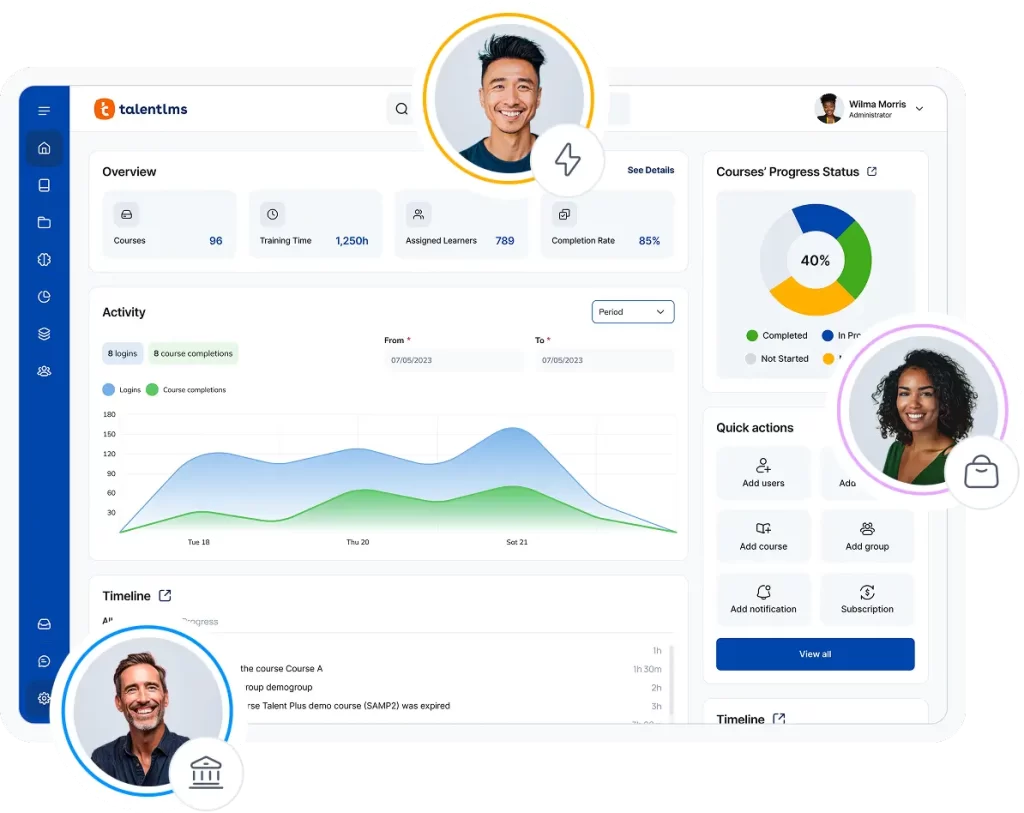
A modern LMS makes it easier to collect and track training data in one place. Instead of manually compiling quiz results, completion data, and learner activity, you can spot patterns and identify where you need to look deeper.
Here are some of the LMS features that can help:
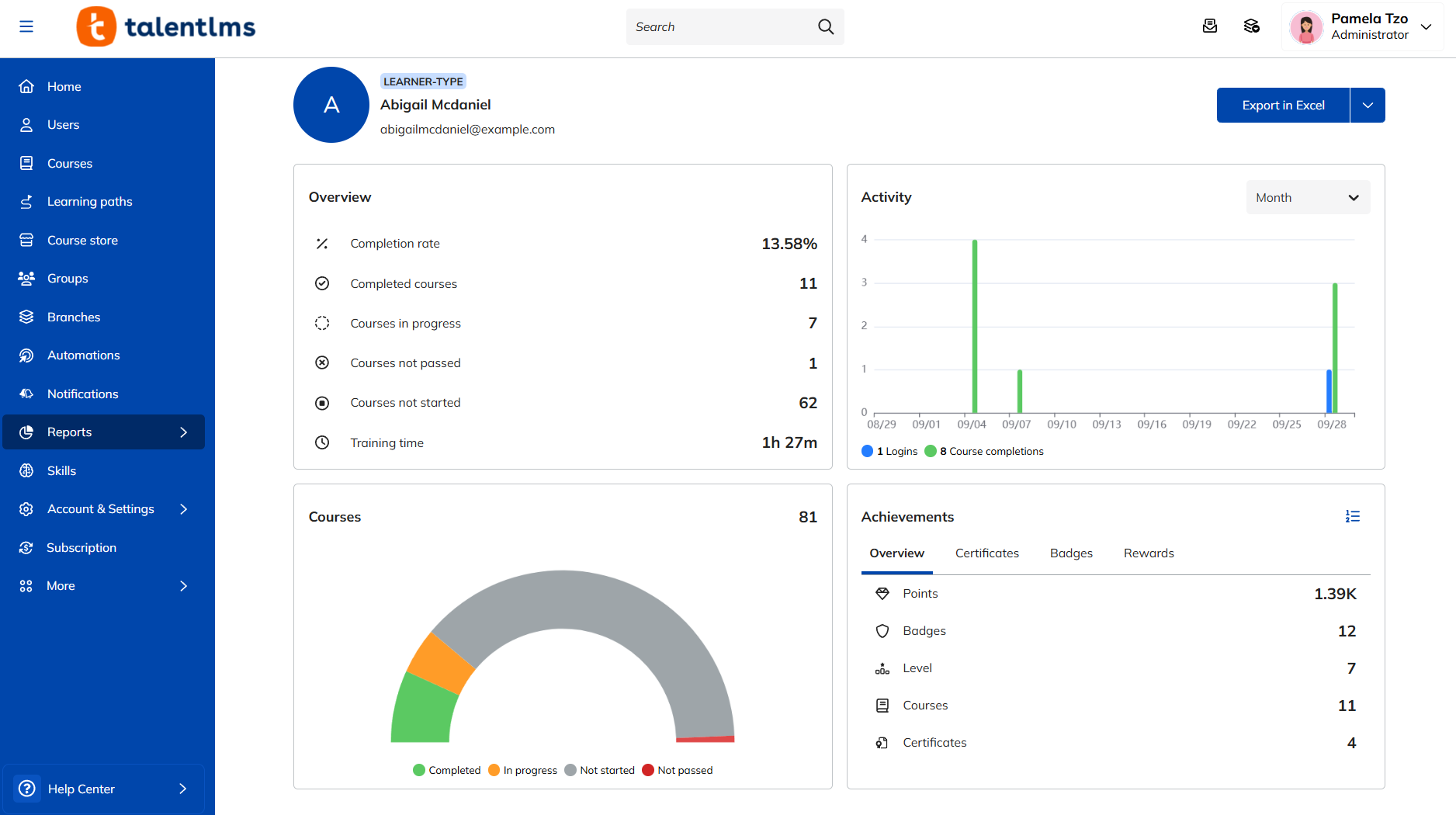
Automated reporting
Reports built into your LMS give you a clear view of training activity and results without having to pull the data together manually. You can track progress, identify learners who may need support, and compare results across courses or groups.
By building custom reports, you can focus on the data that matters to your organization and leadership team.
Learner analytics
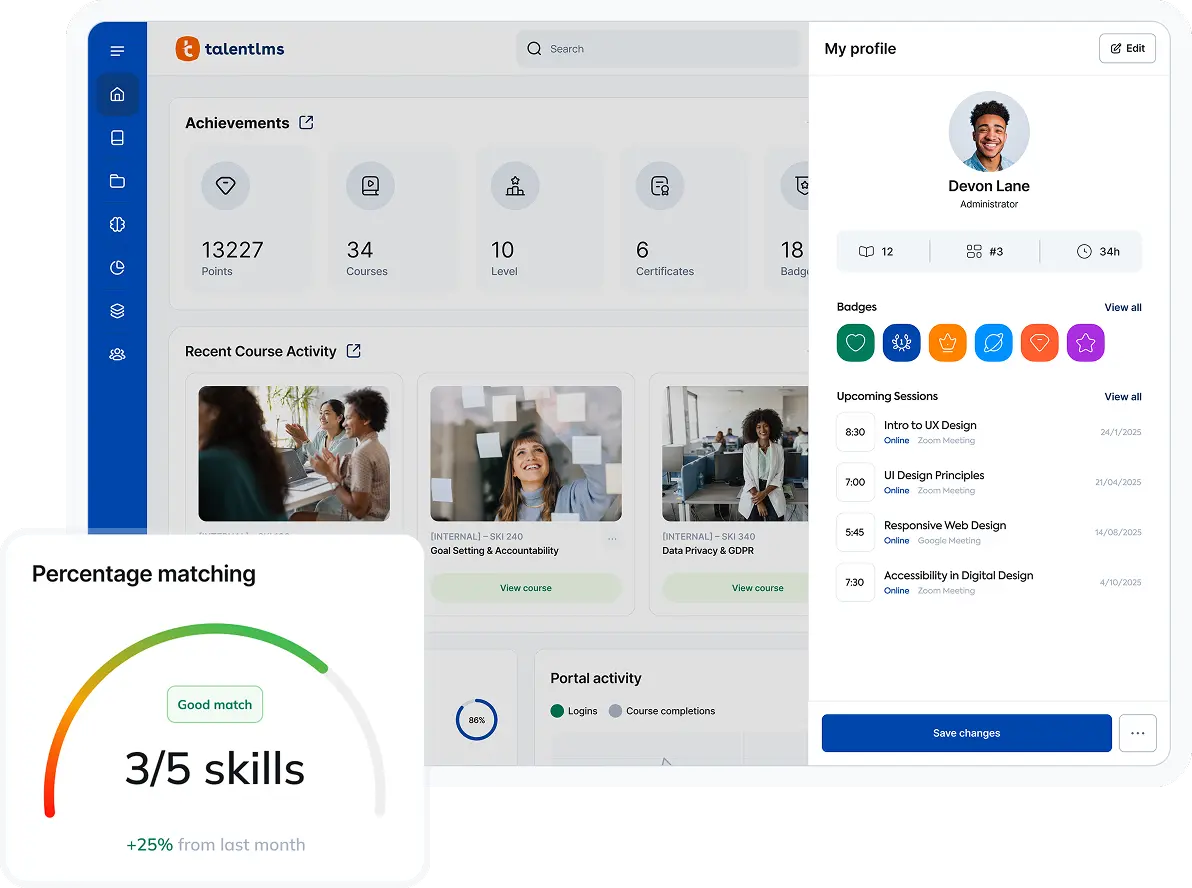
Learner analytics show how employees interact with training, including time spent on modules, progress, and assessment attempts. These insights can help you identify areas for improvement and tailor future training programs to address specific needs.
Skills mapping functionality within an LMS builds on this by connecting course progress with the skills employees need in their roles. This can help you identify skill gaps and provide relevant on-the-job training to address them.
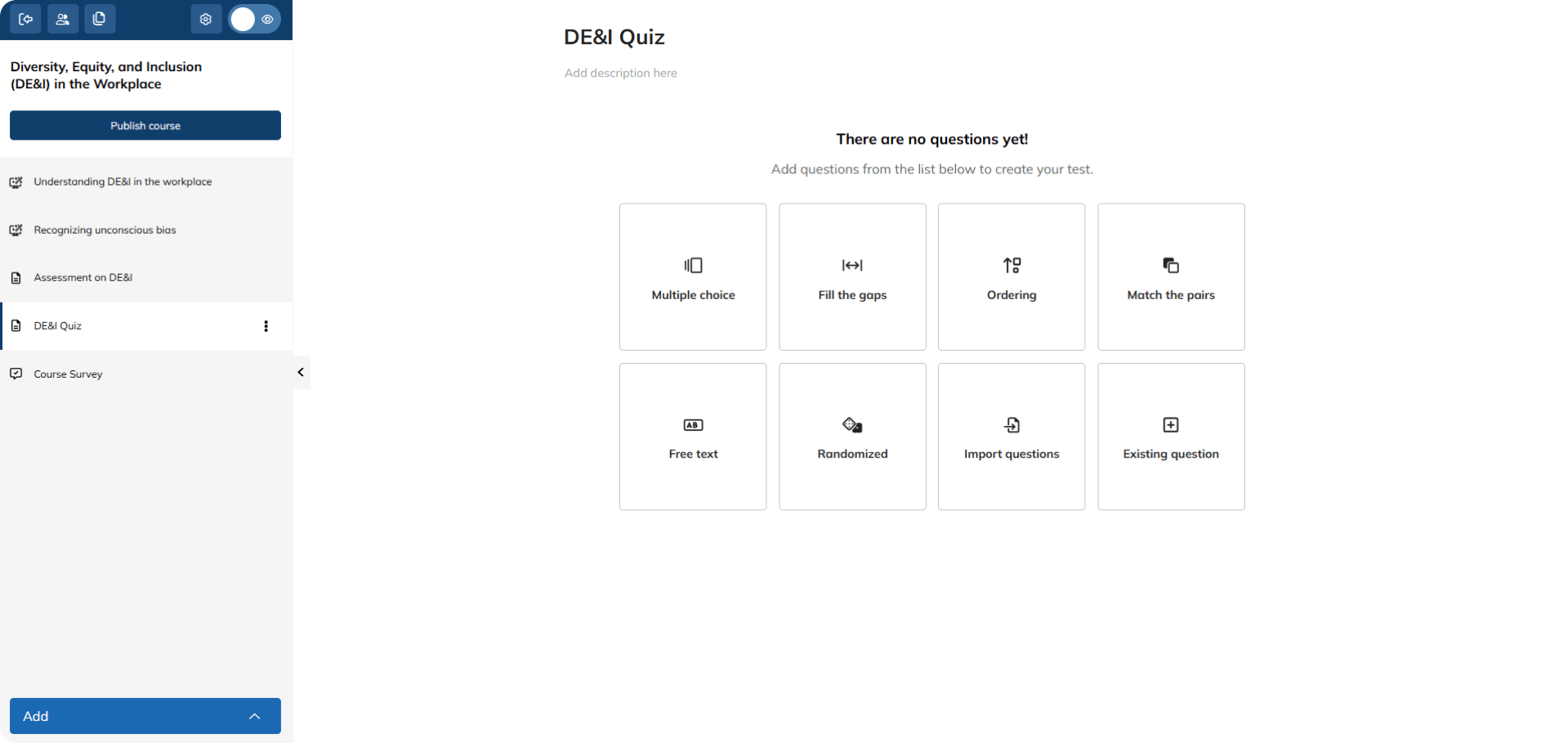
Assessment tracking
An LMS can track results from pre-tests, post-tests, and certification exams, making it easier to see what employees have learned and identify areas where they may need more support.
Engagement dashboards
These give you a quick visual overview of how employees are interacting with training, helping you spot patterns in participation and completion.
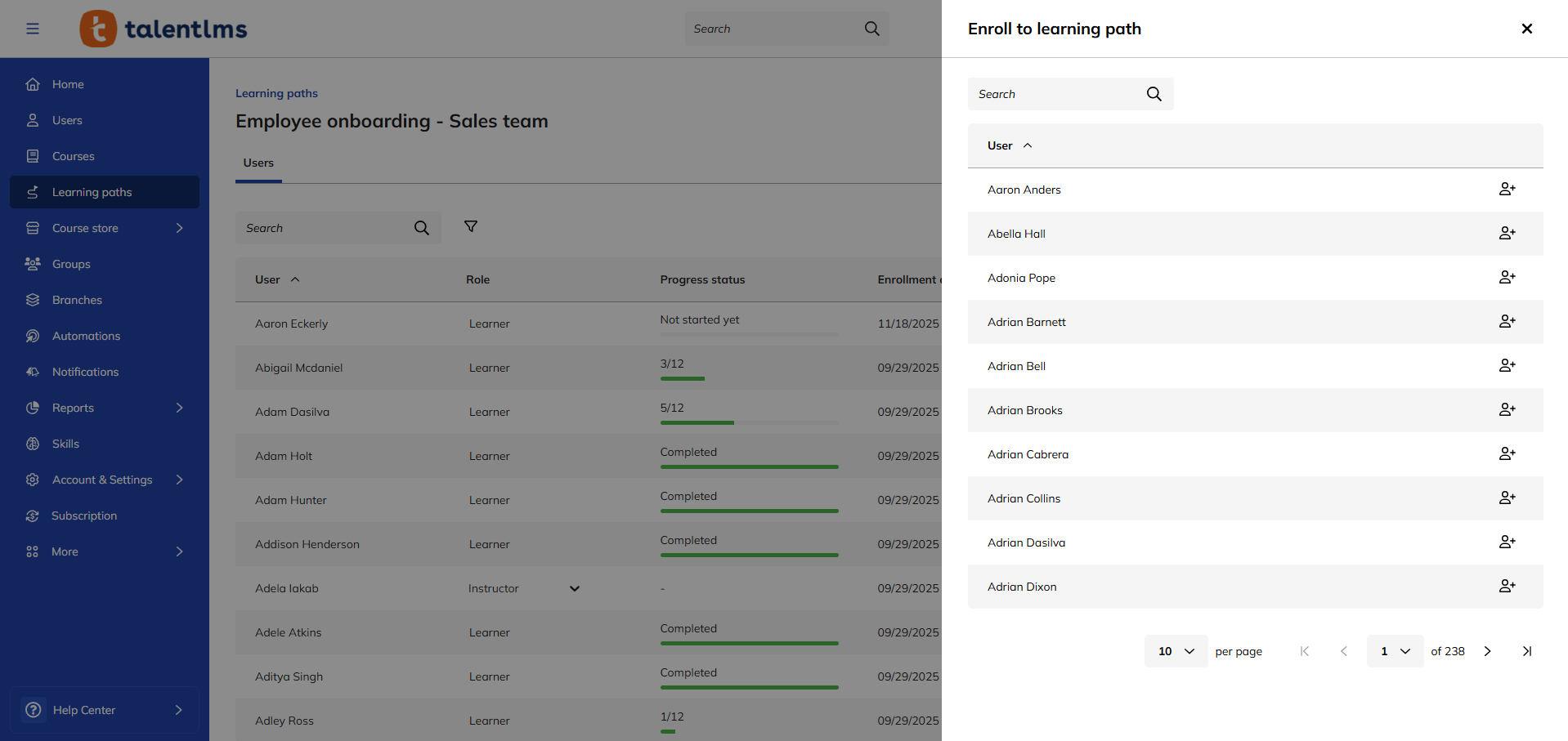
You can also use Learning Paths to organize courses into a structured sequence, so employees can build their knowledge and skills progressively.
4 common mistakes when measuring training effectiveness
Even with the right approach and tools in place, L&D teams can run into a few common problems when trying to understand training impact.
Here are four mistakes to avoid:
Mistake 1: Only tracking completion rates
Completion rates tell you who finished the training but not what they learned or whether they’re applying it at work.
Effective training goes beyond completion, leading to knowledge gain, behavior change, and better performance outcomes.
Mistake 2: Measuring too late
Waiting too long to gather feedback or check knowledge can make it harder to spot issues and improve the training.
Collect feedback soon after training, then follow up over time to see what employees retain and whether they’re putting it into practice.
Mistake 3: Ignoring business metrics
Quiz and assessment results can show what employees learned, but they don’t tell you whether that learning improved performance.
Where possible, connect training with relevant business metrics, such as sales, error rates, productivity, or compliance outcomes.
Mistake 4: Using too many metrics without context
More data doesn’t necessarily give you a clearer picture or proof of training success. Login times, completion rates, assessment scores, and other LMS data are only useful when they help answer a specific question about your training. A focused approach to training measurement is more useful than collecting data for its own sake.
Tip: Pinpoint a balanced set of metrics. You don’t need to track everything. Choose a mix that helps you understand what employees learned, whether they changed how they work, and what happened as a result.
Training works when you can prove it
Measuring training effectiveness means looking beyond what happens during the course to what happens afterward.
Are employees applying what they learned? Are new behaviors sticking? And is that change contributing to better performance?
The metrics you use will depend on your goals, whether that’s reducing compliance risk, improving productivity, or increasing revenue. The important thing is to connect what people learn with how they work and the results that follow.
FAQs
What are different ways you can measure training effectiveness?
You can measure training effectiveness through learner feedback, knowledge assessments, engagement metrics, on-the-job behavior change, business performance, and training ROI. Using a combination of these measures helps you understand not only what happened during training but also what changed afterward.
What is training effectiveness?
Training effectiveness is the extent to which training achieves its intended outcomes. This can include what employees learn, whether they apply new skills and behaviors at work, and whether those changes contribute to better business results.
What are training evaluation methods?
Training evaluation methods are ways to assess whether training is working. A training program evaluation might include learner surveys, knowledge assessments, engagement data, manager feedback, workplace observations, performance metrics, and ROI analysis.
What are KPIs for training?
Training KPIs are measurable indicators used to track training performance and outcomes. Common learning and development metrics include completion rates, assessment scores, knowledge retention, behavior change, productivity, error rates, sales performance, and training ROI. The right KPIs depend on the goals of the training.
Can an LMS help you measure training effectiveness?
Yes. An LMS can track data such as course completion, learner activity, assessment results, and skills development. These are useful indicators, but LMS data alone may not show whether employees have changed how they work. Combining it with manager feedback, workplace observations, and business performance data gives you a clearer picture.