

“How do I do this again?”
If that question keeps popping up, you’re looking at a learning problem.
Work changes fast. New tools arrive, roles grow, and processes shift. Often, the training just doesn’t keep up.
That gap is learning debt. It builds up quietly and shows up in small ways. Like a normal week turning into a scramble because one key person is on vacation.
Let’s look at what this looks like in daily work, why we ignore it, and how to start paying it down.
What’s learning debt?
Simply put, learning debt is the gap between what people need to know to do their job vs. what they actually know.
According to the TalentLMS 2026 Annual L&D Benchmark Report, “half of learning leaders and 53% of employees say high workloads leave little room for training, even when it’s needed.” When the daily workload is heavy, learning is often pushed aside to focus on more immediate tasks.
This debt adds up over time. It leads to repeated mistakes, slow onboarding, and managers spending their day fixing errors instead of helping their teams grow.

7 symptoms of learning debt in the workplace
Here’s how learning debt manifests in the workplace.
1. Performance drops for no clear reason
Quality starts to slip across the team. There is rarely one big mistake. Instead, it is a slow drift where work just isn’t as good as it used to be. The work changed, but the support stayed the same. People try to keep up until they simply can’t anymore.
- What it looks like: More work needs to be redone, customer complaints go up, and teams rely on “hero fixes” to save the day.
- What helps: Use short refreshers tied to real tasks. The best starting point is the smallest bit of learning that prevents the next mistake.
2. Managers fix work instead of coaching
When managers are busy correcting errors, they stop coaching. Growth stalls, and people are more likely to leave. Much of this time drain comes from learning debt showing up as “Can you check this?” or “I’m stuck again.”
- What it looks like: Managers rewrite work instead of reviewing it, 1:1 meetings turn into firefighting sessions, and training is only requested after something breaks.
- What helps: Create simple playbooks for the top 5 repeat issues. Use new manager training to help coaching become a normal part of the day again.
3. One person becomes a bottleneck
If only one person knows how to do a task, your team has a “single point of failure.” This feels fast and easy until that person is out sick, quits, or gets too busy with other work.
- What it looks like: “Ask Alex” is the only way to get answers, no one trusts the written guides, and teams avoid changing workflows because they are too hard to explain.
- What helps: Record quick walkthroughs of the most important tasks. Turn them into short guides that are easy to search.
4. New hires take too long to get up to speed
When onboarding drags on, the system is usually the problem. Learning debt lives in your tools and your “this is how we do it” knowledge.
- What it looks like: Onboarding depends on who is available that day, some people learn much faster than others, and new hires ask the same questions every week.
- What helps: Build onboarding around real milestones, like a first client call. Give people the right information right before they hit each milestone.
5. New tools and processes don’t stick
You roll out a new tool, and people nod their heads, but then they go back to the old way. Change creates learning debt very quickly.
- What it looks like: People use the tool at first, but then stop, teams create workarounds that become permanent, and support tickets rise after every change.
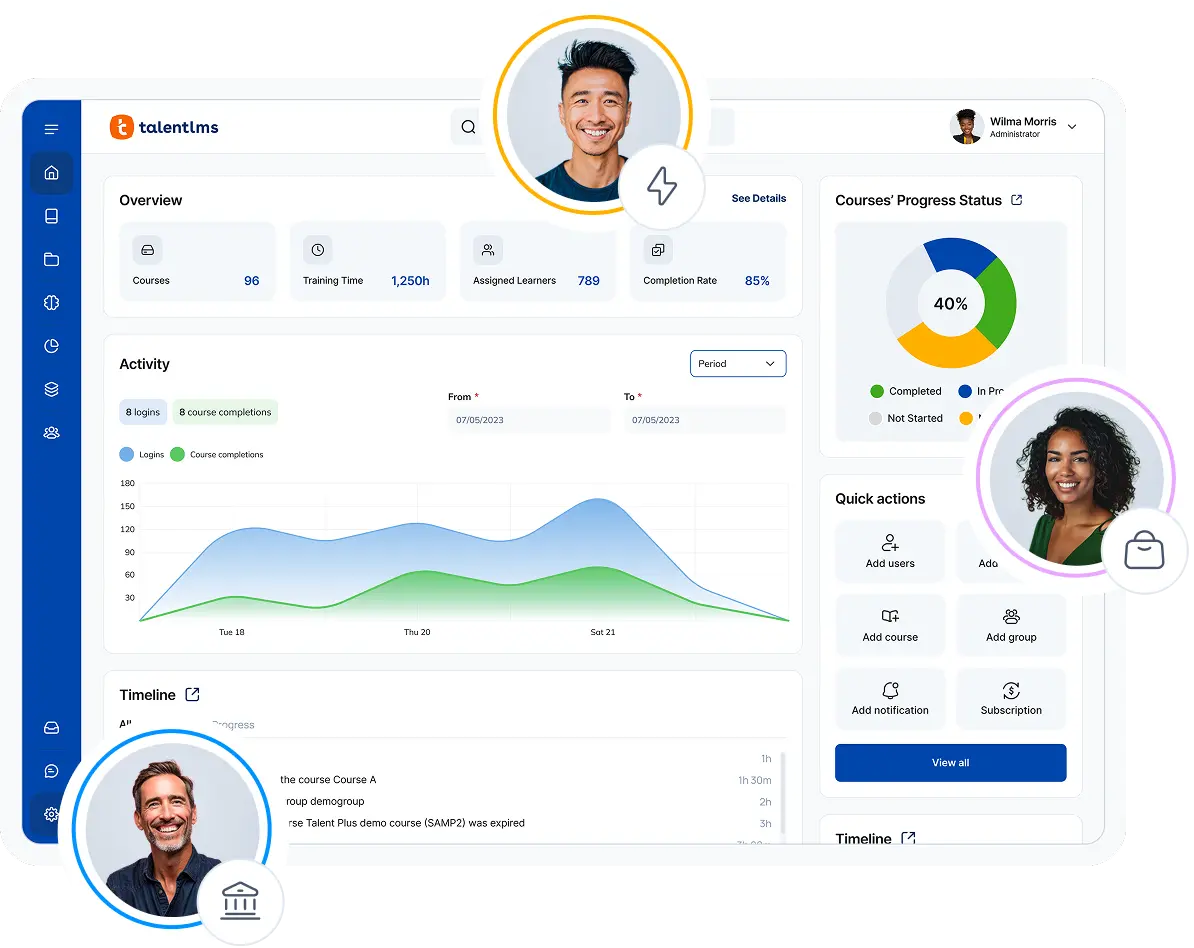
- What helps: Use an LMS for continuous training to provide quick demos and checklists exactly when the task needs to be done.
6. Compliance risk grows quietly
Compliance gaps often look small at first. They look like “We’ll do it next month.” Eventually, that debt turns into a real risk that stays hidden until an audit or an accident happens.
- What it looks like: People finish the training, but their behavior stays the same, policies are forgotten under pressure, and managers assume HR is taking care of it.
- What helps: Use frequent, small check-ins. Use real-life scenarios and track how confident people feel, not just if they finished the course.
7. High performers are overwhelmed
Top performers often become the unofficial training program. They spend their time fixing problems and answering questions for everyone else. This leads to exhaustion and turns top talent into a help desk.
- What it looks like: The same names are tagged in every chat thread, high performers stop taking time off, and burnout shows up as quiet disengagement.
- What helps: Move help from a person to a system. Build a shared knowledge hub and turn repeat questions into a short, reusable resource.
Why learning debt keeps getting postponed
If learning debt can cost too much for an organization, why do we keep pushing it back?
That’s because usually this debt stays quiet. It doesn’t scream like a crashed server or a missed payroll. It whispers through small delays and minor errors. And most of the time, it feels manageable.
Learning debt keeps getting postponed because it constantly loses out to work that feels more urgent, for example, a big product launch or a quarterly deadline. Many teams promise themselves they will handle training later, but in fast-paced environments, “later” rarely arrives. Another reason is that the training budget is too tight for a new training initiative.
There is also a deeper issue. Many outdated ways of training don’t fit how work happens now.
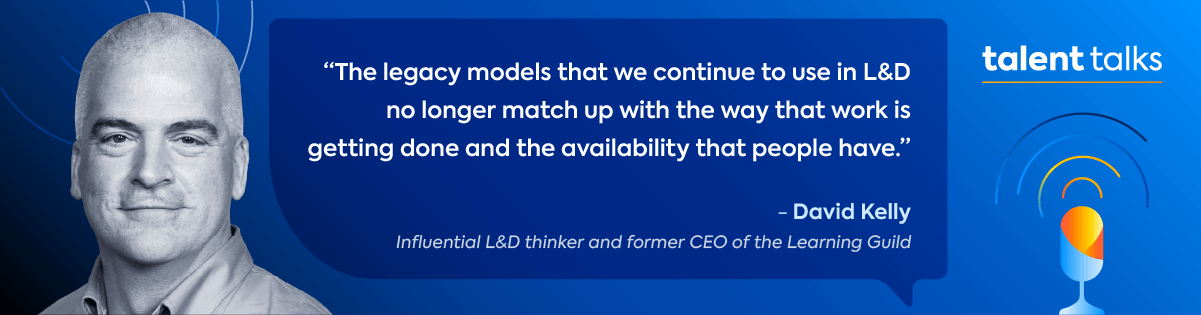
Learning strategist David Kelly notes in L&D in 2026: Learning debt, AI, and transformation, that when learning doesn’t fit the daily workflow, it gets ignored.
For example, if an employee has to stop their work for two hours to watch a generic video on “communication,” they will likely skip it to finish their tasks. When the training feels disconnected from the actual job, the debt continues to grow in the background.
How to start paying learning debt down
To fix the problem of learning debt, small, steady steps often work better than trying to change everything at once. Here’s how:
Start with the most expensive gaps
Don’t try to document every single process in the company. Instead, pick one or two areas where the debt hurts most. Look for the repeaters: repeat questions, repeat mistakes, and tasks that always seem to take twice as long as they should.
For instance, if your customer support team is constantly asking the same three questions about a new refund policy, that is an expensive gap. It slows down the sales rep and frustrates the customer. By fixing just those three points, you pay down a significant chunk of debt immediately.
High-priority targets usually include slow onboarding for new hires or new tools that people are currently using the long way because they weren’t shown the shortcuts.
Build learning into the workday
Stop looking for the right learning course and start looking for learning moments inside real tasks. This allows people to get the information they need without leaving their desks or blocking out their calendars.
A great example is a just-in-time checklist. Instead of a 40-page manual on how to set up a new client, give the team a 5-point checklist that lives inside their project management tool. When they reach that step in their work, the training bit is right there in front of them.
This is how you reduce debt without asking people for time they don’t have. The Global Shop Solutions story is a perfect example of how a company uses structured learning to support daily factory operations without stopping the assembly line.
Specifically, before opting for structured digital learning with TalentLMS, it took the Global Shop Solutions 2-3 years for an employee to move from customer care to a consulting role. By integrating targeted training into their daily environment, that timeline was slashed to just 8–12 months. For instance, by using Branches they divided different training audiences into dedicated subportals where employees could find targeted, relevant training for their roles.

Choose consistency over scale
Large, ambitious training projects often stall because they become too heavy to manage. Instead of trying to build a big training module, try to share one small, helpful tip every week.
Think of it like a living library. When a software tool updates its interface, don’t wait six months to update your internal guides. Record a 60-second video showing the change and swap it out immediately.
Consistency is what stops learning debt from returning. It is much easier to maintain a clean house by doing five minutes of tidying a day than by waiting for a massive spring cleaning once a year.
Give managers practical tools
Managers are on the front lines, so they see the gaps first. However, they are often too busy to act as full-time instructors. To help them, you must provide tools that could fit into a five-minute conversation.
For example, give an IT lead a specific guide for coaching a junior team member through a complex server alert or a security patch. Share a sample of a perfectly documented ticket so the team has a clear model for what success looks like. When you pair this with manager training, building the team’s skills becomes a natural way to solve problems and keep systems running.
Invest in employee training software
Think of your LMS as your debt consolidation strategy. It’s the best way to pay down learning debt at scale without adding to your team’s mental load. Here’s how TalentLMS can help prevent learning debt from growing:
- Centralized learning: Employees don’t waste hours searching for the right version of a process. By centralizing knowledge, videos, and quizzes in one hub, everyone has immediate access to the best company knowledge.
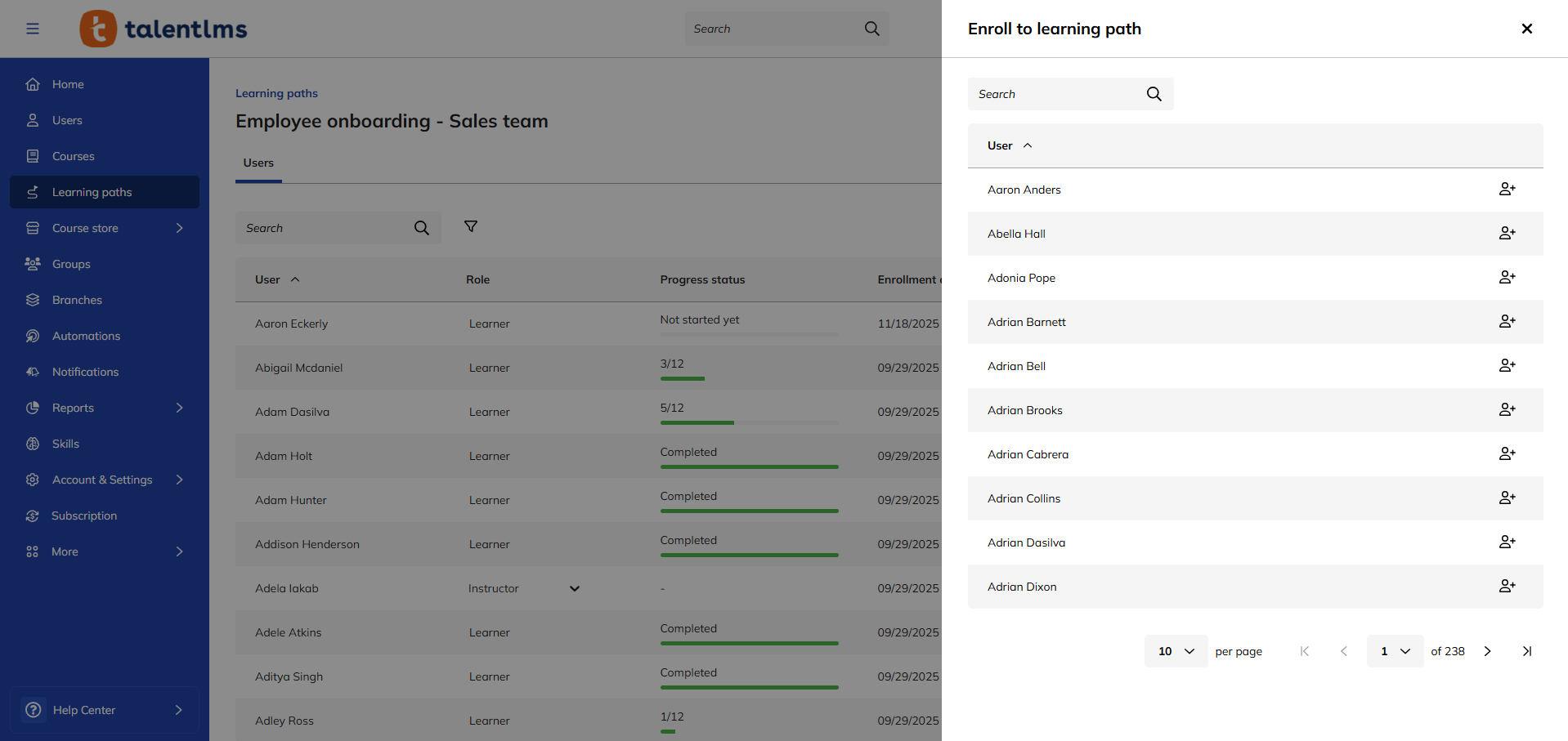
- Structured learning paths: Create clear, logical learning journeys for your teams. Whether it’s onboarding a new hire or upskilling a senior lead, Learning Paths ensure people get the right skills in the right order. This pays down learning debt systematically rather than randomly.
- Continuous learning: It’s impossible to end learning debt at once, but it’s possible to manage it. Make sure to add bite-sized training updates regularly to your LMS to keep knowledge fresh and prevent a debt bubble every time the industry or technology changes.
- Tool integrations: Connected tools help embed learning into the daily workflow. TalentLMS integrates with the tools your team already uses. By meeting employees where they already work, you make upskilling a fast and effortless part of their day.
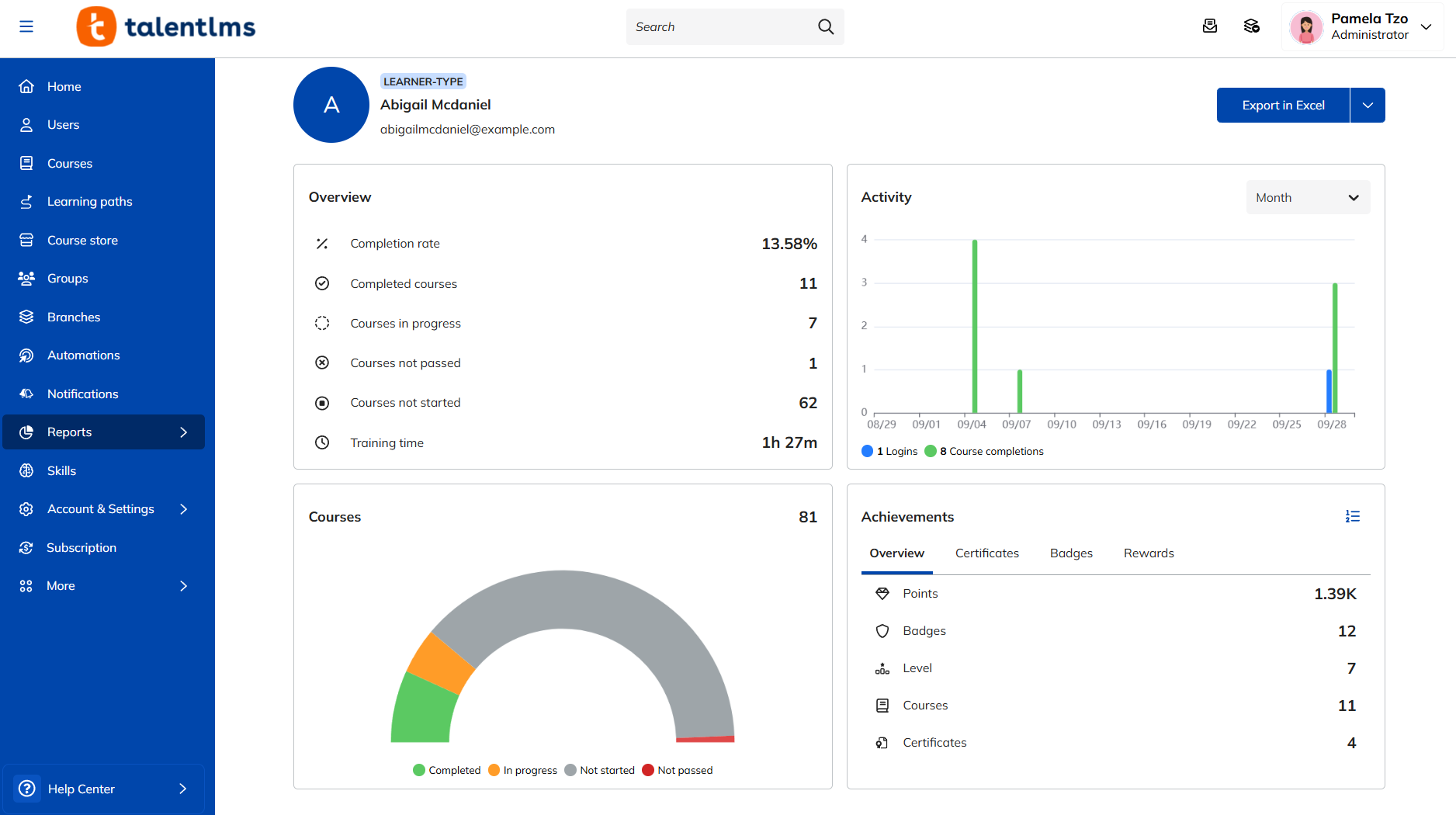
- Clear reporting: Advanced reporting features show where your people are falling behind. If data shows a specific department is struggling with a new protocol, for example, you can pinpoint the debt gap through your LMS before it impacts your bottom line.
Make learning part of the company culture
Learning works best when it is a normal part of the day, a solid part of the company culture. It should feel like a tool you use to get work done. When teams feel safe admitting they don’t know something, they can pay down learning debt before it grows too large.
Leaders can set the tone by learning out loud. This could be as simple as sharing a mistake in a Slack channel and what you learned from it, or posting a 30-second video on a new tool shortcut. When you make growth visible, curiosity replaces the pressure of feeling behind. It turns learning into a shared habit that keeps the whole team’s knowledge fresh.
 Dimitris Tsingos
Dimitris Tsingos is the CEO of Epignosis, the parent company of TalentLMS. Dimitris drives innovation in learning technology to empower organizations globally and transform corporate training with accessible, impactful solutions.
Expert tip: Learning debt is a leadership choice
Learning debt is a choice. We can either prioritize short-term output and watch our teams’ capabilities erode, or we can recognize that learning isn’t time away from work—it is the work.
The organizations that thrive will be those that build learning into their daily pulse rather than treating it as an expendable add-on.
Here’s what to keep in mind:
- Learning isn’t a distraction. Protect learning time like any other task. When training is squeezed out by daily needs, performance eventually hits a wall.
- Prioritize application over completion. A finished course matters less than a skill used on the job. Use practical, just-in-time guides that solve real problems in the moment.
- Make growth a shared KPI. Connect skills to performance reviews. When managers are accountable for their team’s growth, knowledge sharing becomes a habit.
- Choose resilience over short-term speed. Skipping training to save time today makes your organization fragile tomorrow. Consistent, small upskilling keeps your team agile.
Closing the gap: From debt to capability
Learning debt isn’t something you can fix with a single, massive training event. It’s a quiet buildup of missed opportunities and outdated habits that eventually slows your entire team down. But as we’ve seen, the solution doesn’t have to be a burden.
By shifting your focus from big training to small learning moments, you stop the bleed. Whether it’s a 60-second video, a simple checklist, or a manager taking five minutes to coach a junior peer, these small payments do the trick.
When you stop treating learning as a distraction and start treating it as the way work actually gets done, you don’t just pay down debt, but you build a team that is faster, smarter, and ready for whatever comes next.
FAQs
Is learning debt always a bad thing?
Not necessarily. Just like technical debt, you might take it on intentionally to hit a major deadline or launch a product. The danger isn’t having the debt; it’s ignoring it. If you don’t have a plan to pay it back, those quick fixes eventually turn into permanent bottlenecks.
How do I know which gap to fix first?
Look for the pain points that repeat. If your team keeps asking the same questions in Slack or if the same mistake happens every time you onboard someone, start there. Fixing the most frequent, smallest issues usually gives you the highest return on your time.
Does paying down debt mean more meetings?
Actually, it should mean fewer. The goal of paying down learning debt is to remove the need for firefighting sessions and constant “Can you check this?” interruptions. By building learning into the daily workflow with guides and checklists, you give people the answers they need without a meeting.
What if my team is too busy for even bite-sized learning?
This is the classic trap, being too busy to sharpen the saw because you’re too busy sawing. If you truly have zero time, start with learning out loud. Have a leader or high performer share one quick tip or shortcut they used that day. It takes seconds, but starts building the habit.