Duration: 33 minutes
Season 4
Episode 1
Solving the training impact mystery
In this episode, we sit down with self-described “L&D Detective” Kevin Μ. Yates to uncover what it really takes to prove the impact of learning. We explore why traditional L&D metrics only tell part of the story, how to design training around business performance, and why L&D professionals need to think like performance consultants rather than order takers.
Kevin also shares practical questions that help uncover real performance gaps and explains why training is sometimes only one part of the solution.

Key takeaways:
Stop confusing learning metrics with business impact. Evaluating training effectiveness means looking beyond surveys, completion rates, and LMS activity data and focusing on business outcomes.
Make performance the North Star for L&D. When training is designed around real workplace outcomes, it becomes easier to measure training impact and its contribution to organizational goals.
Use business KPIs as a way of proving training impact. Instead of tracking a long, generic list of L&D metrics, focus on the indicators the business already uses. For example, customer retention, quality scores, error rates, or market share.
Reframe the L&D function from “order-taker” to performance consultant. By shifting the conversation toward business goals and performance gaps, L&D professionals become strategic partners rather than service providers.
Recognize that training is part of a larger ecosystem. Training ROI (or L&D ROI) rarely improves because of training alone. Performance outcomes are shaped by multiple factors across the organization.
Design learning with impact in mind from the start. The best way to improve training evaluation is to start early and create learning experiences that intentionally drive results.
Ask better questions to boost training effectiveness. L&D professionals should investigate the performance context first.
Tell an inclusive story about performance impact. Framing impact as a shared success story helps leaders see how learning fits within the broader performance ecosystem.
Use learning to sustain strong performance, not just improve it. L&D initiatives are also valuable when organizations need to maintain strong performance over time.
Study how high performers learn and work, but avoid one-size-fits-all models. Training design must still account for individual differences.
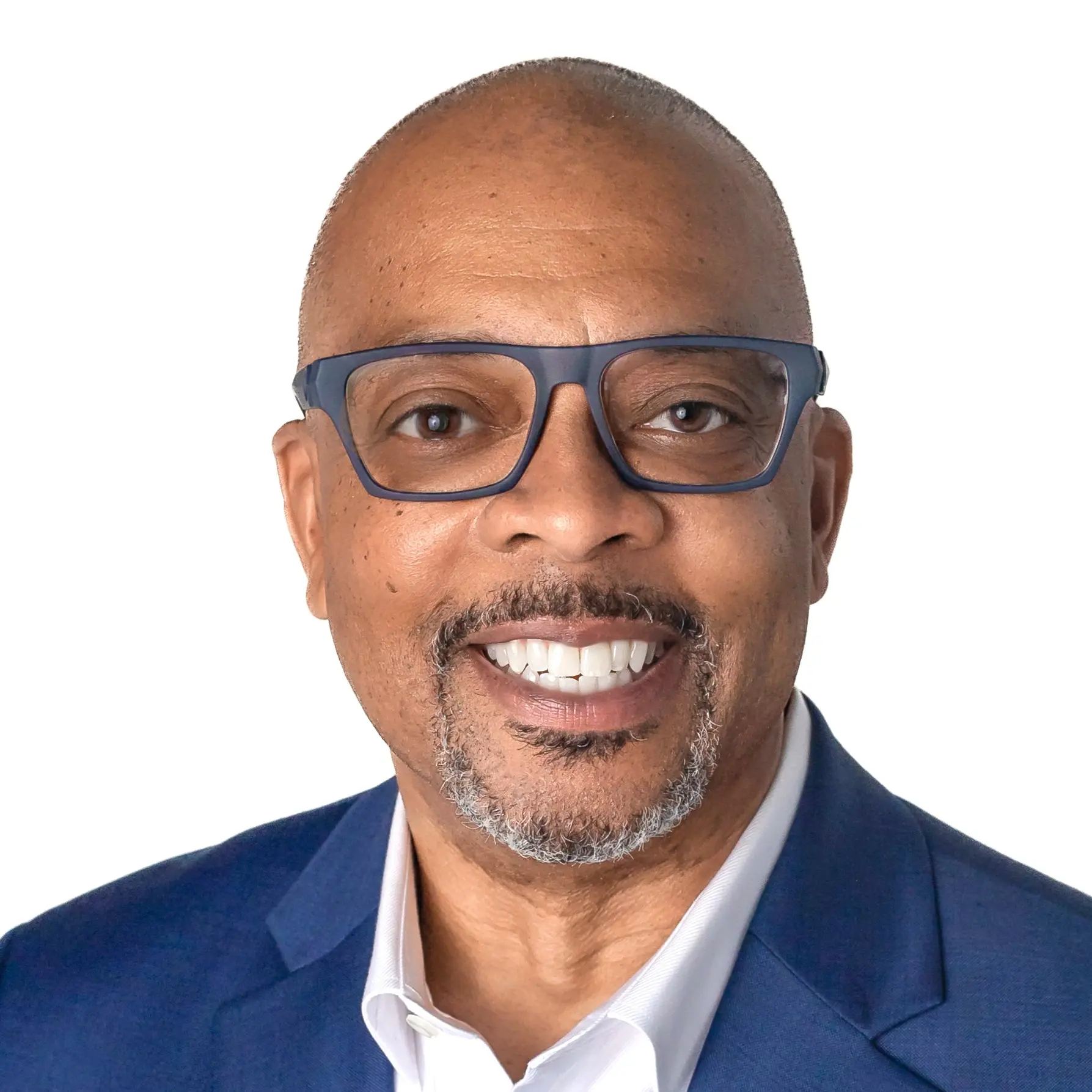
Kevin Μ. Yates
About our guest:
Kevin M. Yates is known in the global training, learning, and talent development community as the L&D Detective®. He solves measurement mysteries and investigates how training and development as an experience and L&D as a function contribute to the workplace performance ecosystem. Kevin uses facts, clues, and evidence to uncover the truth about impact, focusing on collective contributions that affect business and human performance.
He has used his measurement expertise in roles with world-renowned brands including Grant Thornton, Kantar, McDonald’s, and Meta (Facebook). He is also president and founder of Meals in the Meantime, a nonprofit organization addressing food insecurity in the Chicagoland south suburbs.
Available on


Share episode
Want more resources on this topic?

14 L&D metrics for employee training
Webinar: L&D in 2026 with Donald Taylor
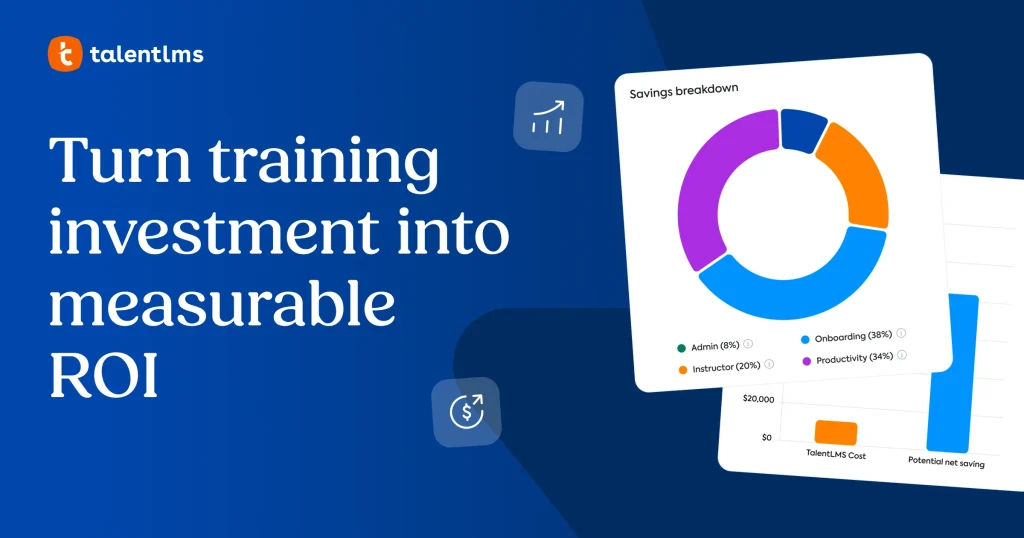
Tool: ROI Calculator by TalentLMS
More episodes we think you’ll love
In this episode, we talk to Donald Taylor, one of the most influential voices in global L&D and a long-time authority at the intersection of learning and technology. From the dangers of the “AI efficiency trap” to why L&D teams need to move beyond being a content house, we explore where AI genuinely adds value, where it creates risk, and how learning leaders can stay relevant as expectations shift. A grounded, honest conversation about using AI in L&D with purpose, not hype.
Go to episode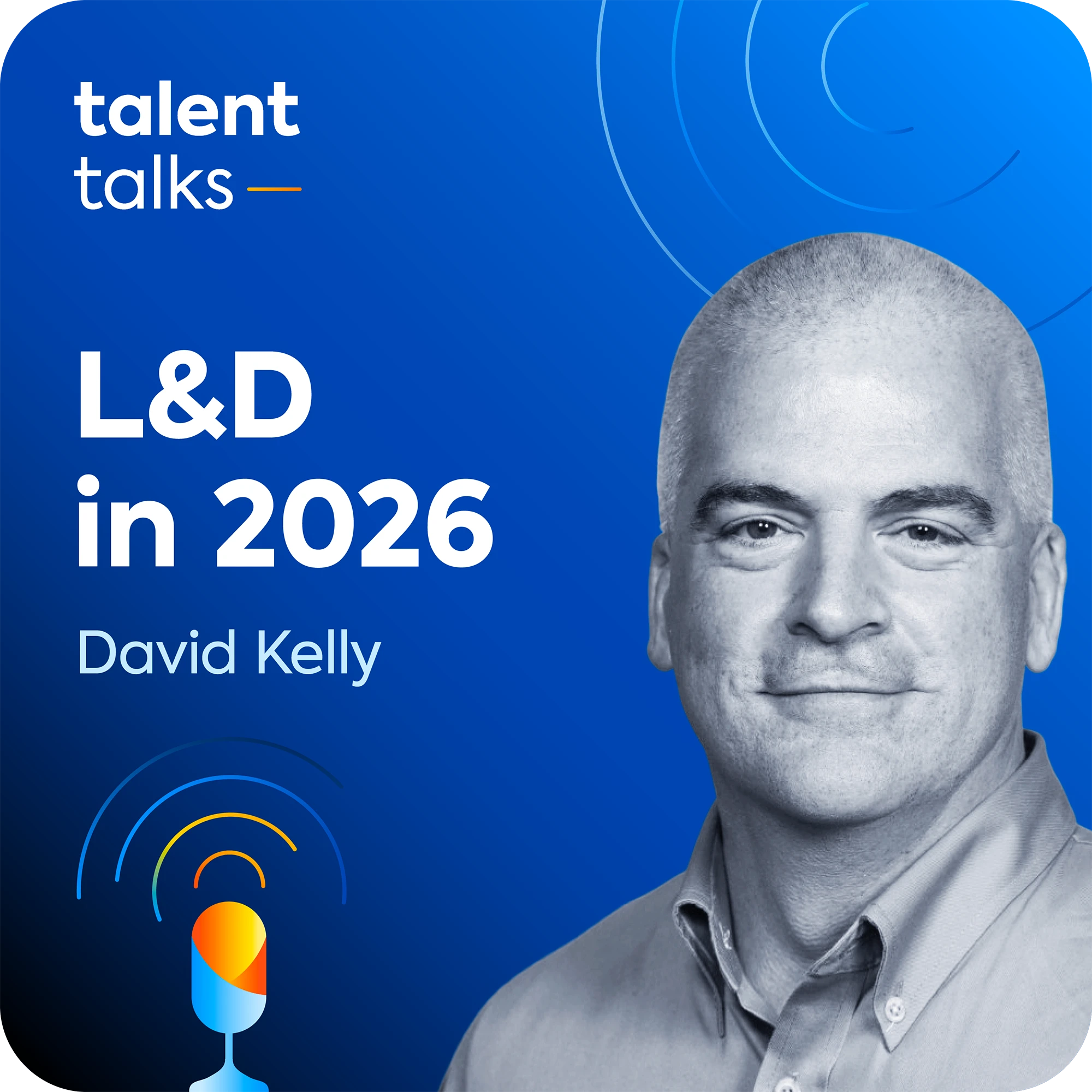
As work continues to transform, L&D in 2026 is being forced to rethink how it supports people on the job. In this episode, we sit down with David Kelly – longtime industry analyst and influential L&D thinker – to dig into our Annual TalentLMS Benchmark Report.
We unpack why learning debt is rising, why legacy L&D models are breaking under modern work demands, how AI should raise the ceiling of human work, and why skills matter more than job titles.
Go to episode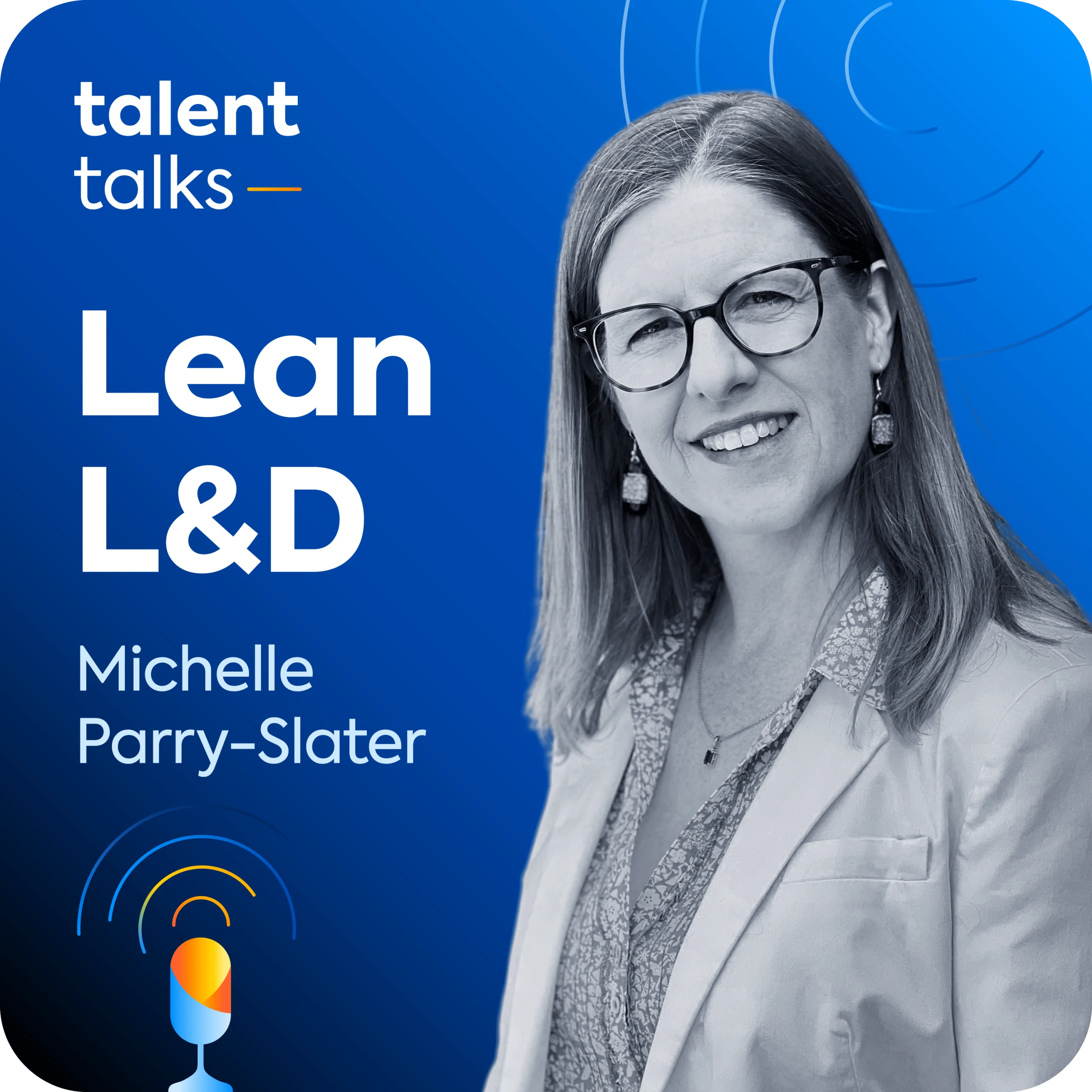
When resources are tight but the demand for learning is high, strategy matters more than spend. In this episode, we’re joined by Michelle Parry-Slater, author of The Learning and Development Handbook and Director at Kairos modern learning.
We explore how L&D teams can build learning programs that actually drive business results. And Michelle shares how to create real impact even when budgets are lean.
Go to episode
Never miss an episode! Get every new drop right in your inbox
By clicking the Subscribe button, you accept and consent to receive the type of content mentioned above. Please review the TalentLMS Privacy Policy for further information.
Full Episode Transcript
Host: [00:00:00] Welcome to Talent Talks, the L&D podcast about the future of work and the talent driving it forward. Today, learning leaders are expected to do more, do it better. And do it faster than ever before. To strengthen teams, scale training, and to show results. Because when learning works, businesses move forward.
Together, we’ll explore what that really means for L&D in growing organizations, what to rethink, what to refine, and what to double down on.
I’m your host, Gina Lionatos, and this is Talent Talks.
Talent Talks is brought to you by TalentLMS. The easy-to-use training platform that helps growing businesses launch faster and see results sooner. Learn [00:01:00] more at talentlms.com.
On today’s episode,
Kevin Yates: I’m excited about the movement of looking at performance as the core. Performance as the North Star. Because I believe that everything we do should revolve around that. And I’m gradually seeing a shift toward that mindset.
Host: What happens when training is successful, but your organization still can’t see the results? In an era of tight budgets and rising demands, L&D teams are under pressure to really prove their value.
So how do we show that learning isn’t just taking place, but that it’s actually driving performance, boosting retention, and having real business impact?
Joining us to unpack all of this and more is Kevin Yates, self-described L&D Detective. We’ll look at how to design with impact in mind. And which stats to track when resources are tight.
Stay with us.[00:02:00]
Kevin, welcome to Talent Talks. So pleased to have you with us today.
Kevin Yates: And it is awesome to be here. I’m excited.
Host: I’m excited too. Especially Kevin, you’ve described yourself as an L&D detective searching for evidence that learning actually can improve performance and impact business results, which is what we are all about here. And what I’m really looking forward to unpacking with you.
From your perspective, why do so many L&D teams struggle to prove that impact? Are we simply looking in the wrong places for data from the get-go?
Kevin Yates: Yeah, that, that’s a great question, and I believe a really great way to start the conversation.
And so yes, we are struggling as a community, the global L&D community. We continue to struggle with finding facts, clues, and evidence that reveal the extent to which [00:03:00] training, learning, and talent development is measurably contributing to business performance and human performance. And I think that the struggle comes from some of our history.
Might I even dare say, some of our baggage? Because of how we have historically viewed what impact is or what we thought impact was. Meaning, for years we have chased after the easy stuff, right? When it comes to measuring impact. And the easy stuff is the results from a survey that reveal how people think or how they feel, or their opinion, or what they believe.
So there’s that, right? For many, many, many years, we have misinterpreted that as impact, but it’s not. It is data. It’s good data, but it’s data that reveals how people are thinking or feeling or what they believe, right? So I think that we continue to struggle because we’re chasing after the wrong thing.
[00:04:00]
Host: L&D’s got baggage!
Kevin Yates: Yeah, unfortunately.
Host: I mean, you know, that’s the truth. And as you said, it’s long been common practice to look at completion rates and surveys, and these do obviously help tell a story, but when it comes to business results and business impact, they only tell part of the story. From your perspective, what are some simple signs to look out for that employees are using skills that they’re being trained in, beyond those learning metrics?
Kevin Yates: So I believe that training, learning, and talent development professionals are performance consultants first. And L&D practitioners second. Right? So, if we have the mindset that we are performance consultants first, that then means that everything we do should be aligned to performance as an outcome of the work that we do with our solutions, i.e., training, learning, talent [00:05:00] development, right?
So if performance is the North Star, and it should be, then what we want to look at is metrics, data measures, key performance indicators that reveal business performance or business goals. So, when we are looking at data that reveals how the business is performing, we are then able to draw some correlation, potentially some causation, as it relates to our training, learning, and talent development solutions.
So, the essence of what I’m saying is, let’s chase after performance as an outcome of training and learning, and then let’s be looking at the key performance indicators that the organizations and businesses we serve use to measure its own success.
And then let’s use that data as a signal for the extent to which [00:06:00] training and learning is measurably contributing to success in the performance ecosystem.
See, I believe that there is a workplace performance ecosystem within which we work. And I believe that training, learning, and talent development are part of that ecosystem.
So the essence of what my work is focused on is taking a look at the workplace performance ecosystem holistically, and then taking a look at how different elements within that ecosystem are contributing to business goals. And so then training and learning as an experience and L&D as a function is part of that ecosystem.
That was a long answer to your question, but I hope it made sense.
Host: Indeed, it was. And there are actually so many paths that I wanna run down, uh, from that statement, but we’ll kind of go bit by bit. This is obviously a very widespread challenge for L&D and all kind of practitioners in this space.
I think there was an ATD [00:07:00] report that came out last year that was saying that so many organizations struggle to get access to performance-related data because it’s scattered everywhere, making training feel separate from actual work. And you know, I think it was only maybe 4 or 5% of organizations excel at using learning data to inform business decisions.
But it kind of sounds to me that perhaps you are suggesting to kind of attack it from the other way around. So looking first at those business decisions, aligning the learning with it, and moving forward in lockstep, knowing that these are the learning programs or the training programs that we are taking forward in order to tackle those business challenges.
Have I kind of understood what, how you’re coming at it?
Kevin Yates: I think you did. And what I’d like to add to that is the idea that not only is training and learning good and viable solutions for moving performance, [00:08:00] they are just as viable for maintaining performance. Quite often we get caught up in the idea that we’re looking for a change, or we’re looking for something different, or we’re looking for something new, and quite often that is what is needed.
There’s a need for a movement in performance in order to achieve a business goal. But there are also times where we need to sustain performance, and training, learning, and talent development are viable solutions for, again, moving and maintaining performance.
Host: Okay, so we know, as I mentioned before as well, many organizations kind of struggle to quantify impact because that performance starter is scattered across systems.
So let’s get our detective hat on for a second, and let’s say we’re in a small or a kind of a time-poor L&D team, perhaps even a team of one. What kind of metrics can we start to uncover and perhaps borrow, if you like, from around the business to help us build that narrative?
Kevin Yates: That’s a great question.
And [00:09:00] so for me and in the work that I do as the L&D Detective, the metric or the key performance indicator that I am looking for, that I use the most, is first and foremost a data point that we do not own. Right? Training, learning, and talent development do not own the types of metrics I’m about to describe, but these are the metrics that are measuring the business goal or measuring business success.
So, if there is a business goal, or rather when there is a business goal, then we want to take a look at what is it that the business is using to monitor the extent to which that goal is achieved or not. So that means looking at metrics like time quality, customer retention, market share, error rates. Those are the different types of key performance indicators that I am using.
So I’m actually not using a whole lot of different metrics. Because again, if the business is using a metric to monitor whatever the business goal is, [00:10:00] then that is the metric that we as L&D want to be using as a signal for the extent to which we are contributing to the movement or maintenance of that particular business goal.
So what I’m sharing here is that, it’s really not a lot of metrics, and I think that’s the good news.
Host: Yeah, sure. And I think it does go back to getting over the baggage of L&D trying to prove its worth via L&D-specific metrics. And, you know, perhaps running the risk of it never really being 100% provable that L&D impacted that result. But L&D was certainly a contributor to that result.
And I think it does require quite a different way of thinking, both as L&D practitioners, but also you know, within the organization that they’re a part of. How can we tackle that challenge? Because I think that’s quite a fundamental challenge to start working in this way, to be able to address that elephant in the room.
Kevin Yates: Yeah, I think, uh, and [00:11:00] I love that you brought that up because I started in back in 2025 with a shift in how I share the message about measuring the impact of training and learning. So I’m gonna go back to this idea that it takes a village to impact workplace performance. And what that says to me is. L&D as a function, and training development as an experience is definitely part of the village, but the fact that we’re using the word village means that there are others, right?
So what I know for certain and for sure, and what I have seen in my 30-plus years as a training, learning, and talent development professional, is that training and development will never, ever move the needle on its own. It just, that won’t happen. But the needle can be moved when the different elements that are part of the workplace performance ecosystem are coming together for the good of the business.
[00:12:00] So, you know, your question was, how can we change that message? Or how do we position that message? And I think that what we have to do is get comfortable telling the truth. And the truth is, it takes a village to impact workplace performance. And so this idea that we can somehow segment training and development and then be able to attribute movement of performance or maintenance of performance specifically to L&D, I believe that’s a false narrative.
Host: So, on this kind of concept of it, of it taking a village, which to me makes absolute sense. Obviously, it needs contributions from across an organization, not just L&D, as you said. But even when the data is strong, I think the impact of L&D’S contribution can be lost if it isn’t communicated well.
So, how can the L&D component of contributing to that successful outcome (fingers crossed), how can L&D tell a more compelling story with that data and help build that mindset of it taking a village to support workplace [00:13:00] outcomes and workplace performance outcomes?
Kevin Yates: Yeah, you have to tell an inclusive story.
When you tell an inclusive story, you have to tell the story of all the characters. And if we’re telling a story about business impact, there are multiple contributors that are going to influence business outcomes and performance outcomes. So, we have to ensure that L&D is a character in that story. But we have to include the other characters as well.
So again, it’s an all-inclusive story about different members of the village coming together to help the business achieve a goal. And so if we are intentional and deliberate about including L&D in that story and not overpromising or undersharing, if you will, our role in achieving the [00:14:00] business goal, then that way we position L&D as a critical member of the village.
In some cases where there is a need for L&D, because sometimes there’s not, but when there’s a need for L&D, we need to make sure that we are presenting our hero story, right? But there are other heroes in the story as well.
Host: Who can L&D kind of align with within an organization to help? Perhaps there isn’t this village mindset in order to help build this mindset. Who can perhaps be L&D’s allies within the village?
Kevin Yates: Well, I think it’s gonna start with leadership. So here’s what I mean by that. So hopefully the organizational structure is one where the L&D leader has a seat at the table.
I hate using that phrase ’cause it’s so passé, but let’s just say where the chief learning officer has a voice with executive leadership. Let’s do it like that. And if that is the case, then the chief learning officer or [00:15:00] the learning leader would need to be in a position where she or he can maybe shift how that C-suite is thinking or how that executive team is thinking to say, you know, L&D can’t do it on its own. It’s gonna take a village for us to do this.
And so as L&D goes about its work, it’s gonna be working in unison, in partnership with other parts of the village. And then this is how we discuss and talk about winning. This is how we discuss and talk about achieving business goals.
So it’s not just what L&D did on its own, but rather it’s what did the village do together to achieve a business goal? And so I believe that is how the learning leader needs to position the way in which L&D fits within the village.
Did that answer your question? And did it make sense, most importantly.
Host: It did. Yeah, absolutely. So further to that, I know that you’ve compared traditional L&D to a, I love this by the way, a fast food model where stakeholders kind of order training and L&D delivers [00:16:00] it. Why do you think some organizations are still falling into this kind of order-taking trap when it comes to training requests? And, more importantly, what do you think L&D professionals can do to get in the kitchen, so to speak, and start the conversation at the business goals and performance gaps level?
Kevin Yates: Yeah, that, that’s another great question. And so yes, it is true that our baggage includes the types of relationships that we have established with business partners and stakeholders.
And those relationships are heavily rooted in L&D being a fulfillment center where you place your order, we fulfill that order, and then we go on to the next. Right? So there is that kinda like fast-food mentality where the business is coming to the counter to place their order for one Webex, two instructor-leds, and a side order of e-learning to go.
So that’s a very legacy way of interacting and [00:17:00] engaging.
I believe that one of the most exciting opportunities is, again, going back to this idea that we are performance consultants first, and if we are performance consultants first, that then takes us away from that fulfillment center of fast food model with the way in which we deliver our solutions.
So I believe that as performance consultants, we shift the conversation. So the first question is usually, what kind of training do you need? I say, let’s replace that with, what is the business goal? What are the performance requirements to achieve the business goal? If you were to compare performance where it is today to where it needs to be in order to achieve the business goal, what does that look like?
What are some of the potential threats to performance? If people are performing in a way that helps them achieve the business goal day to day, real-time on the job, what does that look like? What are some of the key performance indicators that we’re using to measure or evaluate business [00:18:00] performance? So I believe that if we shift our mindset from being order takers to impact makers, I believe that if we shift the conversation from what kind of training do you need to what are the performance requirements to achieve the business goal, that puts us in a better position to shift how people view us. And shift how we practice so that we aren’t working and practicing as order takers, but rather we’re working as performance consultants who are focused on impact making.
Host: Okay. And so in your book, the L&D Detective Kit for Solving Impact Mysteries, very intriguing title by the way, you outline nine questions, I believe, Kevin, that can help uncover performance gaps and business goals. And you call it the impact opportunity interview. Could you perhaps give us a sense of the kind of questions that are absolutely invaluable to ask from [00:19:00] the beginning?
Kevin Yates: Yeah. And I have some exciting news to share.
And so since that first edition of The L&D Detective Kit, I have created a second edition. That’s amazing. And so the second edition of The L&D Detective Kit is called The L&D Detective Kit for Investigating Performance Impact. And the newest version is available on my website at kevinmyates.com.
And so in The L&D Detective Kit for Investigating Performance Impact, I now have 12 questions that, when used as a way in which to investigate the needs for performance, the needs for, um, ways in which people need to be using their skill and capabilities, if you use those questions, I can pretty much guarantee that you’re going to get the evidence and the data that informs decisions for when training and learning is the right solution and for when it is not.
And so there are six questions for business performance. [00:20:00]. And six questions for human performance. And so some of those questions include some of those questions that you heard me mention earlier, like, what is the business goal? What is the context of the business goal?
What are the performance requirements for the people who need to be working toward achieving that business goal? What are some of the risks to performance? How are we currently measuring performance? So it’s all questions that are narrowly and strategically and purposely focused on performance. Performance, performance, performance, performance is the outcome.
Host: Have there been cases in your experience, Kevin, where the questions uncover that in fact, training wasn’t the solution at all?
Kevin Yates: Absolutely. Absolutely. And that’s one of the advantages to gathering that information upfront and not presuming that there is a need for training, learning, and talent development. Because there are times where training and development as an experience and L&D as a function are critical contributors to the workplace [00:21:00] performance ecosystem and achieving a business goal. And there are times where there are other solutions that are needed.
I have seen many times in my career where the assumption was that training and development would save the day. Um, and then what was discovered afterwards is that training and development was never a needed part of the solution at all.
It was just a presumption.
So I think that by getting that information upfront, you are then better informed to know when to introduce training and development into the workplace performance ecosystem and when and when not to.
Host: I think that this is really quite a crucial one because I think that this is also a great spot where L&D can build credibility and trust within an organization.
Imagine the power of turning around and saying, actually training is not necessarily what’s going to move the needle, you know, to help us reach this goal. Rather than, you know, having a blanket approach and just applying a learning program to attack every organizational goal. I think there can be real power in saying, actually [00:22:00] this is not really somewhere we are going to bring a whole heap of benefit to the business, and we’d rather focus our efforts on tackling objectives X, Y, and Z.
What are your thoughts on that?
Kevin Yates: Well, I think that what you’re saying goes back to my point earlier that I believe we should position ourselves as performance consultants first and L&D practitioners second. And so as performance consultants, the goal is to provide expertise and solutions and consultation to the business to say, when we are looking at ways in which we can achieve a business goal and use performance to do it, we’re able to identify when training development is part of that solution and when it is not.
So it’s not like we’re talking ourselves out of a job, but rather what we’re doing is being more strategic. So I think that the essence of what we are actually doing is demonstrating our value. And we’re not just falling back on the idea of, well, [00:23:00] they, they asked for training so that’s what we’re gonna give the business.
So I’m excited about the, I hate to call it a trend, but I’m excited about the movement of looking at performance as the core. Performance as the North Star. Because I believe that everything we do should revolve around that. And I’m gradually seeing a shift toward that mindset. So I’m really excited about that.
Host: I agree. I think it’s very exciting, and it’s certainly something that we’re reading about and hearing about more and more. I do remember seeing a talk by Josh Bersin early last year in fact, that touched on the same area of moving into the performance consulting kind of role, and I think it makes absolute sense. If we try to take a step back from that being, let’s say, the end goal, and maybe looking at in a bit of a step-by-step basis. When we look at the way we design learning, for example, you know, you’ve obviously stressed that measuring impact can often be an afterthought, and that building it in, you know, [00:24:00] from the design stage, from the outset is key.
When it comes to L&D, what kind of elements do you think should be built into a learning experience or our approach to L&D from day one to make sure that measuring impact afterwards, later on is a little easier?
Kevin Yates: I think the best place to get started is to be very clear about the performance requirements for achieving a particular business goal.
So when we’re very clear about what performance looks like. When it shows up real-time, day-to-day on the job, in a way that helps people achieve a business goal, that is where we start, right? So when we know what that is, when we know what good performance looks like, the work to be done is to create solutions, be it training or e-learning or simulation, whatever it is, but be intentional about [00:25:00] creating the solutions that have potential and power to produce those types of performance outcomes.
It sounds simple, but that’s how we do it. So when we stay aligned to that, we’re then in better position to impact human performance because we have created training and learning solutions that were designed to impact human performance. So it’s intentional, it’s purposeful, and it’s very specific. It’s abandoning the order-taking conversation and picking up the performance impact conversation,
Host: And it’s really, I suppose. In most cases, it’s on L&D to proactively initiate those conversations, right?
Kevin Yates: Yes.
Host: If we’re talking about changing mindsets, and it’s something that we, it’s a mindset that we want to shift. It’s not necessarily something that we can wait for others to come to us with.
Kevin Yates: Exactly. So it’s up to us to find ways in which to shift the discussion.
[00:26:00] So what I mean by that is when someone comes to us with a “training request”, and I’m using air quotes. It’s up to us to shift and move that discussion. Certainly honoring the requester with something like, certainly hear what you’re saying. I appreciate your ideas about the training that we could potentially need. Let’s take a little bit of time, pause here, and let’s talk about the business goal. What business goal do you want to achieve? Oh, and by the way, thank you for letting me know what that business goal is. Now, what do you believe people need to be doing in their workday to achieve that business goal?
So it is up to us in the midst of that order-taking conversation, to shift it into a discussion that is focused on performance as an outcome.
Host: Something that I found quite interesting, albeit slightly unrelated, is some organizations study how high performers learn and how high performers in an organization apply their knowledge and that they [00:27:00] then use those observations to inform their learning design company-wide. Do you think that comparing these patterns can help L&D move from tracking activity to actually understanding what drives performance?
Kevin Yates: I think that there is some valuable information that we can gain from that. You know, if you’re taking a look at high-performing employees, you know, you can take a look at: what are some of the ways in which they’re working? How are they achieving business goals? What makes them in any way, particularly unique or different?
So we have to keep in mind that as human beings, we are dynamic. We have our own traits and our own characters, and our own individual and unique ways of working. So we always need to take that into consideration because people are not monolithic, but rather when we can take a look at maybe just some of the habits that high performers have or just how they are doing their work. You know, we can gain some insights there, but I [00:28:00] still think that we have to be very careful about a one-size-fits-all model.
I think that there’s insights to be gained from trends amongst high performers, but again, I think we just have to be careful and consider each person as a unique individual.
Host: Kevin, for me, the key takeaway that I’ve taken from this conversation, if I had to, you know, pull out one thing, it’s really around asking those questions, driving those conversations, whether it’s proactively going to the leaders in the business or whether it’s in response to fast food-style L&D requests that’s come through, always driving that conversation and putting that detective hat on and asking those questions.
And on that, I’d love to know from your perspective, what’s the most surprising piece of impact evidence that you’ve uncovered as an L&D detective, and what made it impossible for leaders to ignore it?[00:29:00]
Kevin Yates: Okay. I’m gonna share with you a story from a business that I worked at quite a few years ago, where the presumption was that training and development would move the needle on its own. And so it was a business where there were three or four different product teams. And those three or four different product teams were expected to do cross-selling, so they were expected to sell each other’s product.
The goal was increasing revenue in the business through cross-selling. So the leaders thought that if each different team was trained on the other team’s product that they would be more effective in increasing revenue because now they’re not just selling their product, they’re selling the products of other teams as well.
And so again, the idea was [00:30:00] that all we have to do is train them and all will be right with the world. Okay? So we went through the training, and it was pretty expensive, by the way, ’cause it was a global program. And fast forward three or six months later, and revenue had not changed, the needle did not move.
Well, we found out that one of the reasons the needle didn’t move is because the revenue recognition model did not change. Which meant that if I sold another team’s product, I wouldn’t get the revenue recognition for it. The team that owned the product would. At the same time, all these teams had a revenue goal to meet of their own.
So the point here is that up until the point where the revenue recognition model was changed, that training was never gonna be effective. Because what needed to [00:31:00] change, yes, they needed to be educated on the products of other teams, but what was really circumventing the success for increased revenue through cross-selling was what needed to be addressed about how revenue was recognized.
So that was an “aha” moment for the team. But it was a good “aha” moment because it was one of those times where the thought began to change to say, oh, yes, training is part of the solution, but it is not the solution. And so that’s one of my, my most favorite stories about a time where training and learning was perceived as the savior of the day, and it really wasn’t, and that what really needed to happen had nothing to do with training at all.
Host: Fantastic. Coming back to performance consultants and working as a village, right? If the conversation had happened in that way from day one [00:32:00] they would’ve come to that solution, probably a little faster. Saved a little bit of time.
Kevin Yates: Yeah.
Host: Kevin, thank you so much for sharing your insights today. I’ve really enjoyed the detectiveness of it all, and, uh, uh, really looking forward, actually, to checking out your second edition as well for that. So thank you for mentioning that. Thank you. Thank you so much for being on Talent Talks,
Kevin Yates: And thank you for having me. It’s been a great discussion. Thank you so much.
Host: When you invest in training, you need to know it will pay off. According to G2, TalentLMS customers launch training twice as fast as the industry average. They also report seeing ROI in less than a year, while many LMS platforms take closer to 16 months. That means you’re not just getting started faster. You’re proving value sooner.
Looking to launch training without the complexity? Visit talentlms.com. [00:33:00]
Thanks for tuning in. In the next episode, we’ll be exploring how overcomplicating the process is often the biggest mistake when it comes to L&D.
You can find Talent Talks on all podcast platforms. Subscribe now so you don’t miss an episode.
Train your people. Measure results. Drive growth.
TalentLMS gives you the tools to supercharge every step of your training.