
You’ve probably heard it before: “Never stop learning.”
But there’s a part most people overlook. Sometimes, learning more isn’t the answer. In fact, real progress can only begin when you deliberately start to unlearn, letting go of what no longer works, and making room for something new.
However, most workplace training still assumes the opposite. The result? Employees aren’t just missing new skills. They’re relying on outdated ones. This disconnect shows up clearly in how organizations view skills, as 90% of managers say they understand their team’s skills. Yet, only 69% of employees agree, according to TalentLMS’s “Skills visibility report: Companies are sitting on talent they can’t see or unlock”.
And that’s the real problem. Old habits don’t fade; instead, they stick around. These habits are usually formed over many years, often beginning with traditional education. Traditional education shapes people’s approaches to learning, making such ingrained habits particularly challenging to accept.
That’s why unlearning in the workplace is becoming a business-critical capability. Organizations don’t just need people to learn more. They need them to unlearn, relearn, and perform.

What is unlearning and why it matters now
Unlearning is the process of questioning and replacing outdated knowledge, habits, or assumptions.
It’s not about forgetting everything you’ve learned. It’s about making space for better ways of thinking and working. Unlearning isn’t throwing away knowledge that’s been hard-earned for no reason. It’s a healthy, natural, and necessary step in the learning process. It means opening up to other perspectives and updating old beliefs and concepts. And even if it can be challenging, it’s a great way to confront any limitations and pick up new, better habits that lead to development.
Think about it:
- The way teams worked pre-pandemic? Many had to unlearn it overnight.
- Long-standing processes that once delivered results? They can quickly become bottlenecks.
- Skills that used to be a nice-to-have are now critical, like AI literacy.
Skills build capability only when they stay relevant. That’s why unlearning sits at the center of a bigger shift, from skills chaos to business clarity. Yet many organizations still struggle to see what skills they actually have. Only 12% of employees and managers say their company doesn’t have skills visibility issues. Making it even harder to know what needs to change.
Learning vs. unlearning vs. relearning
Learning, unlearning, and relearning are all connected. However, unlearning is what makes the other two effective.
- Learning: Gaining new knowledge or skills
- Unlearning: Letting go of what no longer works
- Relearning: Adopting better, updated ways of doing things
Upskilling today isn’t just about learning new things. It’s also about relearning what you already know. – Elena Leandros, Chief Marketing Officer at Epignosis
The hidden cost of not unlearning
When organizations don’t actively invest in unlearning, they build skills debt little by little.
This means that employees may look capable in theory, but in practice, they’re working with outdated workflows and methods, legacy assumptions, and familiar habits overriding better approaches. Over time, these outdated ways of working become ingrained patterns in the brain, making them difficult to recognize and change.
As a result, performance drops, decision-making degrades, employees become resistant to change, and gaps between training and real-world impact start to form. In fact, nearly half of employees (49%) say their skills are underutilized at work. Which is clear evidence that capability exists but isn’t being effectively applied. But the deeper issue skills debt creates is that leadership can’t clearly see what their people are actually capable of.
Enter the skills visibility gap: capability is assumed, not measured. It’s no surprise, then, that 50% of employees say their company hires externally for skills that already exist internally. This is another sign that outdated assumptions are driving decisions.
Why traditional training fails without unlearning in the workplace
The reason most traditional training fails is simple: it prioritizes the what over the how. Traditional training often emphasizes what is taught rather than addressing how to unlearn outdated information or habits.
By focusing strictly on content rather than behavior, these programs fall into the same old traps:
- Ignoring individual needs
- Overwhelming learners with data
- Valuing course completion over competence
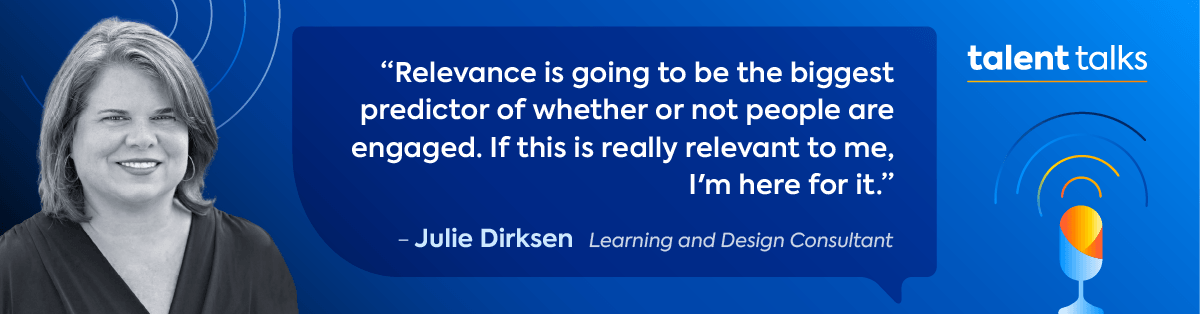
As Julie Dirksen discusses in “Why we don’t learn at work: The psychology behind great training”, from TalentLMS’s podcast series, Talent Talks, real-world relevance is the biggest predictor of learning success. If learners can’t see immediate application or value, engagement and retention will suffer.
Simply put, it’s impossible to build new skills on top of broken mental models. If the foundation is outdated, adding more training won’t fix it. Unlearning is the essential first step because it clears away the cognitive clutter of the way we’ve always done it. Intentionally dismantling these habits creates the mental space necessary for new, behavior-driven skills to actually take root.
The unlearn–relearn cycle: How modern learning actually works
David Kelly discusses in “L&D in 2026: Learning debt, AI, and transformation” that the legacy models we use in L&D no longer match how work actually happens.
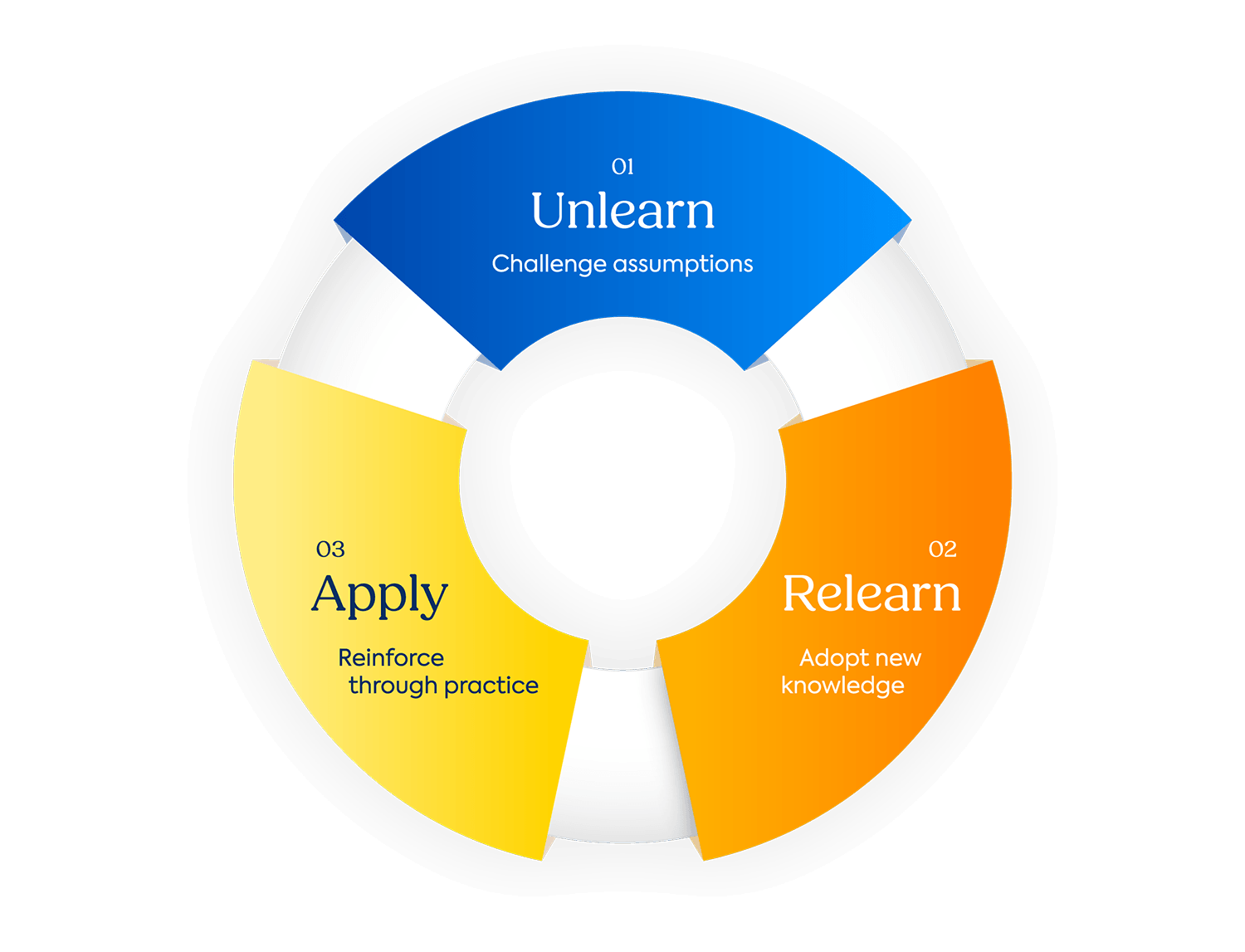
Modern learning isn’t linear. Think of it as a cycle that reflects how skills actually develop today, not in isolated training sessions, but through ongoing adaptation. It’s continuous and works as a loop:
- Unlearn: Challenge assumptions and question existing habits
- Relearn: Adopt updated knowledge and better approaches
- Apply: Reinforce through real-world practice
Then repeat.
Signs your employees need to unlearn
Unlearning needs aren’t always obvious, but the symptoms are. Watch for:
- The legacy shield: “We’ve always done it this way” becomes the standard response to any proposed change.
- The completion paradox: You see 100% course completion rates, yet daily performance remains completely stagnant.
- Active resistance: New tools or processes are met with workarounds or a return to manual, outdated methods.
- Expert inertia: High-performers hit a ceiling because they are over-reliant on skills that were relevant three years ago but are obsolete today.
- The training loop: Employees repeat the same mistakes despite multiple training sessions, suggesting the old habit is stronger than the new instruction.
How to build unlearning into your L&D strategy
Unlearning needs structure, support, and a clear link to how people actually work. To successfully embed unlearning into your L&D strategy, it’s essential to clearly explain the reasons behind unlearning initiatives so teams understand the why and can relate to the changes being introduced.
Overcoming common obstacles and past biases is a crucial part of the unlearning process and should be prioritized to foster self-awareness and personal growth. Setbacks in unlearning should be treated as data points rather than failures, providing valuable insights for continuous improvement.
Here’s what that looks like in practice.
1. Identify outdated skills and habits
Before you can replace anything, you need to see what’s no longer working.
Outdated habits often hide in plain sight, especially when they’ve been repeated for years. They show up as the way things are done, even when results suggest otherwise.
Start by combining:
- Skills mapping to understand what capabilities are needed vs. what exists
- Performance data to spot gaps between expectations and outcomes
- Employee feedback to uncover friction in day-to-day work
You can also:
- Ask new hires what feels inefficient or unclear
- Review past decisions and recurring issues
- Talk to managers and long-term employees about existing workflows
This is how you surface hidden or outdated skills and move toward real skills visibility instead of guesswork.
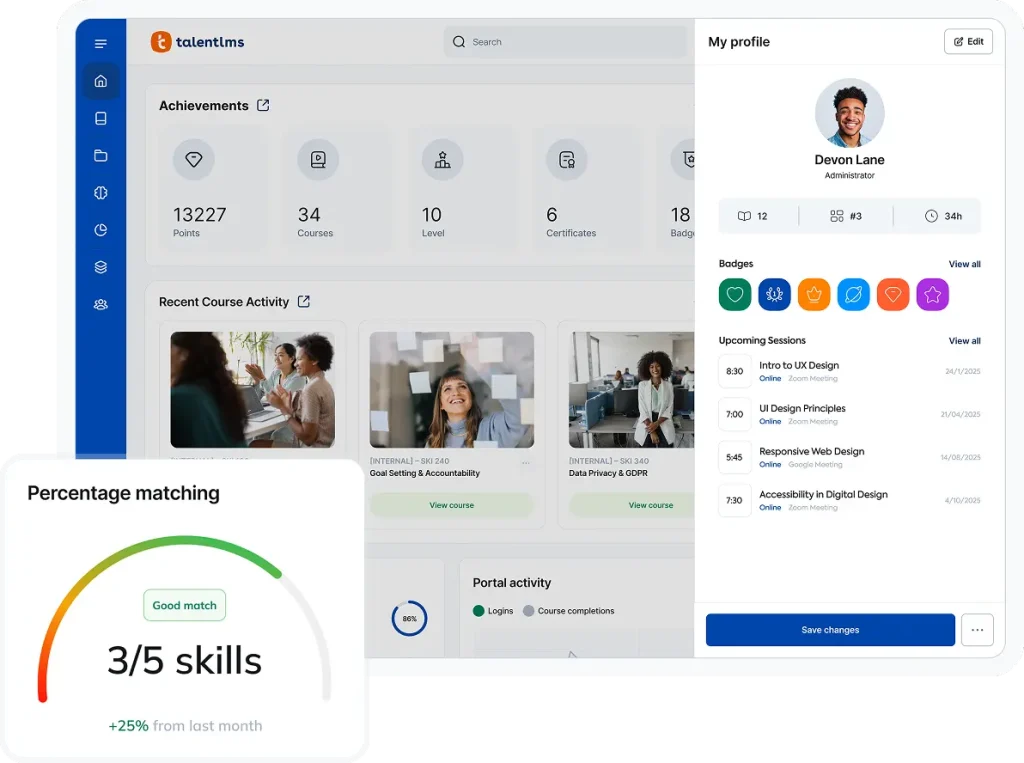
With TalentLMS’s Skills, skills mapping makes this process easier. You can connect training to specific skills and identify where outdated capabilities are holding teams back, so you’re not relying on instinct but real data.
2. Challenge assumptions and mental models
When teams rely on familiar approaches, they stop questioning whether those approaches still work.
To shift this:
- Encourage people to challenge existing processes
- Bring in outside perspectives or industry benchmarks
- Open up discussions on what’s not working and why
One practical way to do this is through scenario-based learning. Instead of presenting information, give employees real situations to solve:
- What would you do differently here?
- Which approach delivers better results today?
This helps people rethink their assumptions and replace outdated mental models with more relevant ones.
TalentLMS supports this with flexible course creation through TalentCraft so you can design training that reflects real challenges, not generic examples. That makes it easier for employees to rethink assumptions and apply new thinking in context.
3. Design for behavior change
More content doesn’t lead to better performance. What matters is whether people can apply what they learn. And if learning doesn’t connect to real work, it won’t replace old habits.
Focus on:
- Practice: Let employees try new approaches in realistic contexts
- Feedback: Show what works and what doesn’t
- Real-world application: Tie learning directly to daily tasks
Learning paths help guide this process. Instead of scattered courses, you can build role-based journeys that focus on skill progression. Learning leads to measurable capability, not just completion.
4. Create a safe environment for unlearning
Unlearning can feel uncomfortable, especially for experienced employees. Letting go of something they’ve relied on for years isn’t easy. It can feel like losing expertise. Plus, mistakes are signals of change in progress. When employees see that failure is part of learning, they’re more willing to let go of old habits and try new ones.
That’s why a safe environment matters. Support people by:
- Encouraging experimentation without judgment
- Providing coaching and guidance along the way
- Listening to concerns instead of dismissing them
- Normalizing failure
Features like AI Coach in TalentLMS support this by offering real-time guidance, explanations, and practice opportunities. Then, learners can explore new ways of working without pressure.
5. Encourage curiosity and continuous relearning
Unlearning only works when people are open to new ways of thinking. Curiosity is what drives that shift. You can build it by:
- Creating space for knowledge sharing across teams
- Encouraging employees to learn from each other’s experiences
- Using discussion boards, peer learning, or mentoring
At the same time, bring learning closer to work. When learning is continuous, unlearning becomes a natural part of the process. Support learning in the flow of work by:
- Offering quick, accessible resources
- Embedding learning into daily tools and tasks
- Making it easy to explore and test new ideas
6. Reinforce relearning over time
Unlearning doesn’t happen in one session. And similarly, old habits can’t disappear like magic. They need to be replaced and reinforced.
That’s where consistency comes in. Use:
- Microlearning to deliver focused, easy-to-digest content
- Nudges to remind and guide employees at the right moment
- Repetition to strengthen new behaviors over time
The goal is to introduce new ideas and make them stick. Because real change happens when new ways of working become the default.
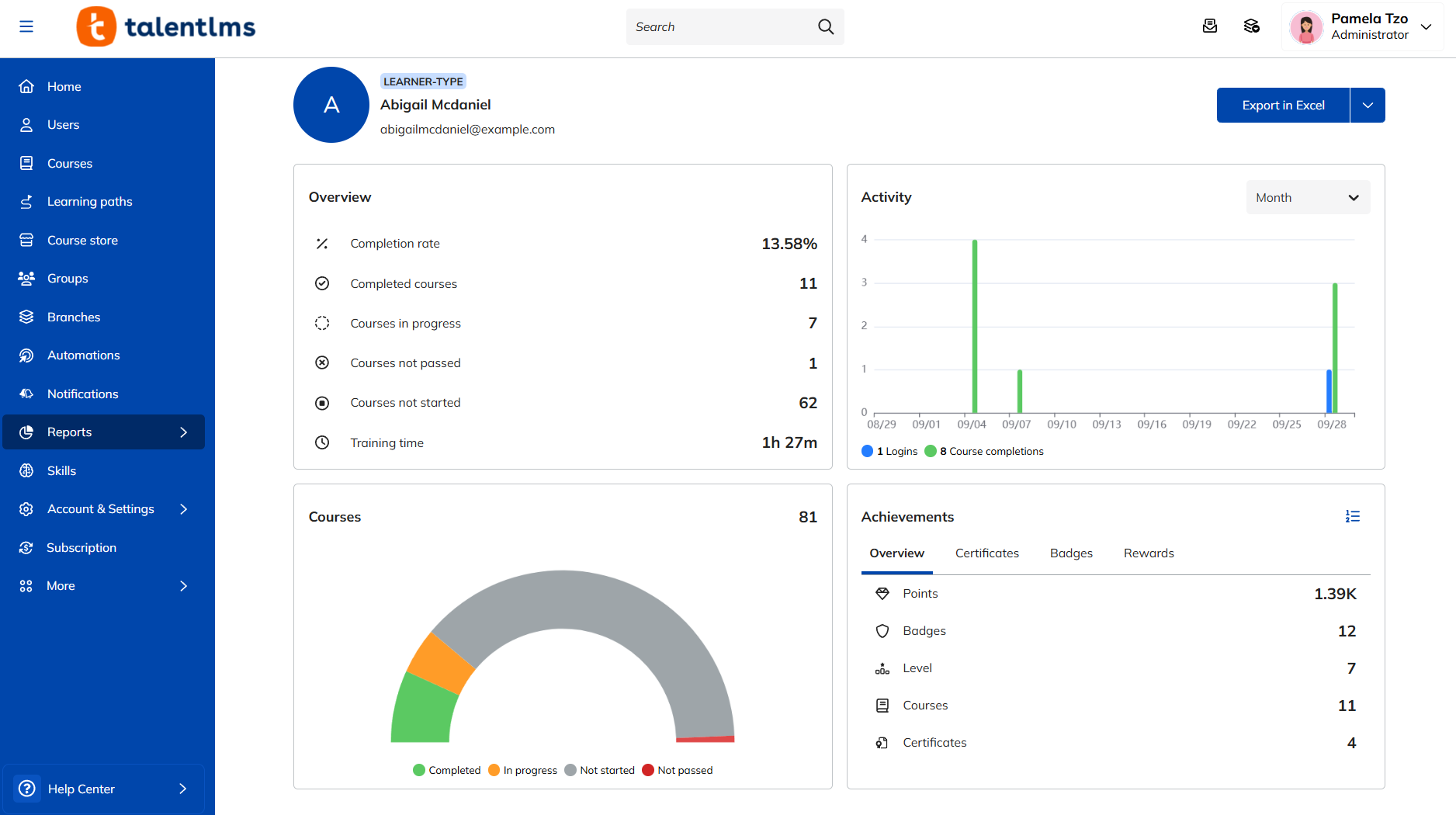
Progress tracking and reporting help reinforce learning over time so you can see not just who completed training but who actually built the skill.
The role of leadership in unlearning
Leadership is at the heart of a successful unlearning process. Leaders set the tone for how teams approach change and their willingness to challenge old ideas. This can create a powerful ripple effect throughout the organization. When leaders model unlearning, they signal that it’s safe and encouraged for others to do the same. For example, by reflecting on the past year, questioning their assumptions, and openly embracing new perspectives.
Effective leaders create the right conditions for change. This means providing support and resources, such as training on cognitive biases. Or setting up workshops to develop emotional intelligence. By helping team members identify outdated habits and encouraging them to reflect on their processes, leaders foster a culture where continuous learning and unlearning are part of daily work.
For example, a leader might ask their team to review recent projects and pinpoint areas where old habits held them back. By facilitating these conversations and supporting employees as they challenge their thinking, leaders help teams build the confidence and skills needed to adapt and thrive. When leaders prioritize unlearning, they empower their organizations to stay agile and competitive.
Measuring the impact of unlearning
Understanding the benefits of unlearning requires clear, measurable outcomes. Measuring the impact of unlearning can be challenging, but it’s essential for organizations that want to support real change and adapt effectively.
One way is to track changes in behavior or performance over time. For example, if a company introduces an unlearning program to help employees adapt to new technology, they can monitor metrics like productivity, customer satisfaction, or employee engagement before and after the initiative. These data points provide concrete evidence of how unlearning supports adaptation and growth.
Another method is to gather feedback directly from employees. Surveys, interviews, or feedback sessions reveal how individuals experience the unlearning process, what challenges they face, and what benefits they notice. By combining quantitative metrics with qualitative insights, organizations can build a comprehensive picture of how unlearning drives positive change.
Measuring the impact of unlearning helps organizations make informed, data-driven decisions about their learning and development strategies. And ensure that support for unlearning leads to real, lasting benefits.
Unlearning in the workplace: Letting go builds real skills
Unlearning is what makes learning work.
Because in today’s workplace, skills must continuously evolve, and training needs to matter. The first step in achieving this is to encourage people to let go of what no longer works.
Organizations that win in this focus on building skills that are visible, relevant, and measurable. And skills chaos then becomes real business clarity.
FAQs
What is unlearning in the workplace?
Unlearning in the workplace is the process of letting go of outdated knowledge, habits, and assumptions that no longer support performance. It helps employees replace ineffective ways of working with more relevant skills and approaches, making learning and development more impactful.
Why is unlearning important for employee performance?
Unlearning is critical because outdated skills and habits can limit performance, even when employees complete training. By removing ineffective behaviors first, employees can adopt new skills more effectively and apply them in real-world situations.
What is the difference between learning, unlearning, and relearning?
Learning is gaining new knowledge or skills, unlearning is letting go of what no longer works, and relearning is adopting updated and more effective ways of working. Together, they form a continuous cycle that supports modern workplace performance.
How can organizations encourage unlearning in the workplace?
Organizations can support unlearning by identifying outdated skills, challenging existing assumptions, designing training for behavior change, and creating a safe environment for experimentation. Continuous learning opportunities and real-world application also help reinforce new behaviors.
What are the signs that employees need to unlearn outdated skills?
Common signs include resistance to new tools or processes, reliance on “we’ve always done it this way,” stagnant performance despite training, and repeated mistakes. These show that old habits are still in place and need to be replaced before new learning can stick.