

Workplace skills have changed a lot over the last few years. While the demand for skills has kept rising, the lack of visibility around what workplace skills are needed has created quite a big roadblock for anyone working towards upskilling and reskilling their employees.
According to the TalentLMS 2026 L&D report, 65% of employees say performance expectations have gone up recently. At the same time, over half of these workers feel their current workloads leave absolutely no time for learning new things.
On top of that, companies do not know what their teams can actually do. And the employees do not know what gaps they need to fill to meet new demands.
A skills inventory steps in to fix that disconnect.
What is a skills inventory?
A skills inventory helps leaders have a real-time view of what a workforce can actually do. It goes far beyond a basic resume or a simple list of employee skills. Instead, it acts as a dynamic skills inventory database detailing specific employee skills across the entire company.
Good skills management relies on knowing exactly where a team excels and where they fall short. A proper inventory of skills captures the exact proficiency levels of each person. Managers can see if someone is a beginner or a seasoned expert. Tracking these details makes it easy to spot knowledge skills gaps early, which helps with strategic workforce planning.
You might find out that your team lacks the leadership skills set needed for a big upcoming project. Knowing these gaps helps you train the right people before problems happen. Having all the data in one place also takes the guesswork out of assigning tasks. Leaders can match the exact right person to the right job every single time.

What is the purpose of a skills inventory?
Skills visibility is the foundation that makes return on investment actually measurable for HR professionals.
Without it, you are just guessing. When you can see all the skills clearly, you stop wasting resources on things that do not work. Every bit of human potential becomes a trackable business asset.
Make better workforce decisions
Hiring the right person or picking someone for a promotion is a lot easier when you have the proper data in front of you.
Instead of looking outside the company first, you can scan your team to find a perfect match for a new role. Internal mobility turns into a natural part of how the business runs.
Managers can place people in spots where they will actually thrive because their talents align with the work. Employees then also feel recognized for their specific strengths and the chance to try new roles.
Identify potential skill gaps early
An effective skills inventory highlights the missing skills your team needs.
You can then look at your future goals and see exactly where your team might stumble and what you need to start building.
Align training with actual needs
Once you know exactly what your team lacks, you can fix those specific problems. You stop forcing people into boring seminars they do not need. Instead, you give them the precise tools required to do their daily work better.
Your training budget goes toward closing actual gaps instead of paying for random guesswork.
Prove L&D impact
Connecting targeted learning to real business results proves the worth of your employee training programs. Right now, 75% of HR managers say their learning programs align perfectly with business key performance indicators. Better yet, only about 20% struggle to measure their return on investment.
You join those top ranks when you track abilities accurately.
Why most companies struggle without a skills inventory
The biggest problem teams face today is not a lack of training. The real issue is a complete lack of skills clarity.
We already know workers feel squeezed by rising expectations and heavy daily workloads.
When leaders demand more but give people zero direction on how to grow, the hidden costs start piling up fast:
- Without a clear map of what people can do, training becomes pure guesswork.
- Meanwhile, a massive skills gap blind spot forms right under your nose. Crucial weaknesses go completely unnoticed until a big project fails or a tight deadline passes.
- People get incredibly frustrated because their learning never translates into better performance on the job.
- The confusion eventually spills over into how you reward your team.
- You might easily pass over a quiet expert simply because you never tracked their true abilities.
- Because educational programs do not match reality, the learning simply does not translate into better performance.

Leo brings over 15 years of experience across software engineering, product leadership, and business execution to his role as COO.
Expert Quote: Build a centralized view of your skills
Most organizations already have signals (in performance reviews, training records, and manager observations), but they’re scattered across systems and teams. Without a single, shared view, skills remain difficult to see, compare, or act on.
Bringing that information together in a skills inventory creates a more accurate and usable picture of workforce capability.
Source: Training Journal, “From Completion to Capability: Making Skills Visible Where It Matters”
How to create a skills inventory in 6 steps
Building a skills database does not have to be a massive undertaking that takes weeks to complete. With this simple step-by-step approach, you can map out your team’s abilities from scratch.
1. Define key skills
First, you need to decide what you are actually measuring. Look at the specific in-demand skills of every position in your company. Figure out the exact role-based workforce capabilities people need to do their everyday jobs well.
Next, zoom out and look at the big picture. Identify the desired employee skills your company must have to stay competitive now and in the future.
2. Run a skills inventory assessment
Now it is time to gather the actual skills data.
For starters, ask your employees to rate their own skills first using a self-assessment. People usually know their own strengths better than anyone else.
After they complete a self-assessment, bring in their direct supervisors. Managers can review those answers and add their own honest input.
You should also pull in real performance data to back up these opinions with hard facts.
3. Centralize your data
All that valuable employee skills information needs a permanent home. A basic spreadsheet works perfectly fine for smaller teams just starting out.
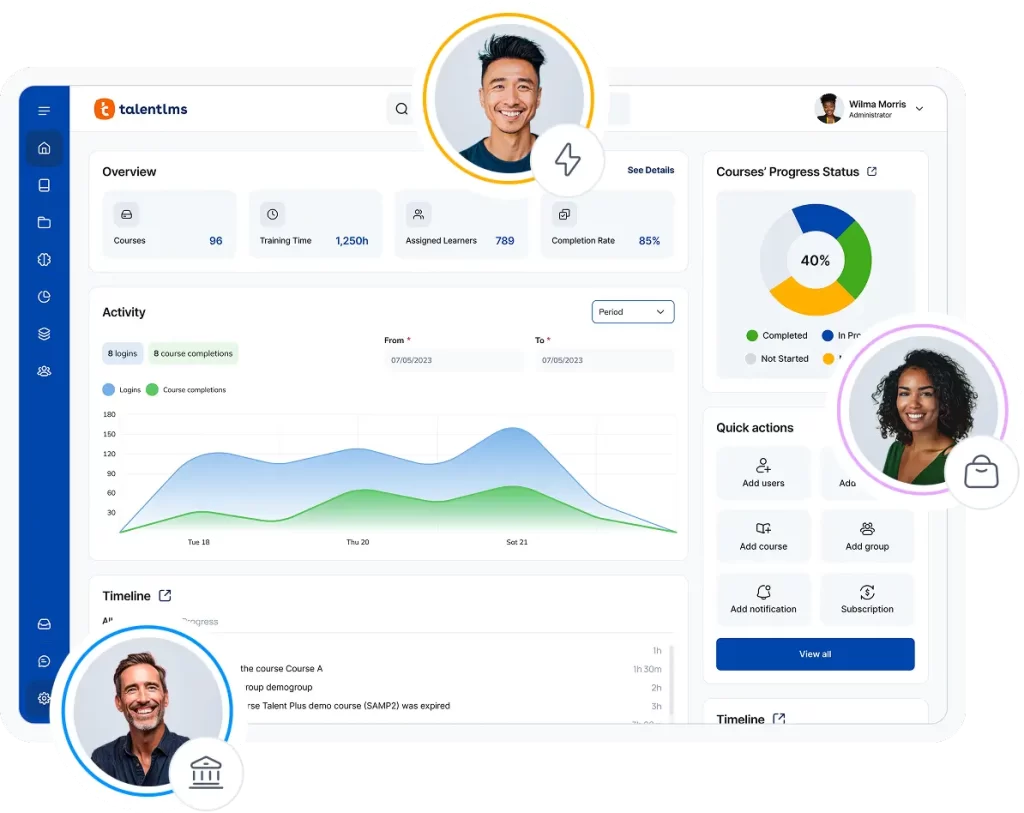
Larger companies will want to use a dedicated skills inventory tool like an LMS, as it makes it a lot easier to track and manage.
4. Identify skill gaps
Now you must look at the current abilities of your team and measure them against the required traits you defined earlier. The missing pieces will stand out immediately.
Finding these skills gaps gives you a massive goal to work towards. You can finally see the exact roadblocks you want to fix using skills-based learning.
5. Connect skills to training
Use your gap list to build custom learning paths for your team. Every training session should solve a specific problem you found during the assessment. Targeted upskilling plans make sure people learn the critical skills they actually need for their jobs.
For example, if your marketing team lacks SEO knowledge, do not send them to a general marketing bootcamp. Pay for a targeted SEO certification just for them. You can also pair junior employees with internal experts for direct mentorship.
6. Keep it updated
Treat tracking abilities as an ongoing process rather than a one-time project. Update the system immediately whenever someone finishes a course or conquers a new project.
Keeping the information fresh guarantees your workforce map stays accurate and useful.
Tools to manage a skills inventory
The right tools can help you use your skills inventory more efficiently:
- Spreadsheets are the easiest way to start if you have a small team. They are free and flexible. You can use a skills gap analysis template from TalentLMS to skip the setup phase. Just keep in mind that manual entry takes a lot of effort as your company grows.
- LMSs often include reporting and tracking features for employee records. Using software you already own keeps everything in one place. These systems work well for tracking simple certifications or general job requirements without needing extra software.
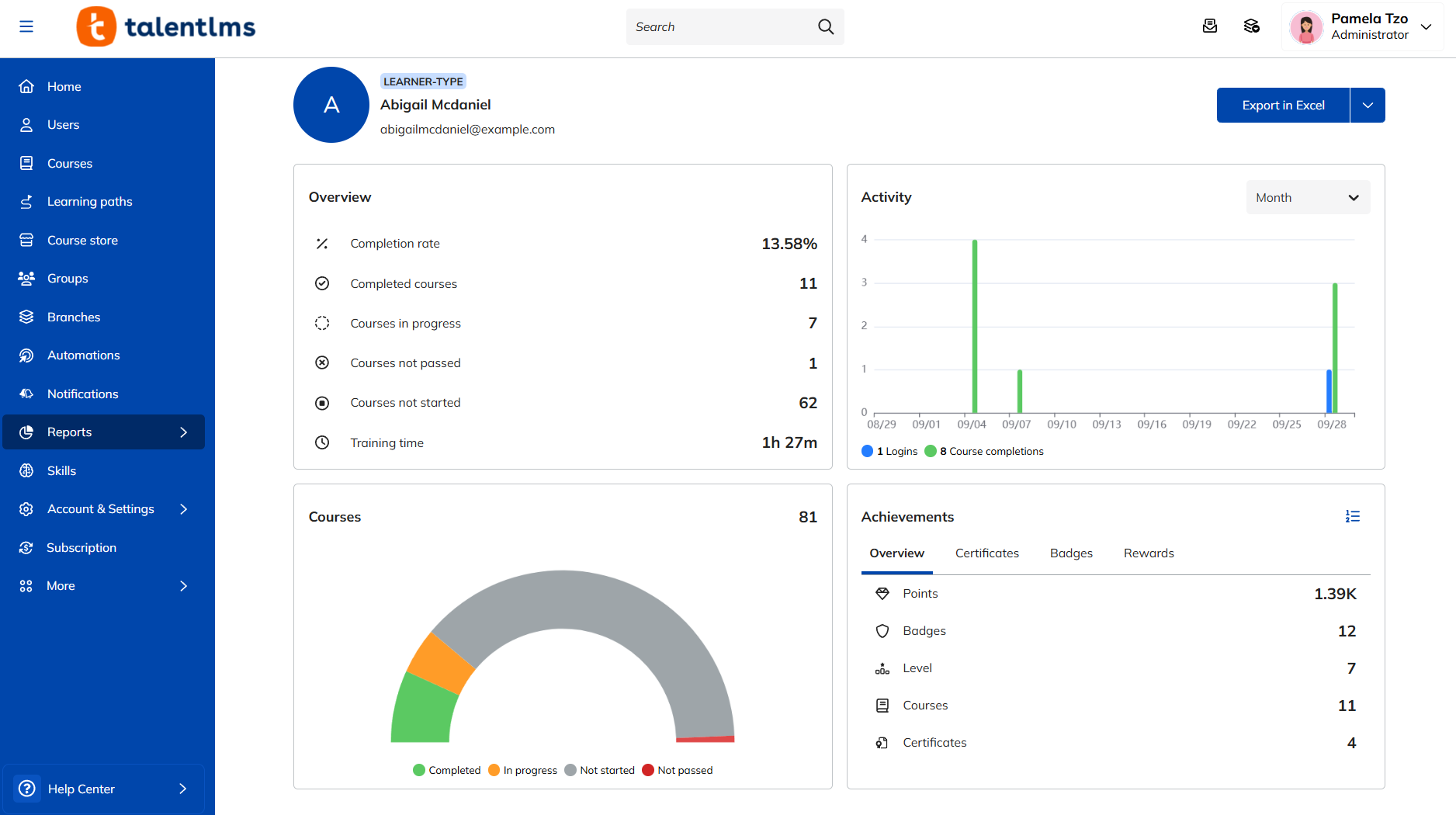
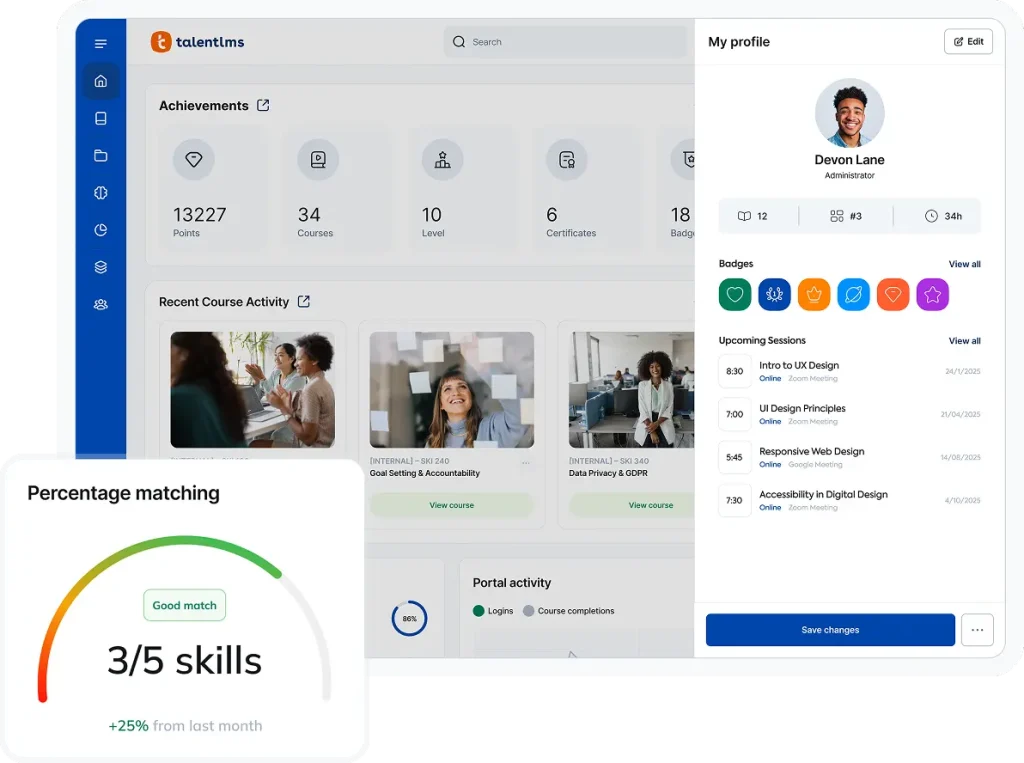
- A dedicated employee training tool like TalentLMS is the best choice for automation. The Skills feature within the platform helps you handle inventory management skills by linking talent data directly to training. It keeps your records updated automatically so you always have an accurate view of your workforce. It can also recommend highly personalized courses based on real learner progression and current skill level. That way, they get exactly what they need when they need it, which is one way to effectively overcome the problem many employees have with balancing work tasks and learning.
Example of a skills inventory in practice
Let’s say you want to train a busy customer support team. You map out the exact capabilities they need, as we spoke about in step 1. Two major ones are soft skills like active listening and technical skills like product knowledge. You set the required baseline for product knowledge at an advanced level.
When you review the data, a clear gap appears. Most of your reps only rank at an intermediate level. You do not have to guess how to fix the problem. You simply schedule targeted product training for the group.
Because teams build hidden skills every day, you might also find a great surprise. A junior rep might rank as an expert in conflict resolution. You can immediately ask them to mentor new hires.
Best practices of skills inventory
Building a well-maintained skills inventory is easier when you follow these core rules:
- Keep it simple: Do not overbuild complex frameworks right out of the gate. Launching a massive skills assessment covering hundreds of traits will only overwhelm your team.
- Prioritize role-specific abilities: Focus strictly on the core talents people need to do their exact jobs today.
- Avoid overbuilding frameworks: Complicated systems become impossible to manage. Gather just enough data to build a practical skills training guide.
- Update the data regularly: Treat your map like a living document. Stale information ruins your long-term planning.
- Tie everything to real outcomes: Use your data as a true skills training guide. Focus on improving daily workplace performance rather than just celebrating course completion rates.
Map the future of your workforce
A skills inventory is more than just a simple spreadsheet. It builds a bridge between the talent you have and the goals you want to reach. Julia Phelan shares great insights on this in a knowledge mapping Talent Talks podcast episode.
She reminds us that the best time to start was years ago, but the second-best time is right now. You should not wait until your experts retire to ask what they know. Starting today helps you catch that hidden wisdom before it leaves the building.
A good list of skills builds real trust. It shows your team that you value their unique talents. You are moving past simple job titles to see the human potential that keeps the business moving forward.
FAQs
What is a skills inventory?
A skills inventory is a real-time record of the specific talents and knowledge your team members possess. It tracks what people can do and how well they do it, so you can see your current capabilities clearly.
What is the purpose of a skills inventory?
The purpose of a skills inventory is to give leaders visibility into the strengths and weaknesses of their workforce. Having this data helps you make smart choices about hiring and training while making sure every dollar spent gets results.
How do you create a skills inventory
You create a skills inventory by first deciding which abilities matter most to your business goals. Then you gather data from your employees through surveys or reviews and organize that information into a searchable map or database.
What tools can you use to manage a skills inventory?
You can manage a skills inventory using simple tools like spreadsheets or whiteboards for smaller teams. Larger organizations often use specialized talent management software or learning platforms that update automatically and use data to find people with specific expertise.
How often should a skills inventory be updated?
You should update your skills inventory constantly because people learn new things every day. Checking the data during quarterly reviews or whenever someone completes a training course keeps the information accurate and useful for making big decisions.