
Let’s start with the uncomfortable truth.
Employees are actively watching what organizations do when it comes to learning and development. The very first sign of that commitment is the quality of the onboarding experience.
Based on data from “Next-gen Onboarding: Redefining the New Hire Journey”, TalentLMS and Bamboo HR’s research report, and TalentLMS’s “The TalentLMS 2026 Annual L&D Benchmark Report,” in 2023, 41% of employees said they’d look for another job if their company didn’t offer training opportunities. This number dropped to 24% in 2024. It looks like progress, but in 2025, it climbed back up to 36%.
Parallel to that, HR and L&D teams are trying to do more with less. Budgets are shifting, high-end spending is shrinking, low-end underinvestment is dropping, and most companies now cluster in the middle. This is about managing money wisely, not just trying to spend as little as possible.
But when we ask HR managers what gets in the way of training, one answer keeps coming on top:
Lack of time.
Lack of time is the number one barrier to effective L&D. And employees say the same, as high workloads and higher expectations leave little room for learning. Even when it’s necessary.
In 2026, the employee onboarding process can’t afford to be an add-on. It must be:
- Easy enough to fit into packed schedules
- Strong enough to support performance
- Meaningful enough to give an additional reason for people to stay
Let’s explore the onboarding trends for 2026 in depth.
1. Microlearning for overloaded workdays
Most team members don’t have a full day to “step away” to dedicate to onboarding. They’re balancing projects, targets, and constant notifications. If the onboarding process feels like a block of time someone has to “escape” to do, it will always come second:
- 35% of HR managers say lack of time is a top obstacle to effective L&D
- 50% of HR managers and 54% of employees say high workloads leave little room for training
- Nearly half of employees (46%) and HR managers (49%) say their company views training as time away from “real work.”
Pro tip
Don’t opt for one, long onboarding training program. Think about it in slices, instead.
Break the onboarding process into 5-10 minute sessions. Each module can cover one clear topic, such as using a particular tool, following a specific procedure, or getting familiar with a certain policy.
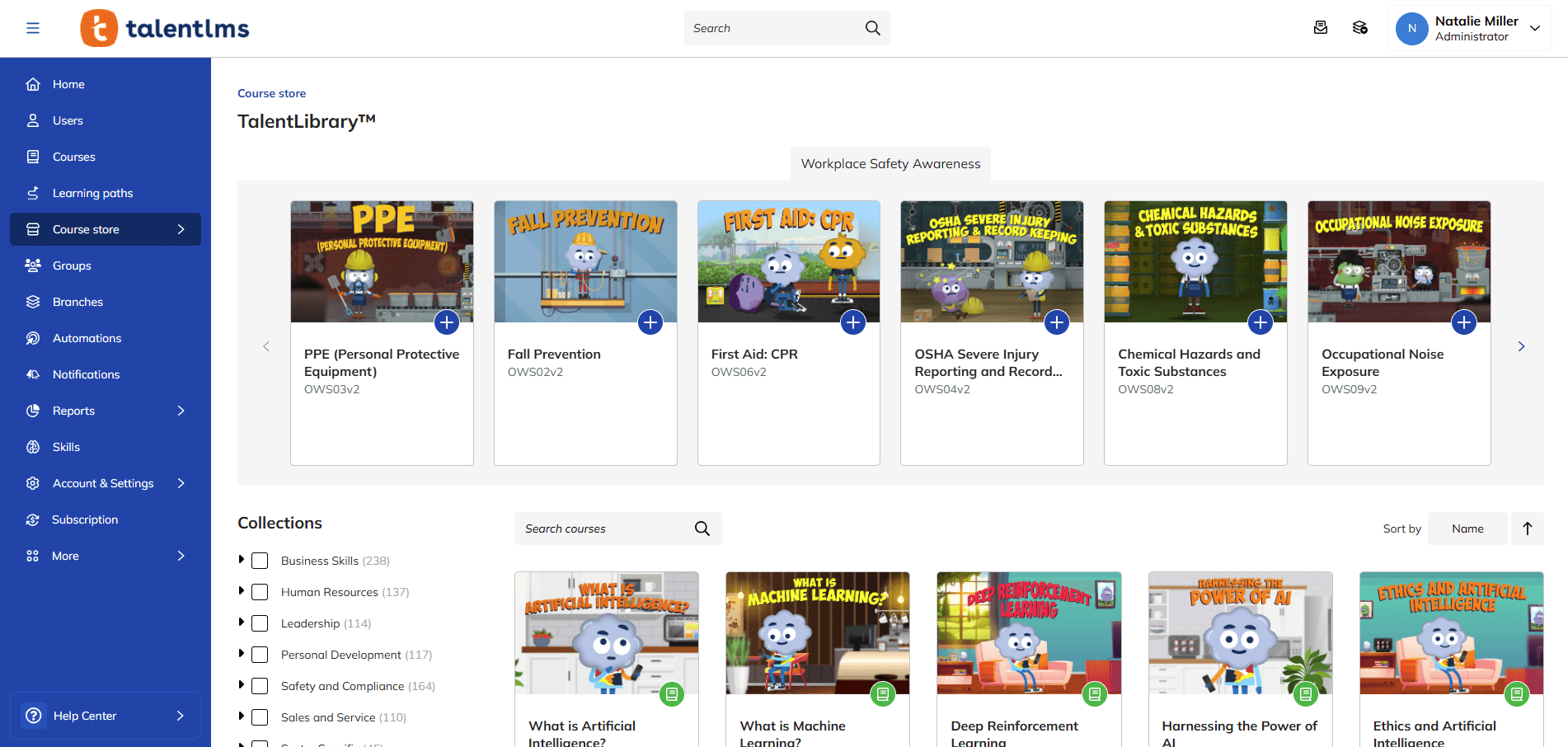
To communicate big ideas quickly, turn to visual content. For instance, short videos or animations that explain key concepts and infographics that illustrate processes clearly. Such brief, focused training modules are key features of microlearning. With TalentLibrary you can offer learners a range of ready-made, bite-sized courses to save time and effort.
2. Advanced onboarding
In 2026, organizations are moving away from the “sink or swim” approach that often followed the first week of onboarding training.
That’s simply because the “old way” isn’t working anymore:
- 69% of employees say onboarding training accelerated their ability to contribute and perform.
However,
- 42% say onboarding overwhelmed them with too much information.
So employee onboarding is doing its job for many people, but it’s still heavy and front-loaded. New hires need clear, defined pathways, not excessive information load.
Pro tip
Advanced employee onboarding isn’t about adding more content. It’s about prioritizing and putting into order what matters most so that people can actually use what they learn.
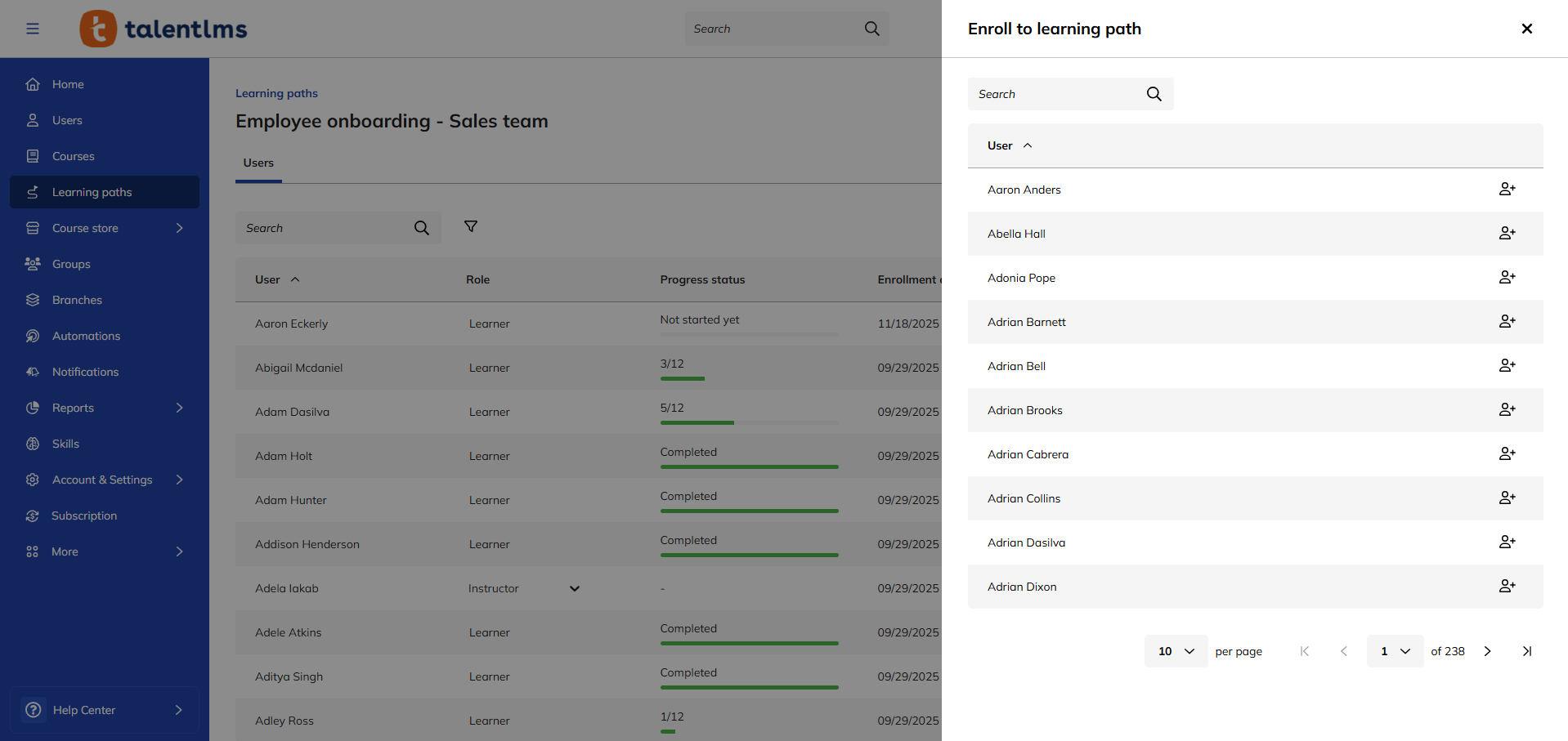
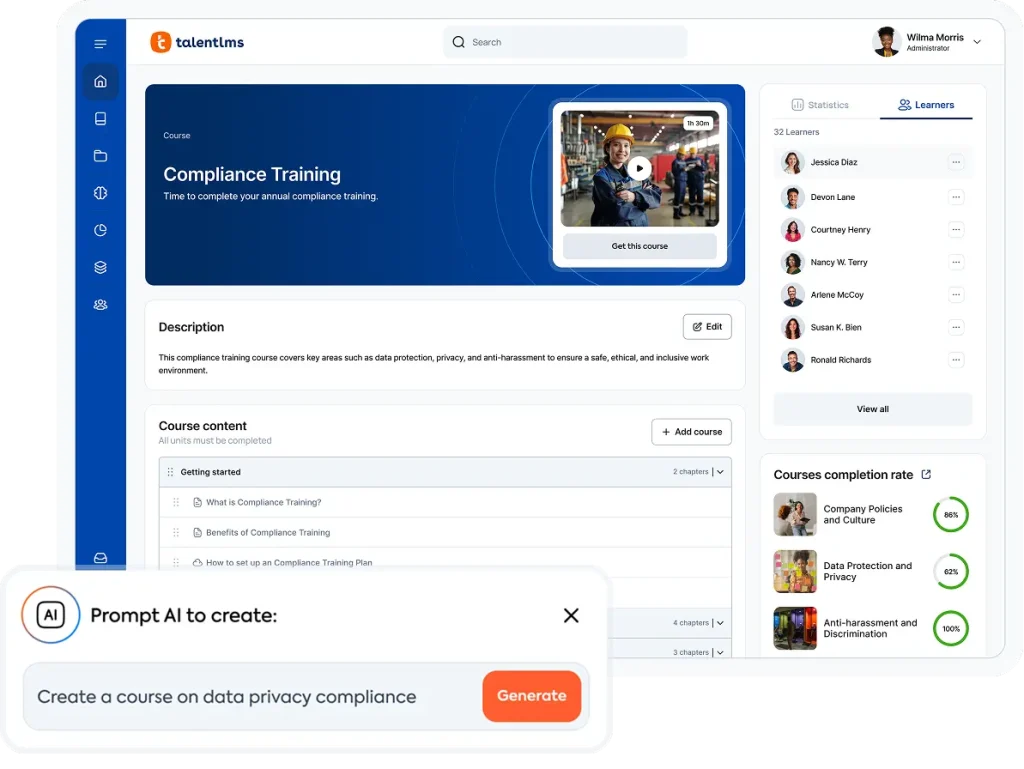
To achieve this, create structured 30/60/90-day learning paths. Start with the basics on week one. Then, introduce more complex skills and tools over the next few months. Also, focus on offering role-specific training content. Give your sales, customer support, or marketing teams, different learning paths on your employee onboarding software to follow. Everyone should have access to training content that clearly connects to their job. Learning paths let you offer personalized onboarding that’s manageable and offers clear next steps. Which keeps new hires confident and reduces the “first-week burnout” effect.
3. Gamification
Most employees in the modern workplace don’t always have the opportunity to sit in a quiet room, fully focused on training. Instead, they’re constantly juggling messages, tasks, and other high-pressure demands. This only means one thing. This environment is too distracting to allow for effective learning.
The struggle for focus is obvious:
- 37% of employees say they don’t have enough time to complete the mandatory training
- 70% of employees admit to multitasking during training
And when people do find time to complete their training, the material often falls short of their needs:
- 32% say the training didn’t include enough hands-on practice
- 29% struggling to stay motivated throughout the process
Pro tip
Gamification is a great way to alleviate pressure by turning employee onboarding into a game-like activity. It boosts motivation and makes progress more visible. Add points, badges, and leaderboards so new hires can see clear goals and small wins.
4. Automation and AI-streamlined onboarding
AI is no longer just a theoretical topic. Organizations are now actively moving from discussing its potential to implementing practical, working applications. It significantly affects roles, necessary skills, and operational workflows:
- 62% of HR managers are automating tasks with AI to close skills gaps
- 70% plan to open new AI-related roles next year
- 24% say integrating AI into training is a challenge
- 22% worry about unreliable AI-generated training content
Pro tip
AI should support the onboarding process, not replace it. And the goal is simple: let AI and automation handle the repetitive parts, so that employees can focus on the “human” aspects of onboarding.
For example, automate admin tasks, like course enrollment, deadline reminders, and feedback sessions, to better allocate their time on building relationships with employees.
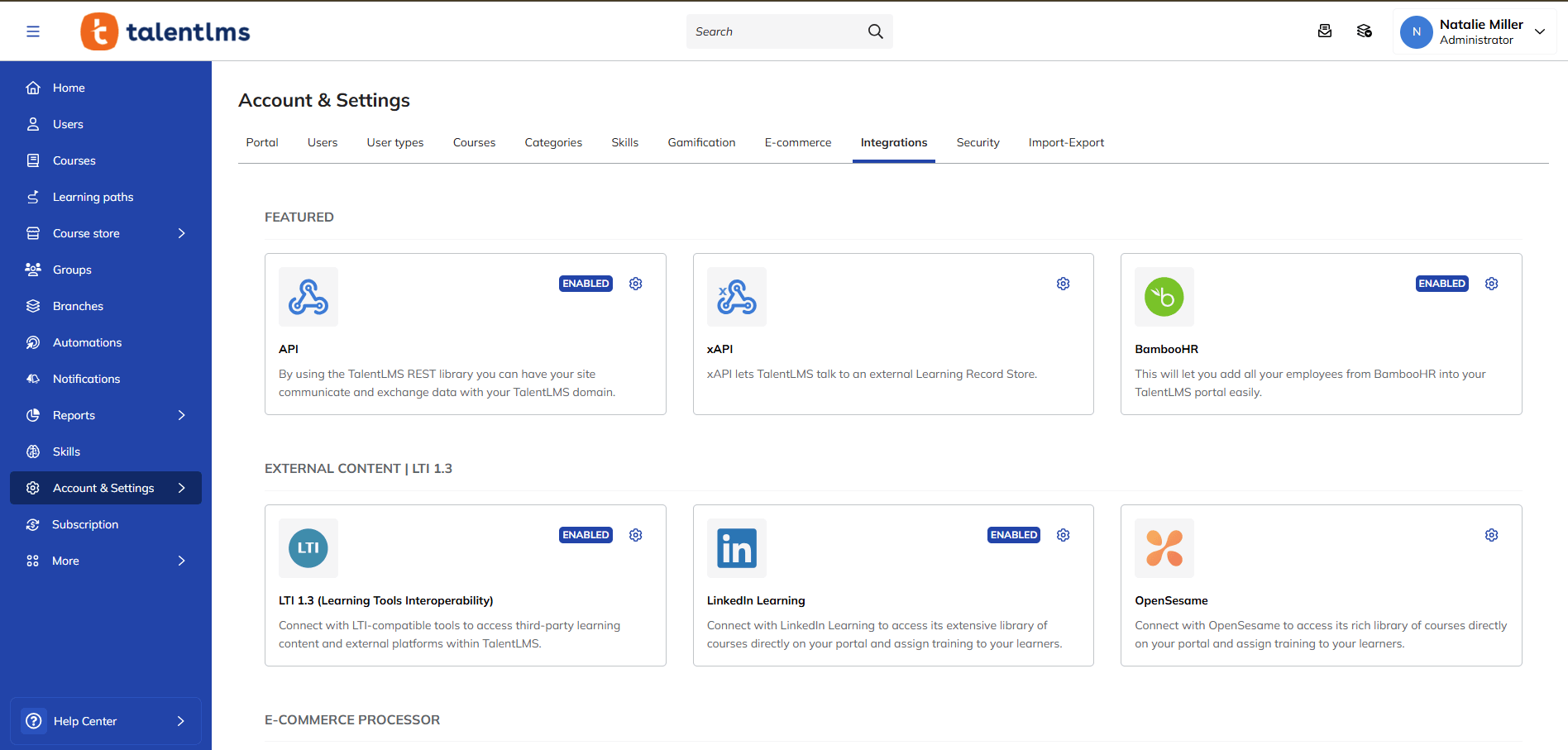
To fully reap the benefits of automation and AI, seamless data flow is key. Integrations are a great way to further streamline workflows by centralizing actions into one tool. So, opt for an LMS that supports some must-have integrations, such as video conferencing, connecting to HRIS, and more.
5. Continuous onboarding that extends beyond week one
Successful onboarding shouldn’t be limited to a quick training week and a welcome meal. It’s the starting point that defines the company’s long-term commitment to employee development. HR professionals already see the connection:
- 84% say L&D is tied to career progression
- 83% say employees have clear paths for advancement
If onboarding stops after the first month, that goal breaks.
Pro tip
Instead of treating employee onboarding and development as two separate programs, connect them. Continuous onboarding means offering clear, visible steps that build an onboarding journey from “new here” to “growing here”. After “new hire” courses, keep new team members moving into role-specific, cross-functional, or leadership training programs. Map out what someone needs to complete to prepare them for their role, as well as the next steps in their career.
Think about creating learning paths tailored to specific roles. Take a junior developer, for example. They start by focusing on basic coding. From there, the path naturally moves into advanced technical skills. The last step is introducing leadership and management training, which prepares them to step up as a team lead.
6. Remote, hybrid, and flexible onboarding
Work isn’t locked to one place anymore, and employee onboarding isn’t either. Remote onboarding can still work well, but remote employees are more likely to feel a gap in ongoing support. The good news is that based on TalentLMS research, hybrid onboarding seems to hit the sweet spot:
- Onboarding satisfaction: hybrid 75%, in-person 73%, remote 71%
- Access to ongoing training: hybrid 73%, in-person 69%, remote 64%
- Feeling set up for success: hybrid 72%, in-person 67%, remote 64%
Pro tip
Regardless of how people work, they should get a consistent onboarding experience.
Offer new employees a centralized training platform so that all new hires, no matter where they are located, get the same onboarding process in one place. Combine webinars, ILT and video sessions with self-paced training courses with live check-ins, Q&A sessions, and team member introductions. Plus, when possible, you can invite new hires to join in-person activities. Make sure, however, not to make these instances the only way to feel included.
7. Train managers on onboarding
HR teams are usually responsible for designing the structure and content of a successful onboarding program. But managers are the ones who determine the new hires’ daily experience and overall feeling. Here’s what the data shows:
The top drivers to ensure employees feel a sense of belonging during the onboarding process are:
- Feeling welcomed by the team (53%)
- Support from managers (48%)
- Clarity about role and expectations (47%)
Pro tip
So when managers are ready, employee onboarding works better. But managers need simple tools, not another heavy manual to add to their workload.
Prepare your managers for onboarding by offering them short training courses. For instance, create a training program on “How to onboard your new hire” with practical steps and checklists. Also, assign clear manager tasks. For example, set expectations in week one, schedule introductions, and review the onboarding experience with the new hire.

8. Onboarding analytics
New hires are usually reluctant to share negative feedback in the initial month. The data, however, reveals a challenge; many employees still seek clarity and confidence, even if they don’t openly state their concerns:
- 39% of employees had second thoughts about their job during the onboarding process
- 32% said onboarding left them disappointed in the company
Pro tip
Instead of relying on intuition, use onboarding data as your early-warning system.
Track completion, employee engagement, and assessment on your LMS to spot who’s falling behind or struggling with core content. Check how remote, hybrid, and in-office new employees perform. Also, ask new hires to complete surveys on how clear, useful, and practical onboarding feels at key points. Then adjust based on what they say.
9. AI chatbots
Many new employees already turn to AI tools before they ask a person for help. That can be useful, but only if it happens in a safe and guided way:
- 32% of employees say they used AI tools more often than people to get answers, with usage higher among Gen Z and hybrid workers
- 88% of HR managers expect generative AI to reshape how employees access knowledge
However, only 64% of employees feel their employer helps them learn AI tools, compared to 83% of HR managers who say their organization does.
Pro tip
Don’t just let employees “figure it out.” Bring AI into employee onboarding in a clear, controlled way.
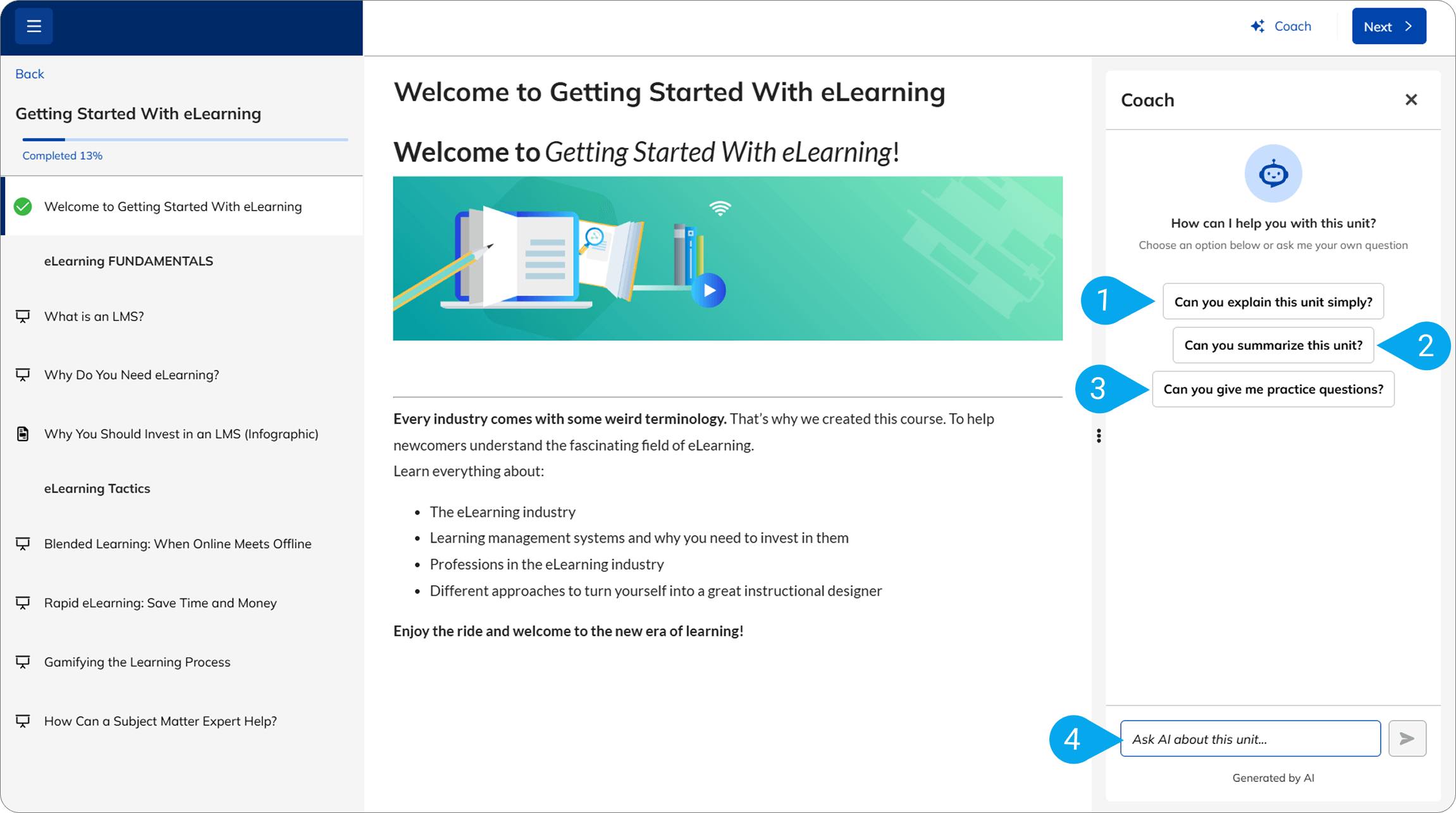
Ensure you offer an AI essentials course during onboarding and explain how your organization expects people to use AI, where it helps, and where it doesn’t belong. Use an AI Coach to guide new employees during training. New hires can ask AI practical questions, get simple explanations on course content without waiting for a meeting with their manager.
10. Immersive onboarding experiences
Employees prefer learning experiences that move beyond passive materials, like slides and PDFs. They value opportunities for hands-on practice, provided they have enough time and the right support. TalentLMS research data reveals that:
- 25% of employees felt pressured to perform before training was complete
- 24% said there was no real follow-up after initial training
- 23% said employee onboarding lacked personalized learning options
Pro tip
Immersive onboarding doesn’t necessarily require high-tech solutions like VR or excessive budgets. Its goal is to deliver hands-on experience that mirrors the look and feel of the day-to-day.
Build scenario-based assessments to allow new hires to experience realistic situations by choosing how to respond (i.e., customer issues, project decisions, safety steps). Use demo videos to show how something is done, and then ask learners to complete relevant assignments.
11. Inclusivity and belonging built into onboarding
Belonging is too vital to be left to chance during onboarding; it must be treated as a planned, measurable priority within the program’s structure.
The good news is:
- Only 8% say onboarding didn’t help them feel a sense of belonging.
But there’s a signal we can’t ignore:
- 31% say onboarding lacked human interaction, with that number highest among Gen Z and Millennials.
Meaning that younger employees, in particular, are looking for real connection, not just information.
Pro tip
Design your onboarding process to show that everyone has a place in your company culture. To achieve that, include DEI, culture, and values content in your employee onboarding process. There, explain how decisions are made, how people are expected to treat one another, and what inclusion looks like in practice.
Create community spaces for new employees by using discussion boards, small groups, or dedicated courses where new hires can share experiences. Most importantly, collect feedback, and act on it. Ask how new hires feel and which parts of onboarding helped them connect (or lose connection). Then, adjust training sessions and resources accordingly.
TalentLibrary — Skills that matter, courses that deliver
With TalentLibrary, you set the foundation for a strong, aligned workforce—soft skills, compliance, and workplace essentials, from day one (and beyond).
12. Personalized onboarding for roles, generations, and work models
Today’s new hire groups can be incredibly diverse. They might include a remote Gen Z developer, an in-office Millennial team leader, and a hybrid Gen X manager. This means that onboarding programs should be customized to meet unique needs, roles, and work styles. So, many companies are on the right track, but there’s still room to grow:
- 68% say onboarding was personalized to their role and needs.
Still,
- 15% disagree, and younger employees are more likely to say personalization and human support were missing.
Pro tip
Personalizing onboarding doesn’t mean building a unique program for every person. It’s all about creating smart variations of training where they matter.
Adapt content for different needs by adding interactive or guided modules for those who struggle with connection, like younger, remote hires. With an AI course creator, it’s also possible to create these variations faster instead of new content being a major overhead. Last, use branches and groups to assign tailored learning paths based on new hires’ role, seniority, location, or work model.
Quick wins for your 2026 onboarding programs
These trends uncover a clear pattern. To keep up with an effective onboarding process in 2026, it’s necessary to focus on an approach that is hybrid, human, and practical.
Hybrid, because work is. Onboarding must deliver for remote, hybrid, and on-site employees. Human, because tools and AI can’t replace managers who support their people, team members that welcome new hires, and a company culture that makes space for questions. Practical, because time and attention are limited, and training that doesn’t fit into real work, simply won’t happen.
An LMS is designed to support the new hires and can make or break the onboarding experience. It’s the tool that will allow to design structured, role-based onboarding, automate repetitive work, support people with AI, and keep learning going continuously, all in one place.
Onboarding isn’t a one-off presentation. It’s the first real promise to new employees that the organization is willing to invest in its people’s skills and their growth. In 2026, this promise is what will make all the difference.
FAQ
How does onboarding influence company culture for new hires?
A strong onboarding process introduces new hires to your company culture in a clear, structured way. By including values, DEI practices, and examples of how teams work together duringonboarding, you help people feel welcomed and connected from day one.
What onboarding strategies improve job satisfaction and employee retention?
Job satisfaction and retention rise when onboarding is continuous, personalized, and practical. Learning paths, hands-on training, AI support, and manager involvement help new hires feel confident and supported. Ineffective onboarding usually leads to having second thoughts about the role. So, investing in clear and engaging training boosts long-term retention.
How can hiring managers better support new hires during the onboarding process?
Hiring managers are key in shaping a new hire’s experience. Short, practical manager training, paired with clear tasks like setting expectations, scheduling introductions, and reviewing progress, helps managers provide the support new hires need. This manager support is one of the top drivers of belonging during onboarding.
Why is personalized onboarding important for the hiring process?
Personalized onboarding shows new employees that the company understands their role, work model, and career goals. Tailored learning paths and optional deep-dive modules help new hires ramp up faster. 23% of new hires cited a lack of personalized learning options during onboarding. So, personalization is particularly crucial for remote employees and younger generations who often feel less supported.
How does onboarding data help improve job performance and overall onboarding success?
Onboarding analytics demonstrate which parts of training help new hires succeed and where they struggle. By tracking completion rates, engagement, and survey responses, companies can identify weak spots and adjust training before issues escalate. Data-driven onboarding improves clarity, confidence, and performance during the first crucial months.