

In Tetris, it’s never one wrong piece that ends the game. It’s the small misalignments you don’t address. The ones that stack quietly until there’s no room left to recover.
Skills gaps work the same way in small and mid-sized businesses.
A salesperson who can’t quite close. A manager promoted on potential, not verified capability. A team scaling faster than its skills visibility. Individually, none of it looks critical. But as your team grows, those gaps start to stack. Progress slows. Mistakes increase. Until there’s no room left to recover.
What once felt manageable turns into a full-screen “game over.”
Most teams don’t struggle because they lack training. They struggle because they lack skills clarity. Without visibility into what your team can actually do and no proof of skills to rely on, it becomes harder to place the right people in the right roles.
A skills gap analysis template helps you spot those gaps early, make skills visible, and take action before they impact performance. In short, it’s one of the most practical tools an SMB can use.
Get your free skills gap analysis template
Map your team’s skills, identify priority gaps, and build your training action plan based on skills clarity. All in one template.
What is a skills gap analysis?
A skills gap analysis makes your workforce’s capabilities visible and measurable. It’s a structured way to assess and identify the difference between current capabilities and future demands.
Conducting a skills gap analysis is the first crucial step towards building business resilience.
In other words, it helps you identify small gaps early, before they stack up and affect performance. Rather than relying on instinct or assumed skills, it gives you a clear, evidence-based picture of where capability exists and where the blind spots are. And provides real proof of skills across your team.
Done well, a skills gap analysis moves you from skills chaos to business clarity. Meaning you can make decisions about upskilling, reskilling, hiring, and L&D investment based on data, not guesswork.
Why conduct a skills gap analysis?
In growing teams, skills gaps rarely appear all at once. They build gradually, one missing capability at a time. As teams scale, this accumulation reaches a climax. Managers are expected to deliver results. But without a clear view of their team’s capabilities, decisions are made based on instinct rather than data.
The result? Without clear visibility into skills, these gaps often go unnoticed until they start affecting performance, productivity, and decision-making. For example, a team that’s strong in tools but weak in communication may still struggle to deliver results.
Performance gaps can happen anytime, anywhere, and at any organizational level or department. They’re usually discovered during a performance gap or training needs analysis. But discovery on its own isn’t enough. Spotting them is one thing; understanding what’s driving them is another. A skills gap analysis helps you do both and act on what you find.
Here’s where it makes the biggest difference for SMBs:
Strategic workforce planning
A skills gap analysis shows you the capabilities your team needs to meet business goals before the absence of those skills slows them down. It helps you grow employee strengths with intention, not in reaction to problems that have already surfaced. Over time, that clarity pays a second dividend: when people can see a structured path for their development, engagement, and retention follow.
Protecting your investment in employee learning and development
When you can see exactly where your skills gaps are, you can invest in measurable skills and capability that drive real business impact and give you a competitive edge. Instead of simply filling a training calendar, a skills gap analysis gives you a roadmap that connects learning directly to business performance. Using this roadmap for employee development and training plans, your L&D budget goes where it will have real impact, not where it’s easiest to spend.
This is where skills shift from activity to impact. From training delivered to capability you can measure.
Preparing for digital transformation
The way we work is changing faster than most teams can track. A skills gap analysis identifies the competencies your people need today. And the ones they’ll need as technology continues to shift. Applied as part of a coherent, ongoing strategy rather than a one-off exercise, it keeps capability moving in step with change. That way, digital developments never outrun your team’s ability to keep up.
Replacing guesswork with skills data
For many SMBs, decisions about promotions, team deployment, and development priorities are still made on instinct. That’s understandable, but it’s also how invisible gaps form and how small capability shortfalls quietly become big performance problems.
A skills gap analysis replaces that guesswork with structured, measurable skills insight. Managers can make decisions based on what their teams can actually do. Not on familiarity, confidence, or visibility. That consistency doesn’t just underpin stronger development decisions and clearer proof of skills across the team. It underpins fairer decisions too.
What do skills gaps look like?
Some skills gaps are visible. Others remain hidden until they start affecting performance. There are several types of skills gaps you might see in your organization. For example:
- Technical skills gaps. These are instances where people lack proficiency in specific skills required for their job. This gap could be due to updates to technology or processes. It’s also common to need technical skills training for new hires who are just learning the ropes at work.
- Soft skills gaps. Employees may lack skills that help them work well with others. Some examples are skills in communication, teamwork, and time management. Developing soft skills can be helpful for teams that have gone through rapid change, remote working transitions, or fast growth. Or teams where miscommunication or lack of coordination is causing friction and bottlenecks. Addressing this particular skills gap is often where SMBs get the most performance return.
- Leadership skills gaps. Team leaders might struggle with the required skills for leadership roles, such as strategic thinking and decision-making. This can be especially true with recently promoted managers who don’t have much leadership experience.
- Skills visibility gaps. This isn’t a gap in your people’s capabilities. It’s a gap in your organization’s ability to see and act on them. The least mentioned skills gap, it’s also perhaps the most costly gap of all. Because when managers don’t have a clear, verified picture of what their team can do, they can’t respond to performance risk before it compounds.
How to conduct a skills gap analysis: A step-by-step guide
Moving from skills guesswork to skills clarity requires a thorough end-to-end process. The goal isn’t just to find missing skills. It’s to make capability visible and measurable so you can address gaps before they start to stack.
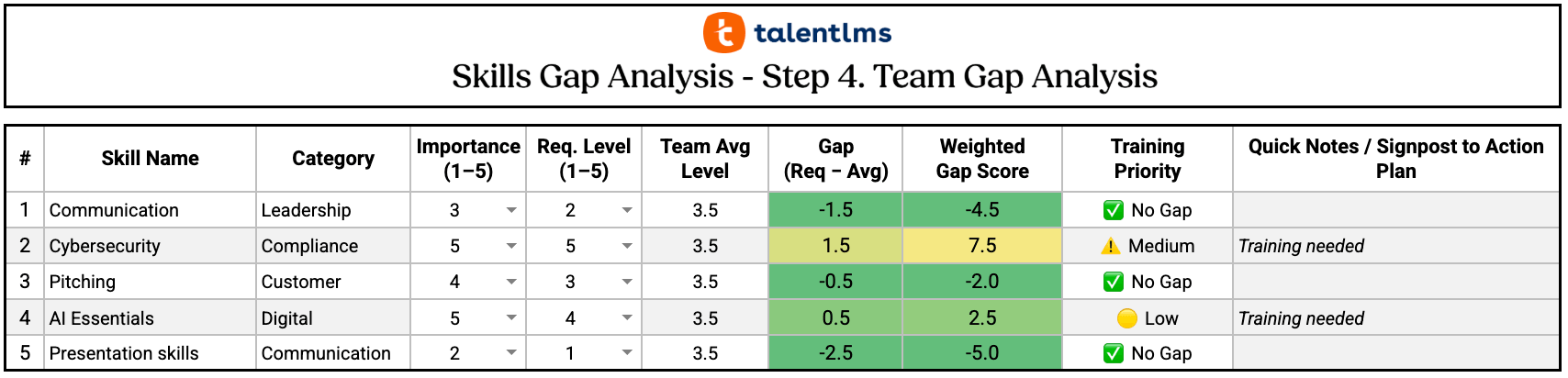
There are many ways to gather and analyze data, but a structured template makes the process faster and easier. Our free skills gap analysis template walks you through all five steps. It starts with defining skill importance and assessing current individual and team capabilities, then provides a format for mapping skills, identifying gaps, and building your training action plan. Everything you need, in one place.
Here’s a detailed breakdown of what’s involved in each step in the process.
1. Define analysis scope and goals
First, define the extent of your skill gap analysis and your desired outcomes. For SMBs especially, resist the pull toward an exhaustive skills inventory. Focus on the 5–10 skills that connect directly to your current business priorities. Skills clarity beats skills completeness. A tightly scoped analysis you can act on is worth far more than a comprehensive one that sits in a spreadsheet.
Then move on to identifying the level of analysis you’ll perform:
- Individual. This analysis focuses on a specific employee’s skill set, measuring them against those skills needed in their current role or a future position. It helps identify ways to enhance someone’s performance or prepare them for career advancement.
- Team. This level evaluates the collective skills of a team, comparing them to the combined skill sets they need to achieve team goals. It reveals any knowledge or expertise gaps that might hinder project completion or team effectiveness.
- Organization. Here, the analysis looks at the entire organization’s skill inventory. It compares the current workforce’s capabilities to the broader business objectives and future strategic direction. This helps identify large-scale skill deficiencies that could impact the organization’s competitiveness or ability to adapt to changing market demands.
Once you know the level of analysis you’re performing, identify your desired outcomes. Are you looking to improve employee performance? Increase competitiveness?
Knowing what you want from the analysis will help you focus on the right performance behaviors.
For example, say you want to improve your customer satisfaction scores. You should concentrate on examining relevant metrics. These might include customer satisfaction survey scores and employee performance metrics in the customer service team. You should also review current customer service training offerings to see whether they support the improvements you want.
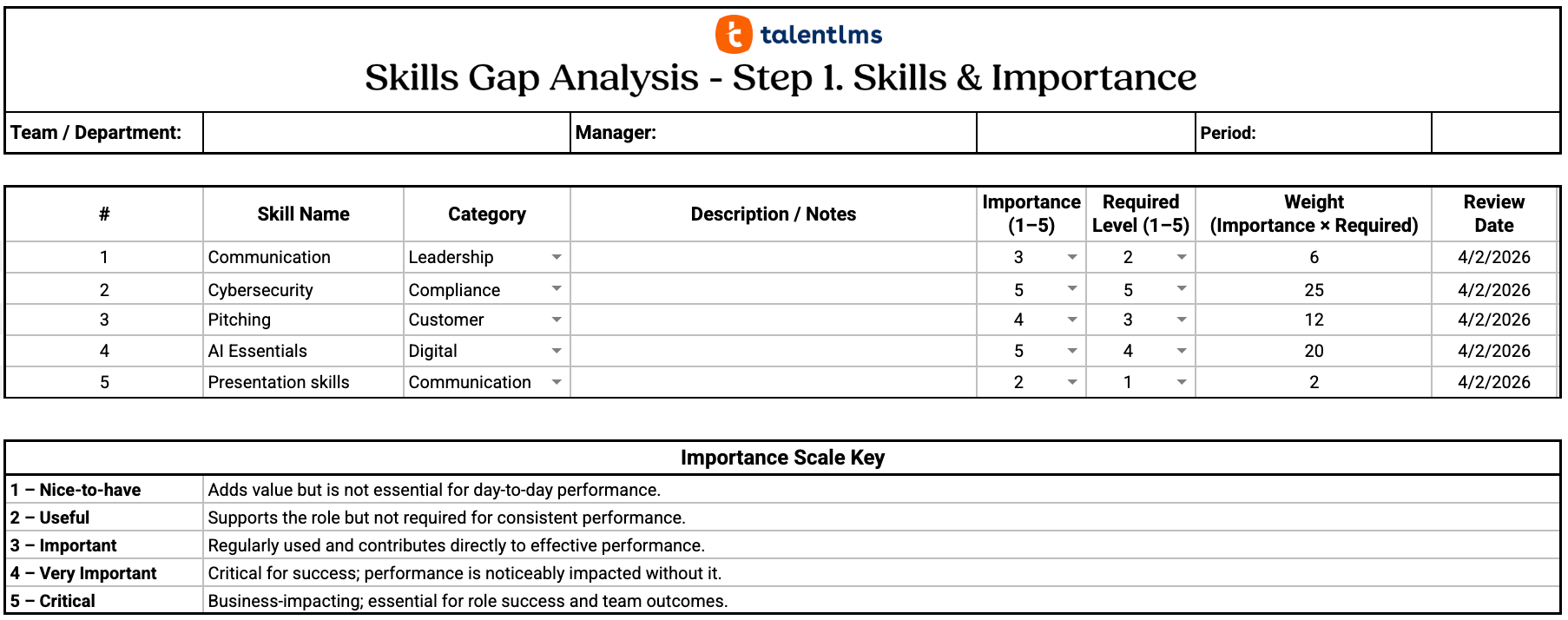
2. Identify current and future skill needs
Once you know why you’re performing the analysis and what you hope to achieve, it’s time to take inventory of existing skills. What relevant skills does your team possess now? And what skills will they need to achieve your future goals? This helps you spot small gaps early, before they accumulate and impact performance.
Here are some ways to gather information for skill analysis.
Current skills analysis
Identify current skills through skills gap analysis tools like skill assessments, surveys, and performance reviews.
- Review job descriptions and performance reviews. Start by revisiting job descriptions and recent corresponding performance reviews. These documents outline the core skills and competencies expected for employees’ roles and show you where there may be gaps.
- Do a task breakdown. Break down employees’ daily tasks and responsibilities. Identify the necessary skills to perform each task effectively.
- Get managerial input. Meet with managers, department heads, and stakeholders to discuss the skills crucial for success in an employee or team’s work. They can provide insights into emerging priorities or specific areas where additional skills would be beneficial.
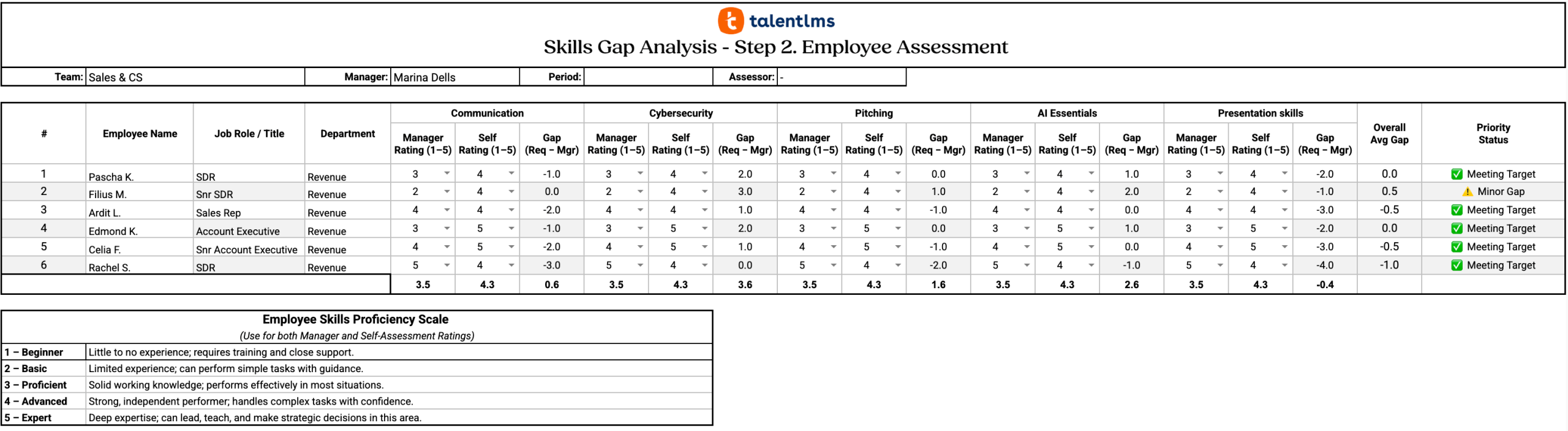
Future skills analysis
Identify future skills needed by analyzing industry trends, business objectives, and emerging technology.
- Industry trends and reports. Research industry publications and reports to understand the evolving skills landscape within your field. Identify the competencies predicted to be in high demand for future success.
- Company strategy and goals. Discuss your company’s strategic plan with stakeholders. Understand how company goals might translate into new skill requirements for your role in the future.
- Emerging technologies. Explore the latest innovations relevant to your field. Consider how these technologies might change the skills needed down the road.
Combining these methods will help you conduct a thorough skills gap analysis and develop a plan to bridge any identified gaps.
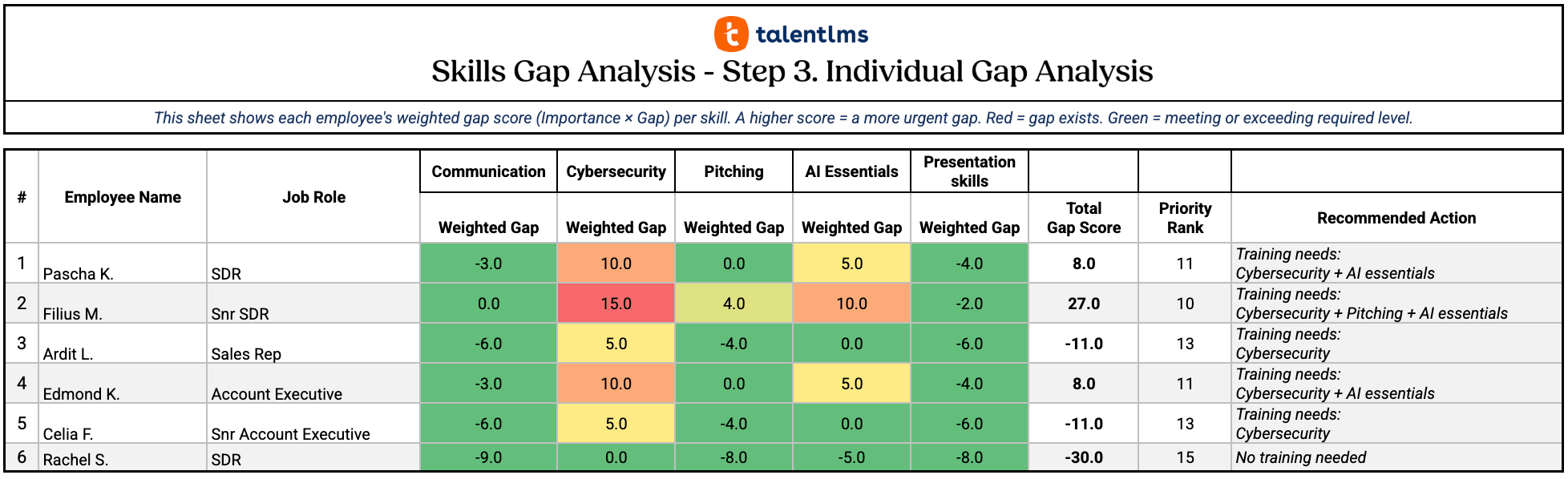
3. Collect and analyze data to identify training needs
Now that you know what your organization needs, collect and analyze data that will show you any holes.
Focus on data that allows you to measure aptitude for the skills you identified in step two. You can then identify gaps by comparing current employee competencies with critical and desired skills.
Here are a few ways to gather the relevant data.
eLearning assessments
eLearning assessments give a good indication of what employees know versus their training needs. Once you have the data, you can use your LMS to pinpoint patterns and trends demonstrating more widespread issues.
For example, say employees participate in an online training simulation. The corresponding LMS graph shows that 50% of participants stopped at a particular point. The dropoff point shows you what skill they’re not grasping so you can create a new training strategy to bridge the gap.
Remember to keep the goal front of mind: you’re not measuring training activity. You’re building a picture of verified, measurable capability. The question isn’t “Did they complete the course?” It’s “Can they do the thing?”
That’s the difference between completion metrics and capability metrics.
Observations
Monitor employees on the job or during a task-based simulation to note any areas for improvement.
For instance, say you notice that most of your customer service employees have trouble using conflict resolution skills with an angry customer. This insight shows you the type of training sessions to include for targeted employee development initiatives.
Surveys
Conduct polls, surveys, and focus groups to gather employee feedback directly from learners.
Ask about their experience. Employees can often shed light on performance issues hiding beneath the surface.
For example, they can articulate whether ineffective online training courses or company policies are holding them back.
Evaluations
Take a closer look at manager evaluations and seek patterns. For instance, you might notice a common theme among your sales staff’s latest performance reviews. Managers across the board note a lack of product knowledge. This points you toward critical skills needed on your team.
4. Analyze existing training effectiveness and make adjustments
You may already have online training materials suited for your training strategy and needs.
Evaluating your existing online training resources lets you identify what’s working and areas for improvement. Consider it a training gap analysis that lets you see which training materials you can reuse and which need to be revised.
Measure training effectiveness metrics like training completion rates and employee feedback on the course. But also look at employee performance and business outcomes. These will tell you how people engaged with the training and whether it transferred to behavior change on the job.
5. Create a strategy to close skills gaps
Decide how you’ll address the gaps you’ve uncovered. This is the actionable part of your skills gap analysis. It’s where you make it count.
Your strategy may include training and development programs, recruitment, and succession planning.
Prioritize gaps based on business impact, not just severity. You want to invest in the capabilities that move your business forward and the skills that drive impact. Not fill a training calendar to show activity.
Work with stakeholders across the business to rank gaps against real outcomes: revenue, customer satisfaction, and operational readiness. That’s where your investment should go first.
If your team is at risk of missing sales targets, for example, prioritize sales training. That’s where your training focus should land—not on gaps that are real but not yet business-critical.
This is also where AI can meaningfully accelerate your response. Once you’ve identified which gaps to prioritize, AI-powered tools can help you build targeted learning paths faster, surface relevant content, and support self-led skill building—so the time between identifying a gap and closing it shrinks considerably.
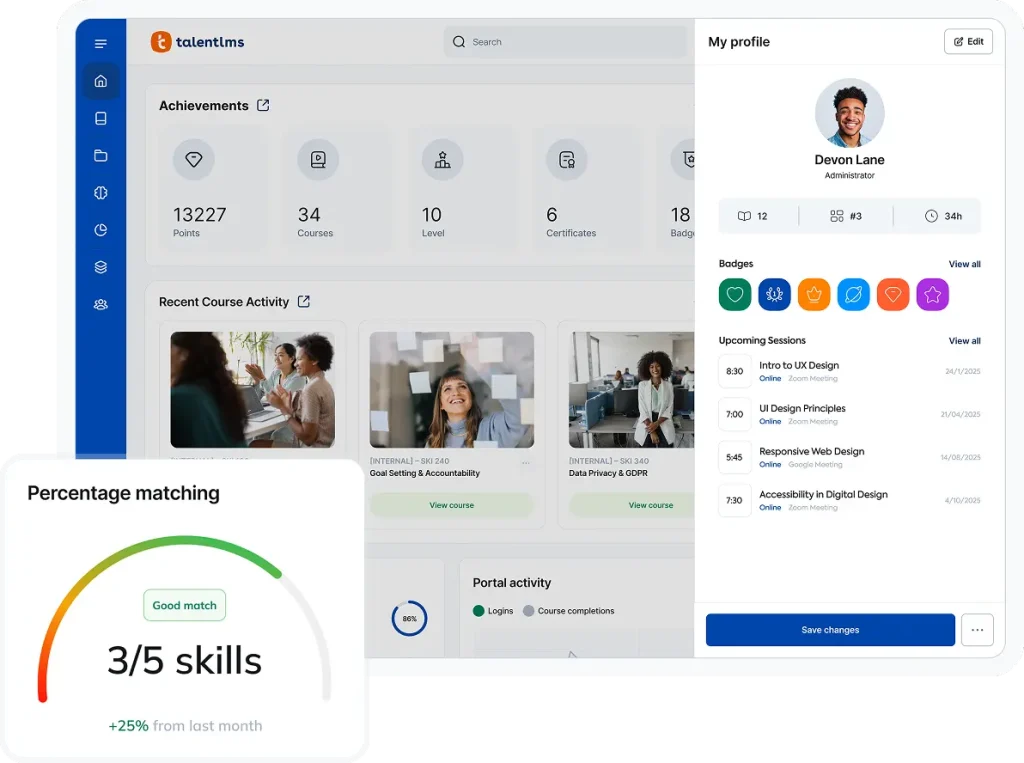
Such tools can be standalone or part of an AI-powered LMS. For example, TalentLMS’s Skills feature helps teams map skills, spot gaps, and build real capabilities. By attaching skills to training, you stop training randomly and start building capability strategically.
Think of AI not as a replacement for structured skills development but as the accelerator that helps capability catch up with business need.
Skills gap analysis benefits employees and employers
Skills gap analysis isn’t just a box-ticking exercise for HR departments. It offers significant advantages to both employees and employers.
Employee benefits
- Career development roadmap. A skills gap analysis sheds light on where you can strengthen employee skill sets. It lets you work with employees to create personalized career development plans to boost their performance and marketability.
- Increased job satisfaction. Knowing they have the right skills to excel in their role gives people a sense of accomplishment and increases job satisfaction.
- Advancement opportunities. Effective learning and development positions employees for future promotions or leadership roles within the organization.
Employer benefits
- Improved performance and productivity. Addressing skill gaps through targeted training equips your workforce to increase productivity and efficiency. A skills gap analysis doesn’t just improve performance. It gives you measurable proof of skills across your workforce.
- Enhanced innovation. A skilled workforce is an innovative workforce. Skill gap analysis helps identify areas where new skills can be introduced to promote innovation and better problem-solving.
- Reduced turnover. Investing in employee development shows a commitment to employees’ growth and well-being. This improves morale and reduces employee turnover, saving you time and resources.
- Better decisions at the managerial level. When managers have a verified, structured picture of their team’s skills—not an assumed one—they can spot performance risk early, deploy people with confidence, and have more meaningful development conversations. The shift from instinct to insight is one of the most practical returns a skills gap analysis delivers.
Make skills gap analysis an ongoing activity
In Tetris, there’s no final level. The pieces keep coming, and they get faster. The game doesn’t reward you for solving the board once. It rewards you for building the awareness and reflexes to respond before the gaps become unrecoverable.
Skills work the same way. Roles change. Technologies shift. Teams grow faster than the surrounding structures. The goal of a skills gap analysis isn’t to close every gap once and move on. It’s to build the visibility to spot them early, prioritize the ones that matter, and act before they stack.
That’s the shift from skills chaos to business clarity. Not a one-off exercise, but an ongoing habit of knowing what your team can actually do. And using that knowledge to make better decisions about development, deployment, and growth. So you’re not just tracking training but building capability you can measure.
Run your analysis at least twice a year. Revisit your required skill levels as your business priorities evolve. Use the results to update your training programs, your hiring strategy, and your conversations with managers. And treat it as what it really is: not an HR checkbox, but one of the most practical tools you have for keeping capability moving at the same speed as your ambitions.