
Most companies have a skills visibility problem. That means managers making rapid staffing and promotion decisions don’t know what their teams can actually do. Instead of relying on real capability data, leaders are stuck using incomplete information like outdated profiles or simple assumptions.
This isn’t an isolated case. The TalentLMS Skills Visibility Report reveals that only 12% of respondents say their organization doesn’t have skills visibility issues.
What is a workforce capability blind spot?
A workforce capability blind spot happens when leaders think they know what their team can do, but reality proves otherwise.
Currently, 90% of managers claim they understand their team’s skills, yet only 69% of employees agree. That 21-point perception gap means a huge portion of your workforce is sitting on hidden skills. There’s talent within the business, but those skills are invisible to the leaders making daily staffing choices.
Because of that blind spot, 49% of workers report their abilities are underused. Managers believe skills are well matched to roles at a rate of 74%, while just 47% of employees feel the same way.
Even companies with strong training programs fall into the same trap. Relying on a static skills inventory often falls short because capability data stays siloed in separate departments.
When you lack clear tracking and manager visibility, daily operations take a hit. You start to see the fallout happen in very specific ways across the business:
- A manager hires an external candidate because they can’t see the internal talent sitting in another department.
- Employees finish their required courses, but leaders still cannot identify who is ready for a promotion.
- Teams duplicate expertise because valuable knowledge gets trapped in departmental silos.
- Learning paths look great on paper, but nobody can accurately measure capability progression over time.
Why organizations struggle with skills visibility
Companies rarely lose track of employee capabilities on purpose. The core issue usually comes down to four mistakes.
Skills data lives everywhere
You can’t build a capable workforce when leaders have to hunt down basic information across five different tools. Only 18% of organizations use a centralized database. The rest are relying on fragmented systems that require constant manual updates.
In addition, 31% of companies track skills through employee self-reporting. Asking people to grade themselves is one of the least reliable ways to measure operational readiness. Consolidating everything means you can start organizing skills in branches based on specific departments, teams, or locations.
Completion data replaces capability data
When systems only track completion rates, leaders are forced to guess who is ready for new responsibilities. In fact, 59% of organizations rely on performance reviews and 56% depend on manager observations.
These subjective signals highlight the core issue of skills vs. certificates, and why checking a training box is never a substitute for measurable capability.
Managers lack visibility beyond their immediate teams
Subjective tracking creates a massive barrier when leaders try to look outside their immediate department. A director might know exactly what their direct reports can do while remaining blind to the talent sitting one desk over.
Acting as a true manager multiplier requires seeing the full picture to match the right person to the right task. Without that broader view, 56% of managers admit poor visibility lowers team performance, and 46% point to poor project fit as the immediate consequence.
Learning paths are unclear or inconsistent
The breakdown in tracking destroys structured career development. Employees are left in the dark about how to grow because 61% of respondents are expected to keep their abilities up to date on their own.
Development turns into a reactive scramble rather than proactive talent building. In fact, 42% of employees report their manager only brings up skill gaps when performance issues have already surfaced.
The business impact of invisible skills
When capabilities remain hidden, the damage creates a chain reaction of operational failures. From stalled careers to wasted budgets, the cost of this blindness impacts every level of the organization. A skills visibility diagnostic helps quantify this damage before it compounds.
Internal mobility slows down
When managers can’t see internal talent, employees realize they have to leave to grow. Fifty-six percent of employees say their career progression stalls simply because their skills go unnoticed.
Because of this frustration, four in ten respondents say it’s easier to find a new job at a different company than to land a new role internally. You end up losing your best people to competitors because you never recognized what they could do.
Strategic workforce planning becomes reactive
Losing those employees forces your organization into constant reactive hiring. You can’t predict future talent needs or build succession plans when you don’t know the current baseline of your workforce.
Instead of developing talent for upcoming projects, leadership scrambles to plug immediate holes with expensive external hires.
Training ROI becomes harder to prove
Investing in training without a clear skills baseline rarely solves the root problem. Twenty-six percent of managers admit that poor visibility leads to less targeted learning investments.
Additionally, 50% of employees and learning leaders say high workloads leave little room for training even when it is desperately needed.
As David Kelly put it on the Talent Talks Podcast exploring L&D in 2026, “We have to change our narrative and our mindset to how does the work that we do impact the business? How does it provide business value?”
You can’t prove that value when you are guessing at what skills your team needs. This ultimately leads to wasted budgets on irrelevant learning paths.
AI initiatives struggle without structured capability data
Many companies hope new technology will close this gap, with 79% stating they’re adopting a skills-based approach to hiring and training. And 84% of HR managers believe generative AI will help close skills gaps.
But AI can’t organize skills data that doesn’t exist. If you lack a structured way to track capability, your AI tools will have nothing to work with, causing those expensive initiatives to fail before they even start.
The skills visibility diagnostic
Before you can fix these operational risks, you have to identify exactly where your tracking systems are failing. The Skills Visibility Diagnostic helps HR, L&D, and department leaders pinpoint where workforce capability becomes difficult to see, measure, or act on.
The assessment takes just two minutes to complete through a series of six targeted questions.
You get immediate visibility into where your critical skills tracking, career progression, and manager oversight start to break down. Each question evaluates a different part of workforce readiness, moving from basic documentation to how promotion decisions are made.
Spotting low scores reveals internal blind spots long before they show up as performance issues.
Why this diagnostic matters
Taking the time to evaluate your skills visibility shifts your organization’s focus from relying on instinct to acting on insight. You can start building a skills-based view of your workforce and map the capabilities you need for the future and right now.
What teams get from it
Completing the Skills Visibility Diagnostic gives your leadership team a clear baseline of measurable workforce readiness. Managers stop guessing about who to promote and start relying on real capability data.
HR and L&D leaders also gain the proof they need to build visible career paths that keep top talent from walking out the door.

Specialized in talent development, skills-based learning, and growth culture, Stelios helps organizations empower their people to learn, adapt, and thrive in an AI-driven workplace.
Expert tip: Making skills truly visible
Skills visibility is usually a mindset problem. Meaning, you can invest in the best tracking tools available, but if managers don’t actively use them and employees don’t see the value, capability stays hidden. Here are three ways to make skills visibility part of how your team actually works:
- Make skills conversations a routine: Don’t wait for performance reviews. Encourage managers to ask “What have you learned recently?” and “What skills are you building?” in regular 1:1s. Train them to identify and reinforce individuals’ strengths and not only areas of improvement. The more often skills come up in conversation, the more visible they become across the organization.
- Connect visibility to opportunity: Employees are far more likely to keep their skills profiles current when there’s a clear link to career growth. Tie skills data to internal career paths so updating it feels like a solid step forward.
- Start with one team: A company-wide rollout can feel overwhelming and might stall. Pilot your skills visibility approach with a single department, learn what works, and use those wins to build momentum.
Takeaway: Skills visibility starts with a mindset shift, from “We track what people learn” to “We see what people can do”, and we build on that. When that shift happens, talent decisions become smarter, feedback becomes a fundamental pillar, and employees feel they are constantly growing.
How to support skills clarity with your LMS
Finding the right solution starts with getting your skills data out of the dark. As Julia Phelan pointed out on the Talent Talks Podcast, the true value of a knowledge map is making all that unseen, hidden talent and expertise visible. Once you improve skills visibility, you can actually start developing your workforce.
Make workforce capability visible
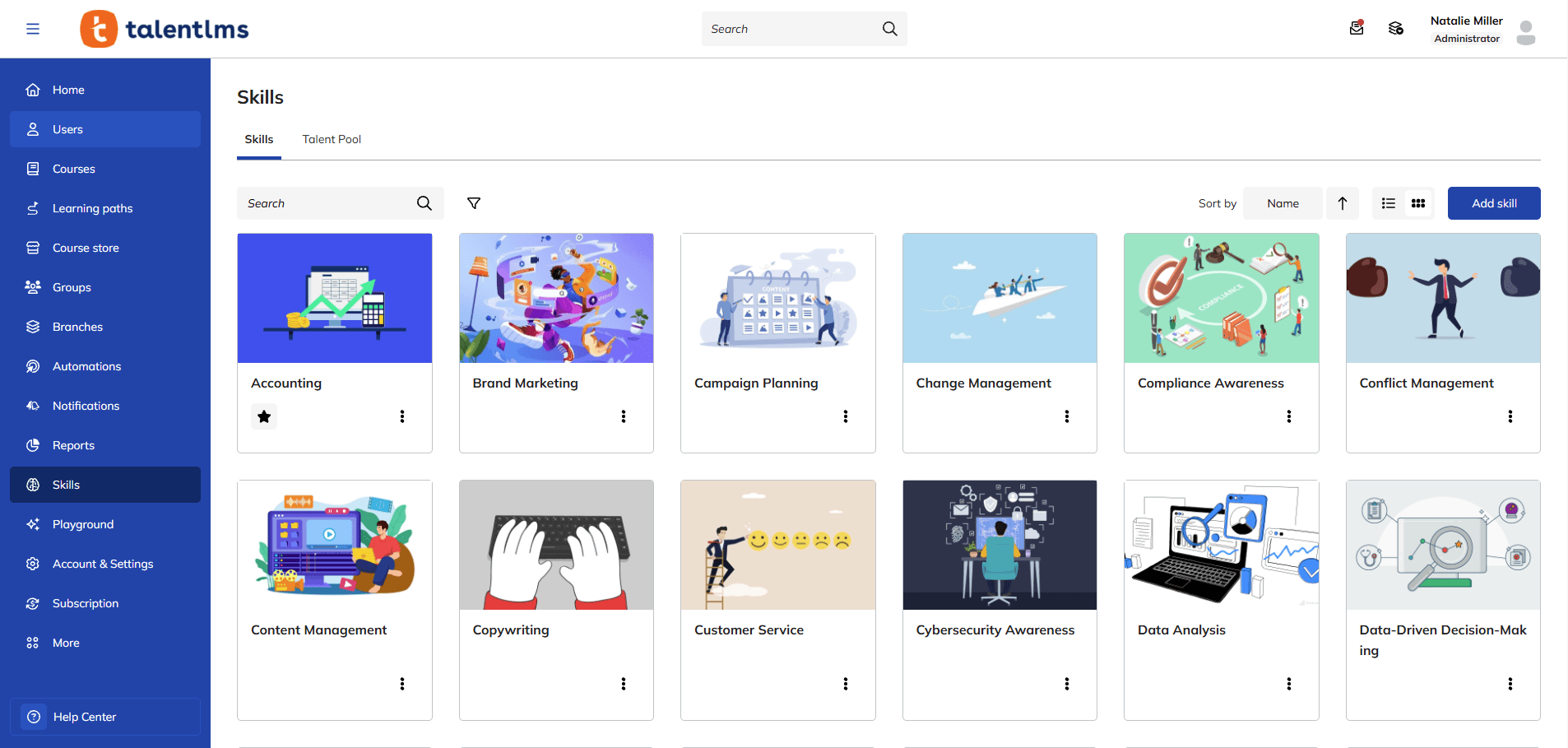
You can’t manage what you can’t see, which is why relying on scattered spreadsheets and self-reporting fails. An LMS with built-in skills management gives you a single, centralized learning record that proves what your people can do, and it can help you identify skills gaps as part of this skills visibility diagnostic process.
TalentLMS’s Skills feature replaces guesswork with one shared, visible view of your organizational capability.
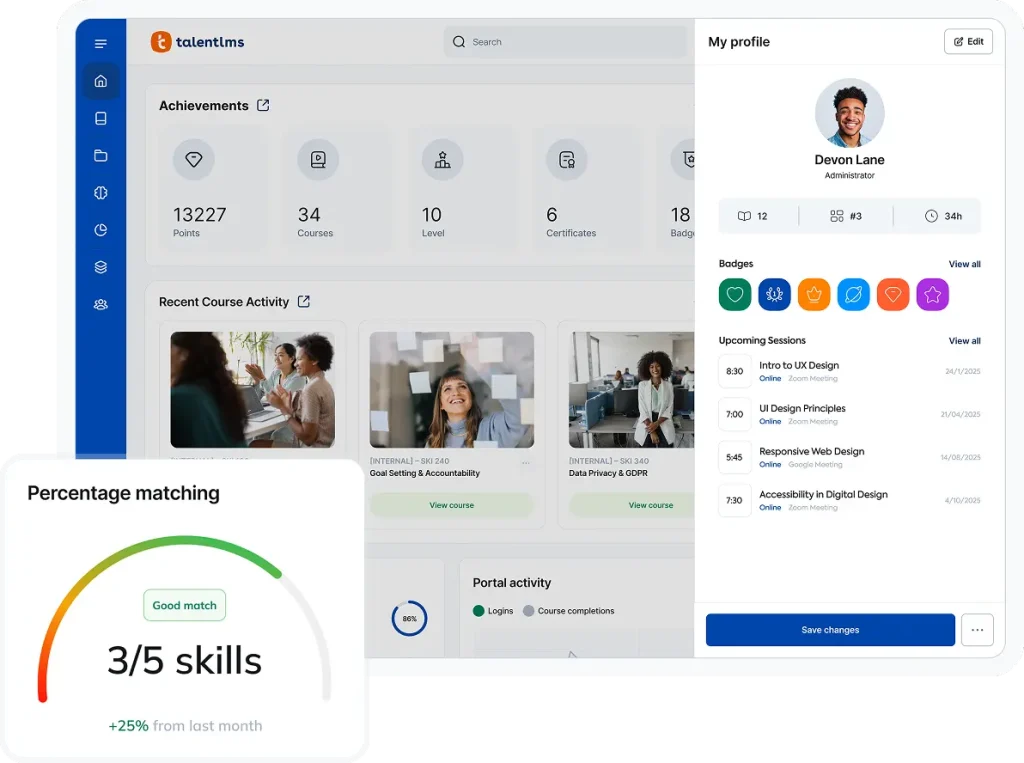
Getting that data out of silos empowers your leadership. Setting up a Group Supervisor gives managers real, verifiable data instead of assumptions about their team’s readiness. With immediate visibility into capabilities, leaders can make better staffing and development decisions while building programs that fill skills gaps before they grow.
Structure progression
Instead of letting employees guess what they need to learn, you have to connect training to visible career goals. Setting up clear Learning Paths removes the confusion and shows people what it takes to grow within the company.
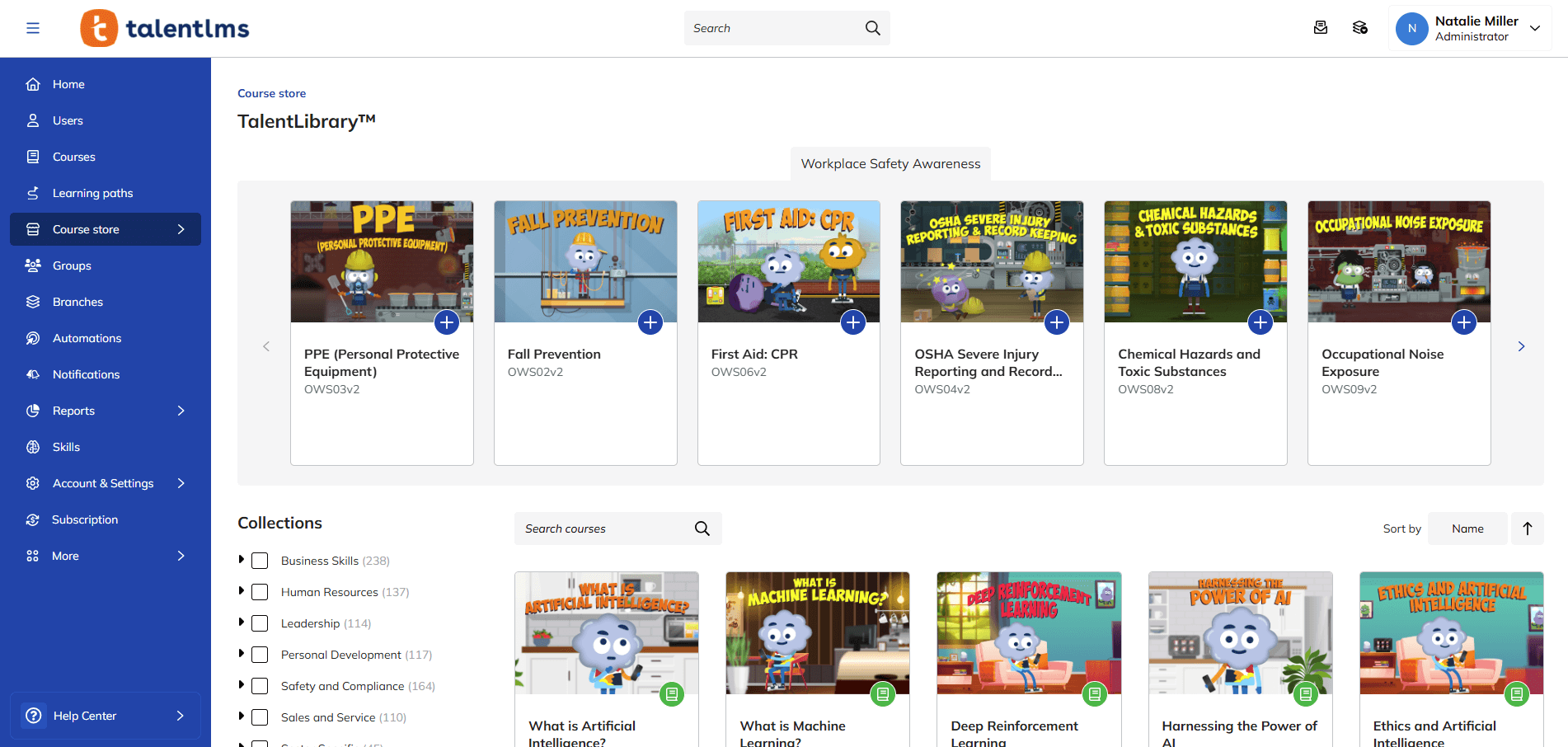
Aligning development to specific roles ensures the training applies to the job employees want to do. You can fill those tracks with ready-made content from TalentLibrary™. Managers don’t have to build every single course from scratch. Giving employees a structured way to build capability keeps them engaged and ready for real internal mobility opportunities.
Measure capability beyond completion
You have to shift the focus from asking whether an employee finished a training module to verifying they can do the work.
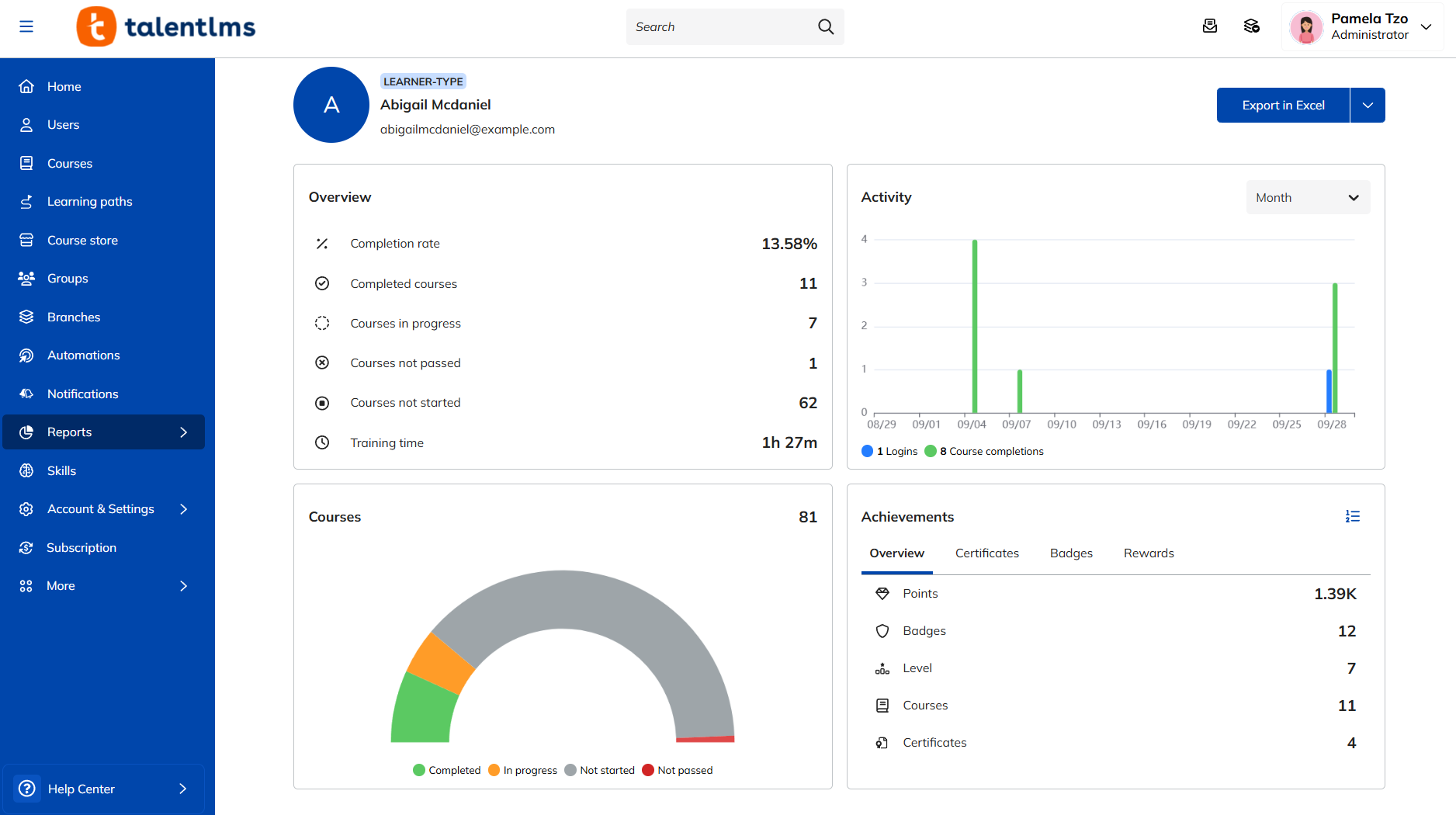
Building custom Reports gives leaders a clear, objective breakdown of abilities across their team. Pairing those analytics with formal certifications provides proof that an employee has met a specific requirement.
Accelerate development with AI
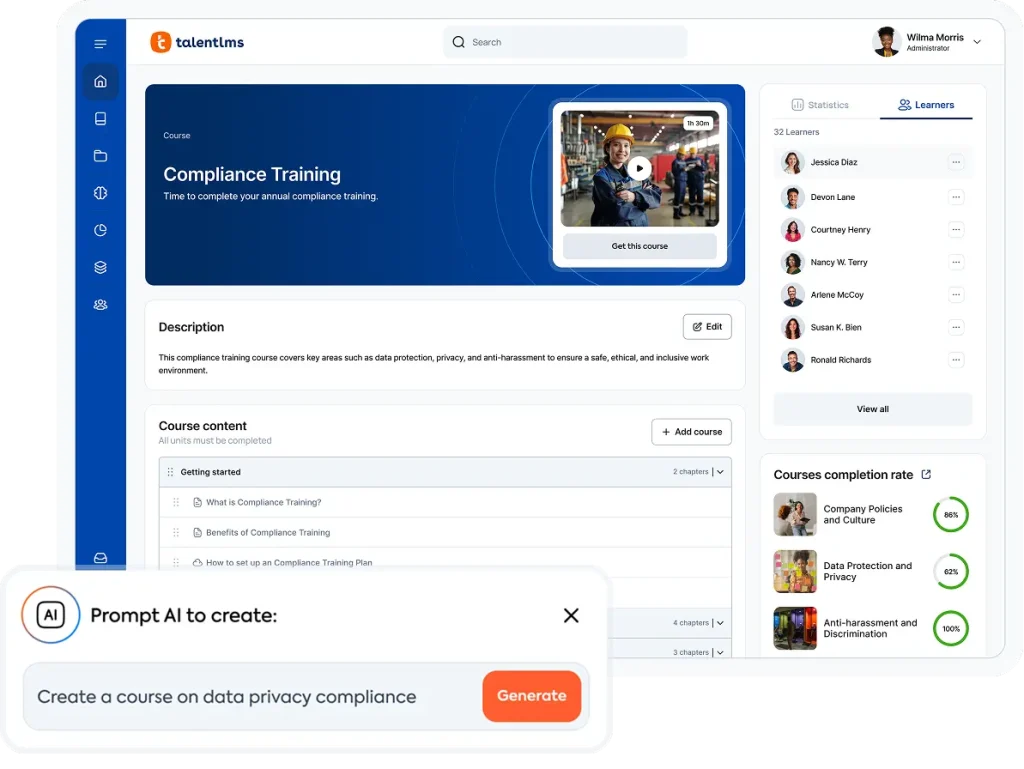
Waiting for capabilities to develop naturally takes too long. You have to accelerate skill-building before small gaps turn into performance problems. TalentCraft creates AI-generated course structures so you can target what your team needs to learn.
Moreover, the built-in AI Coach guides learners in real time with helpful explanations and practice questions, keeping them moving without waiting for an instructor.
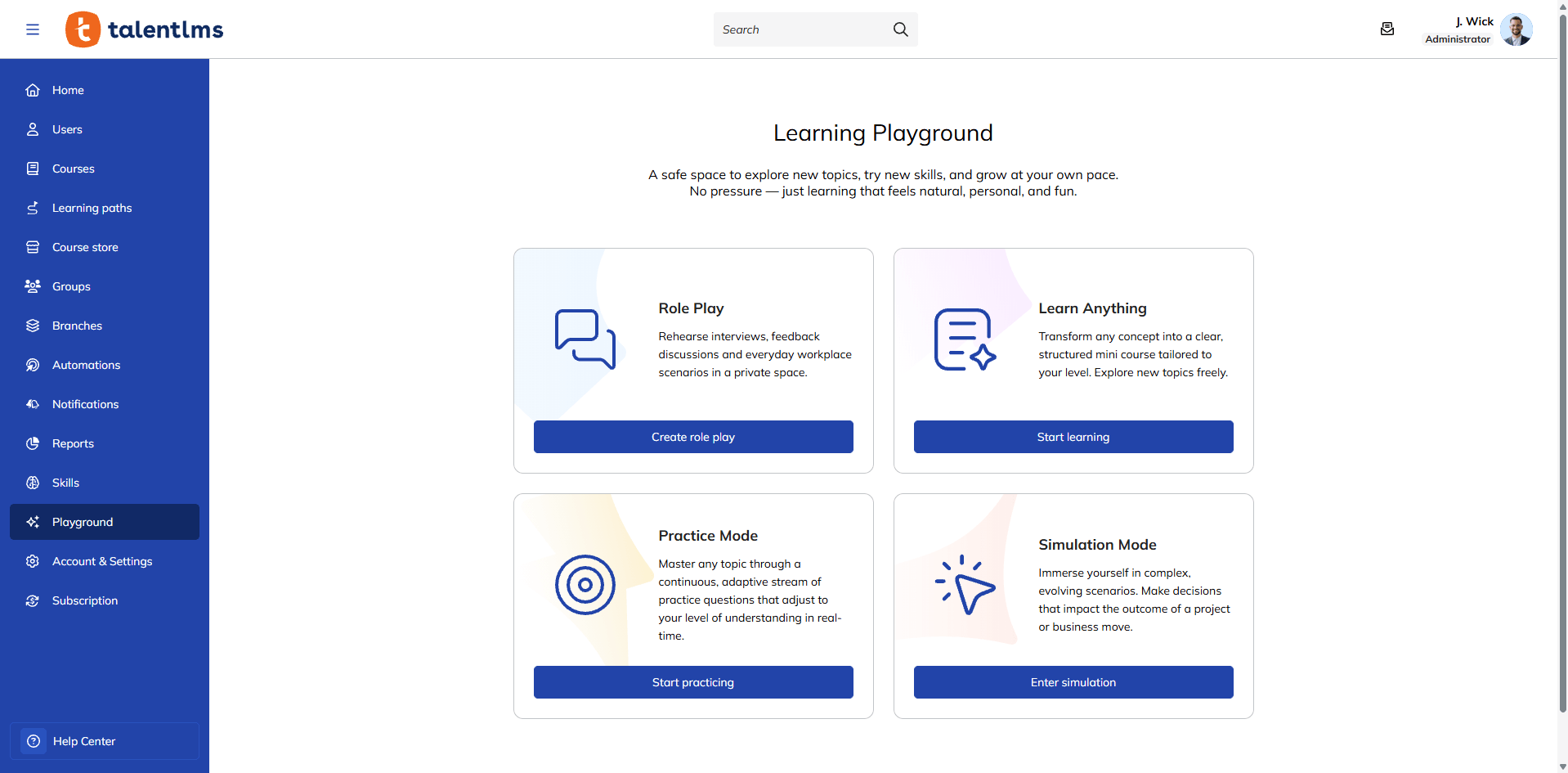
Workers also need a safe space to test new knowledge. Learning Playground provides a self-led practice space for realistic scenarios and skill-building, helping them gain confidence before performing on the job.
Keep learning connected to work
Training feels like a waste of time if it doesn’t apply to an employee’s job. You have to connect development to daily operations so people see the immediate value of what they’re learning.
Syncing your systems solves that disconnect. Setting up the BambooHR integration syncs role and department data so training maps to real positions and organizational structure. With role data connected, every course directly supports the specific responsibilities of that role.
Moving from instinct to insight
The organizations that thrive won’t just rely on hiring externally to solve their problems. They’ll know how to deploy the capabilities of the people already in their organization. A Skills Visibility Diagnostic is the first step. Building a system that tracks real, verified ability transforms how you operate day-to-day.
Replacing instinct with measurable insight means you stop reacting to sudden gaps and start anticipating future demands. Clear, manager-visible capability gives your leadership the structure they need to drive operational success.