
The days of checkbox training, where employees click through slides just to say they finished, are over. In 2026, if learning doesn’t directly improve performance, it isn’t working.
It needs to be measurable, embedded right where your people are working, and supported by AI.
At the same time, workload is squeezing learning:
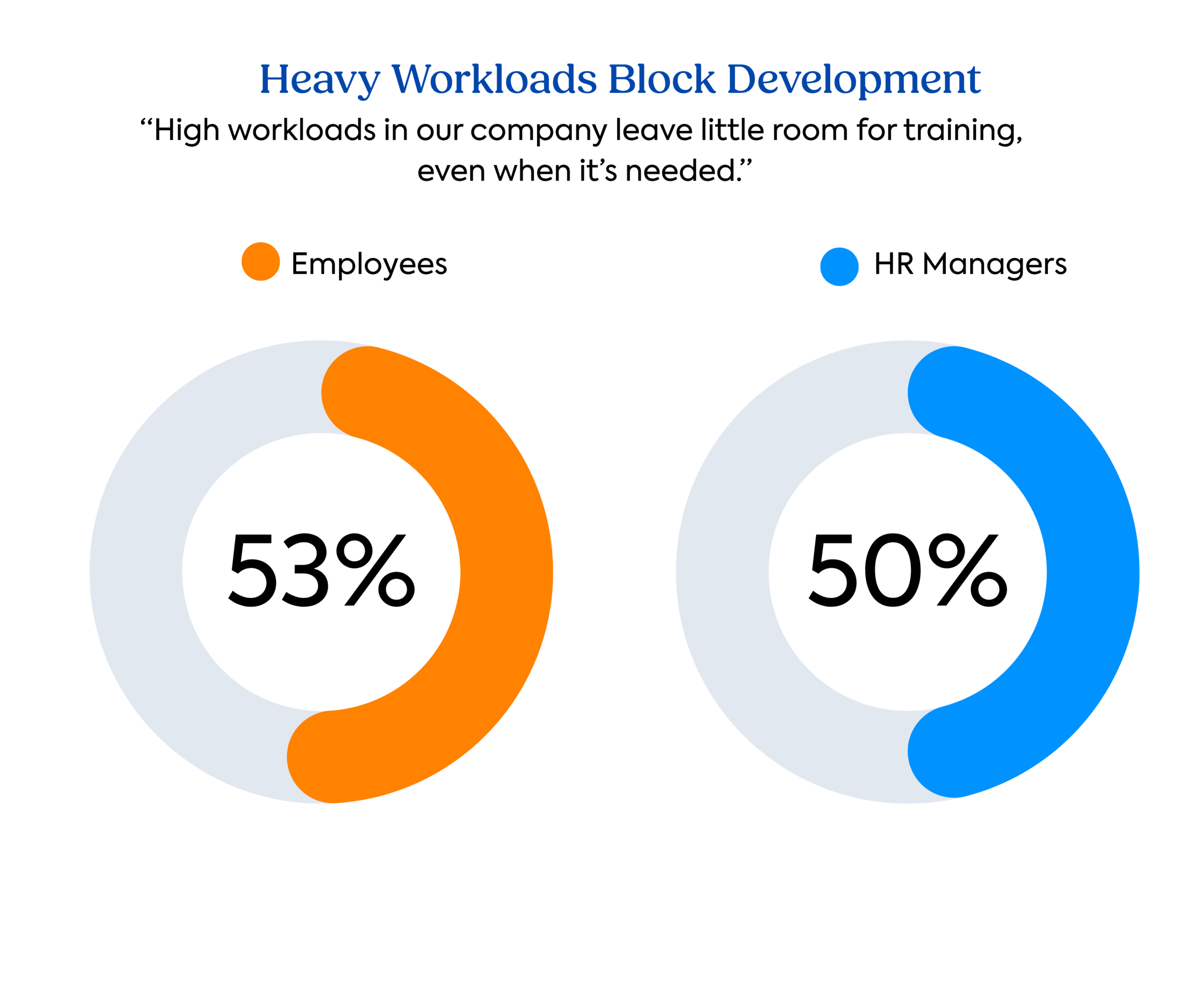
- Half of HR managers and 53% of employees say high workloads leave little room for training.
- Yet, 65% of employees say performance expectations have risen.
The goal for 2026 is to bridge this gap. To deliver high-impact learning that fits into a busy day, which is a common theme in many of the 2025 L&D trends.
12 key L&D trends to watch in 2026
We’ve combined deep research with findings from our Annual L&D Benchmark Report to identify the learning and development trends that will define this year. From AI-powered coaching to the “ROI mandate,” these are the latest trends in learning and development that move from a nice-to-have to a business engine.
1. AI-driven performance coaching
In 2025, we used AI to generate text, write courses, and create content quickly.
In 2026, we will also use AI as a performance coach. It’s now a frontline guide that tailors learning paths to fix specific skill gaps as they happen.
However, while 88% of HR managers expect Generative AI to completely reshape how employees get knowledge, there is a tricky 20-point perception gap. HR leaders believe they are providing great AI support, but employees don’t feel it yet.
To bridge this gap, AI learning platforms are evolving. For example, TalentLMS uses features like TalentCraft to create the content, but crucially, it now uses an AI Coach to provide that real-time learner support we discussed.
As David Kelly noted in the L&D in 2026 podcast, we need to stop thinking of continuous learning and working as separate activities.
“Support learning through everyday tool use. Digital tools are becoming learning environments in their own right. Skill-building now happens through hands-on use, not just formal instruction. Use AI as a coach, not just a content creator.”
2. Paying down the learning debt
This is a new term that’s buzzing in 2026.
Think of “learning debt” exactly like financial debt or technical debt in coding.
- When you take shortcuts on talent development to hit immediate targets, you accrue debt.
- Eventually, you have to pay it back, or your “system” (your workforce’s capability) collapses.
Why is this debt piling up? Because people are overwhelmed. 50% of learning leaders and 53% of employees report that heavy workloads leave absolutely no room for training—even when they know they desperately need it.
The podcast L&D in 2026 hits hard on this:
“The legacy models that we continue to use in L&D no longer match up with the way that work is getting done and the availability that people have.”
To prevent burnout and incompetence, you need to shift your focus from speed of delivery to depth of mastery.
One way to “pay down” this debt without overwhelming people is to use bite-sized learning libraries like TalentLibrary or bundles like TalentCards. These permit quick, impactful workplace learning injections rather than long, draining courses.

3. Learning in the flow of work
Remember the old days of taking a whole Friday off for a seminar? In 2026, that’s history.
Learning in the flow of work is about embedding learning directly into the tools people use every day, like Slack or CRM systems. It shifts the goal from “Did you finish the course?” (checkbox completion) to “Did this help you do your job right now?” (performance enablement).
This snippet from our podcast The Power Skills to Future-Proof Your Teams puts it perfectly:
“Skills development should shift from being an individual’s off-hours responsibility to being integrated into the workday.”
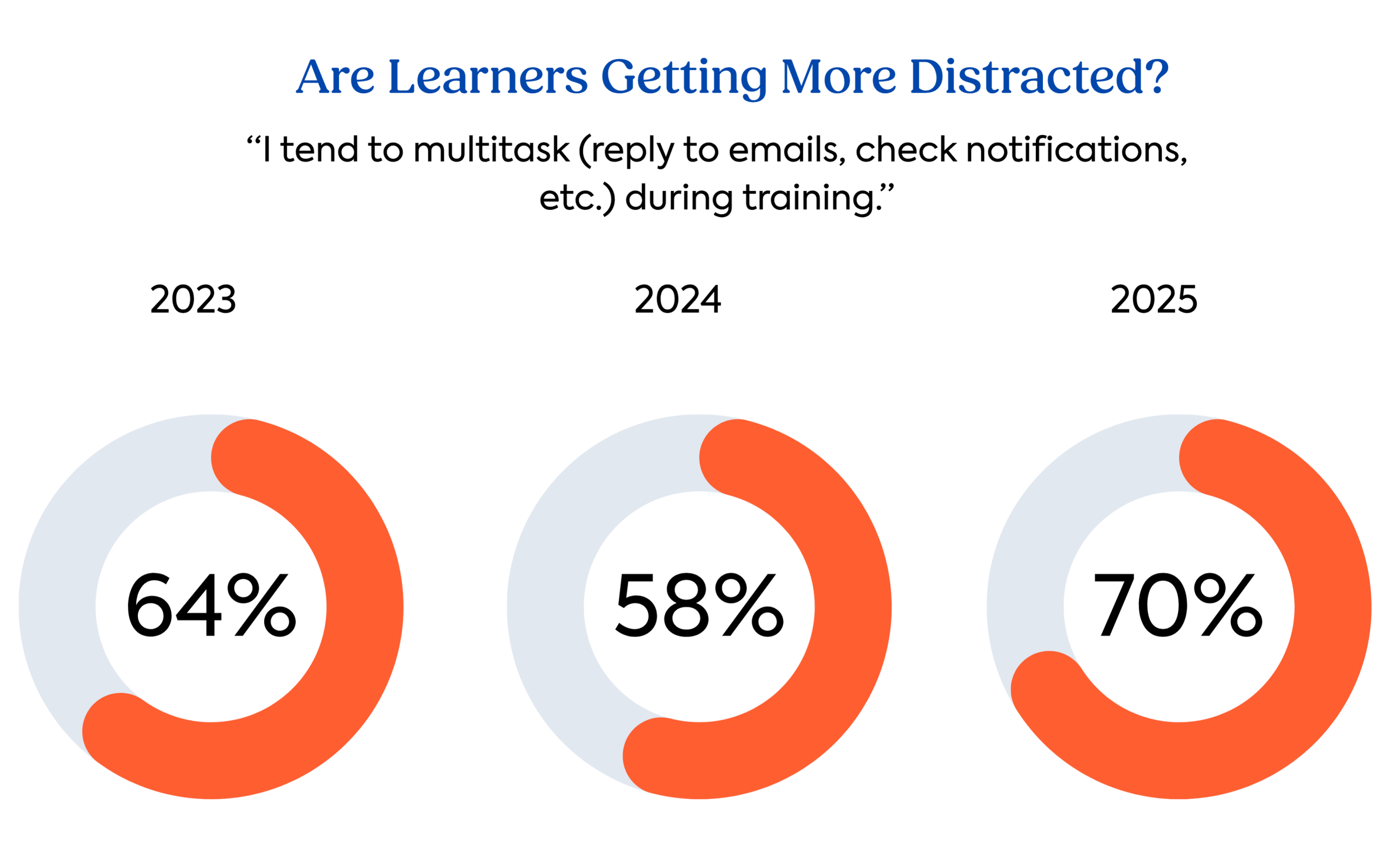
Plus, 70% of employees admit to multitasking during training. So if you embed it into their workflow, you catch them when they are already engaged.
To combat this, tools like TalentCards offer mobile, micro-learning on the go, and integrations with HR systems like BambooHR make access effortless.
4. Skills-based internal mobility
Companies in 2026 are stuck in a bind. They see that hiring from the outside has become too slow and expensive, while they’re also losing good people who feel stuck.
A massive 73% of employees say they would stay at their company longer if they had better L&D opportunities. Despite this, only 45% of employees feel their current training is actually aligned with their career growth. They want to stay, but they don’t see the path.
To fix this, organizations are shifting from “job-centric” to “skills-based” structures. Instead of locking people into rigid job titles, companies are mapping out how learning a specific skill (like data analysis or public speaking) unlocks a new role internally.
As Julia Phelan mentions in our podcast Knowledge mapping: Surfacing employee strengths, this is about visibility:
“Make internal mobility more visible and more possible. Knowledge maps reveal employee skills, interests, experiences, and untapped potential that can be used to support lateral moves… prompting a rethink of traditional team structures.”
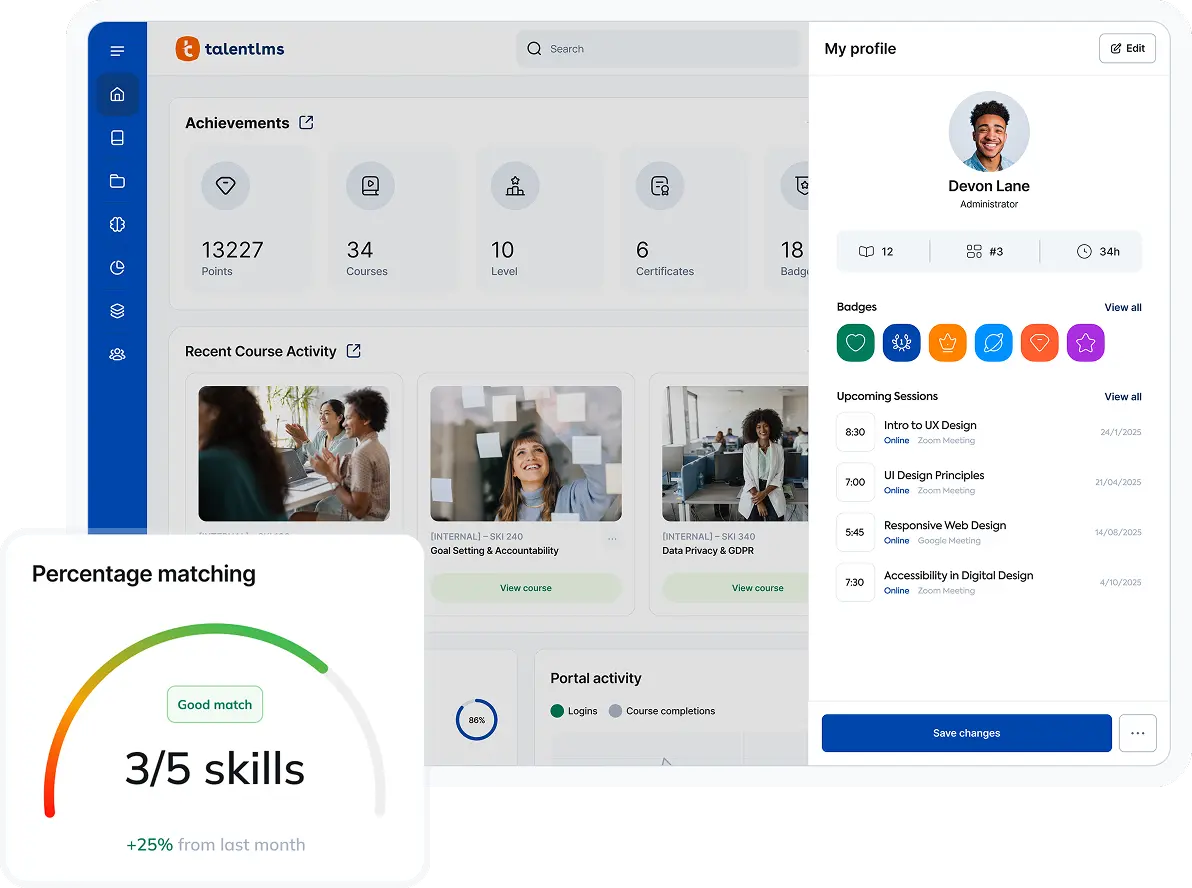
To bring this strategy to life, L&D teams are using employee skills tracking and adoption features. These tools act like a GPS for career development—showing employees exactly which skills they need to acquire to navigate from their current role to their dream role within the same company.
5. Strategic business alignment (the ROI mandate)
L&D is no longer just a budget line item or a nice-to-have perk. In 2026, it is set to be a core business driver. The focus is shifting from simply tracking who showed up for training (participation rates) to measuring actual business impact and change readiness.
This shift is happening because 75% of HR managers say their strategy is now aligned with business KPIs. However, 41% of executives still view L&D as a cost rather than an investment.
To change that perception, Michelle Parry-Slatter from our podcast Lean L&D: Maximum impact, minimum resources advises:
“Boost L&D credibility by delivering solutions tied to organizational goals. Demonstrate value added through qualitative and quantitative metrics, including emotional engagement, team satisfaction, and impact.”
To prove this value, modern L&D teams can use Custom Reports to track ROI and productivity improvements. These can be shared with stakeholders to prove the ROI.
6. Data-driven decision-making
In 2026, it is no longer enough to just know who took a course. The L&D trend has moved to predictive analytics. You need to model performance and track real-time progress to predict exactly where the next skill gap will emerge before it becomes a problem.
This is critical because 65% of employees have faced increased performance expectations in the last year. To help them keep up without burning out, interventions need to be precise, not generic.
In our podcast Turning change into opportunity, Rob Catalano warns against drowning in useless metrics:
“Measure what matters. Use specific and targeted data to show how L&D skills are critical to driving what’s important to your business… Ensure it’s accessible. And put it in the hands of those who can act on it.”
To make this practical, you need reports that offer real-time progress tracking and performance modeling. This helps you to spot a struggling team or a rising star instantly, turning data into immediate action.
7. Human-centered & social learning
As AI takes over the technical side of content creation and data analysis, the human element becomes the premium asset. In 2026, social learning—coaching, mentoring, and peer-to-peer interactions—is the “social glue” that keeps employees engaged, especially under high pressure.
This is particularly important for bridging generational gaps, since 33% of Gen Z employees find it challenging to communicate with older colleagues. Social learning provides a natural environment for these groups to connect and share knowledge.
In our podcast Why we don’t learn at work Julie Dirksen reminds us that this doesn’t happen accidentally:
“Social learning needs space and support to grow. Knowledge sharing won’t flourish in isolation. It needs purpose, structure, and cultural support—especially in hybrid workplaces.”
To foster this connection, you need tools like Discussion Boards and Gamification. These features create the “space and structure” for social learning to happen, turning isolated workers into a collaborative community.

8. Immersive & blended learning
The old model of reading the PDF or watching the video is failing.
The data backs this up, with nearly one in three employees saying their current training is too theoretical. They understand the concept, but they panic when faced with the real thing.
This tells us that there is a disconnect between “knowing” and “doing.”
As Gary Cookson points out in the podcast Training teams in a hybrid world, relying solely on live sessions is a mistake:
“Live training (virtual or in-person) is only a small part of the learning process. Organizations should build communities of practice, provide on-demand audio and video content, and strengthen social ties to prevent isolation and foster a sense of belonging.”
To fix this, you need blended learning capabilities that mix instructor-led training (ILT) with digital content. This ensures learners get the theory and the practice they need to make the knowledge stick.
9. Ethical & responsible AI use
As we rush to adopt AI (L&D Trend 1), a new problem emerges: Trust.
37% of employees worry that relying on AI tools is actually weakening their ability to solve problems independently. They fear becoming “dependent” on the machine.
However, if employees don’t trust the AI—or worse, if they trust it too much and stop critical thinking for themselves—the system fails.
To fix this, we need to change how we talk about AI. In our podcast Preparing for the AI-powered workplace, Ronald Ashri argues that we need to stop “anthropomorphizing” AI, which means to basically stop treating it like a person.
“It’s crucial to understand AI as a sophisticated machine devoid of consciousness. This will help foster a realistic perspective and a necessary level of distrust for effective and vigilant use.”
So, the move for 2026 is to establish clear governance. By using SSO (Single Sign-On) & Security features, L&D ensures that while employees are using these powerful tools, their data is safe and the “coaching” remains transparent and controlled.
10. Leadership development with a middle manager focus
While leadership development is a recurring priority, in 2026, the spotlight has moved firmly to the middle.
Think of middle managers as the squeezed layer of an organization. They are under immense pressure to deliver results while managing remote teams and integrating new AI tools.
Because they don’t have time for long, theoretical seminars, the trend now is toward “caffeinated training”—learning that is quick, highly effective, and energizing.
In our podcast Quiet Cracking: The hidden crisis in the workplace, Lia Garvin perfectly explains the danger here. She warns that managers are often “promoted without any training to support their new role.” They were likely great at their previous job, so they got promoted, but now they are drowning in leadership responsibilities without the skills to handle them.
In the podcast, Lia notes that “managers are the frontline defense against disengagement.” If they crack, the team cracks. That is why 56% of L&D leaders are now leaning heavily into human-centric skills, like strategic thinking. As AI takes over technical tasks, managers need to be better at the human side of leading people through that transition.
Lia also points out that you have to “pair high expectations with real enablement.” To make this happen practically, you can use the branches feature in TalentLMS. With this feature, you can segregate your audience, creating a dedicated, high-level leadership training portal specifically for your middle managers so they get exactly what they need, fast.
11. Well-being & sustainable performance
You can teach someone the best technical skills in the world, but if they are burnt out or overwhelmed, they can’t use them effectively. That’s why, in 2026, organizations are realizing that to get sustainable performance, they have to support the whole person, not just the employee.
The newest generation entering the workforce is a big part of this shift. Gen Z is the only generation to rank mental health training among their top 3 priorities for 2025-2026. If you want to attract and keep young talent, you have to show them you care about their well-being.
In the podcast Unlocking Gen Z’s full potential in the workplace, Mark C. Perna explains it clearly: “Prioritizing lifestyle over career is essential for attracting and retaining top Gen Z talent.”
It’s not just about offering a gym membership or a meditation app. It’s about “aligning work and lifestyle according to Gen Z aspirations.” When you integrate this perspective into your systems—from onboarding to daily processes—you reduce turnover and increase employee engagement.
To support this, you can use the TalentLibrary feature in TalentLMS. It offers collections specifically focused on soft skills and wellness, making it easy to roll out mental health resources to your team alongside their technical training.
12. Personalized learning
Last but not least, let’s talk about relevance.
You know how annoying it is to sit through a training session that has absolutely nothing to do with your actual job? Yeah, employees hate that too. In fact, nearly 80% of them say that if the training program isn’t personalized to them, they just tune out.
In our podcast, Hitting the mark: How to create top-tier training, Heidi Kirby hits the nail on the head, saying that “Engagement comes from relevance.”
If a learner in Finance sees the same generic examples as a learner in Sales, you’ve lost them. They need to see how it helps their specific work right now.
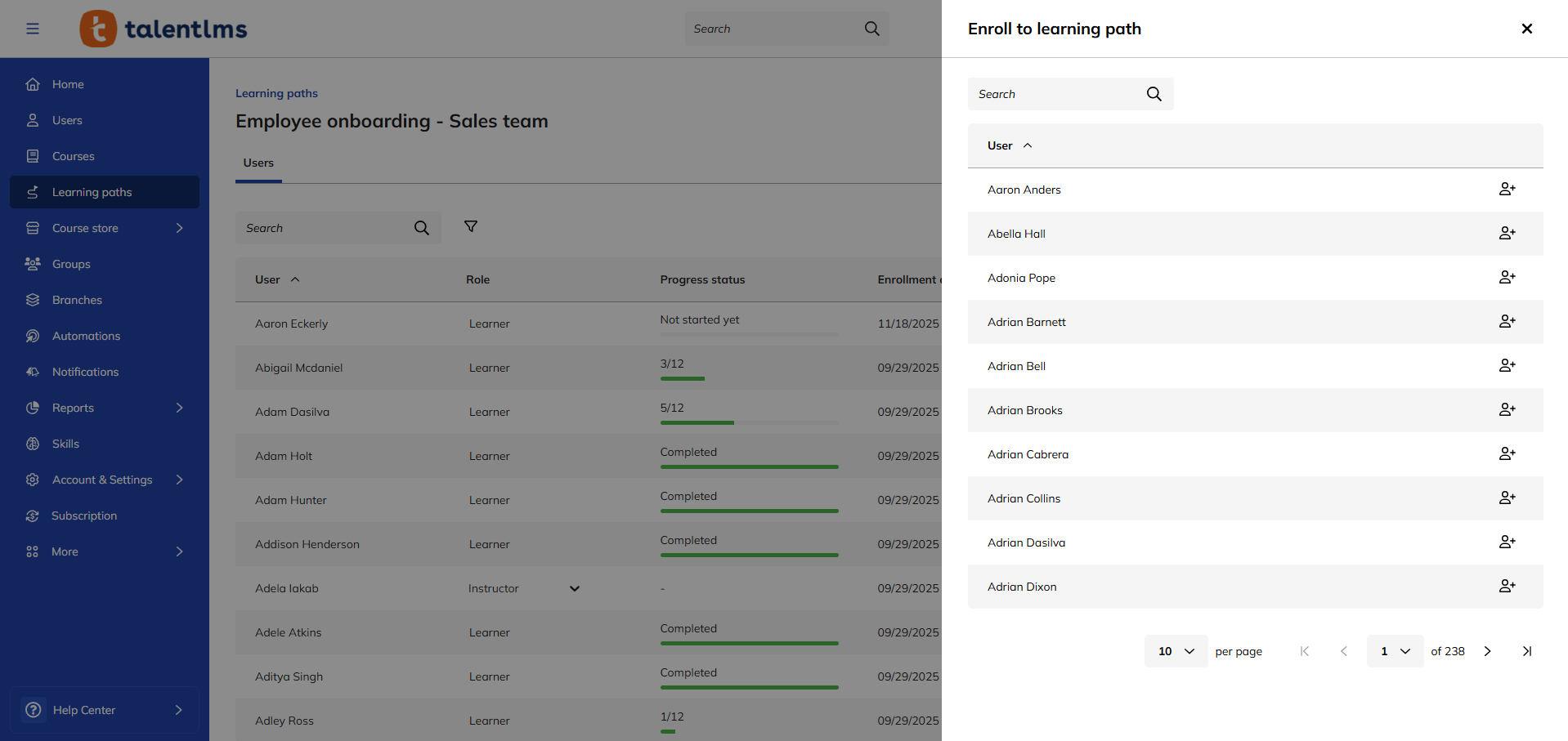
That’s why the big move for 2026 is using Learning Paths to tailor the experience. It lets you ensure that even if everyone is learning a topic like “Communication,” the Sales team gets a version about pitching clients, and the Finance team gets a version about reporting numbers.
From course builders to performance architects
If there is one “red thread” connecting all 2026 L&D trends, it’s that the era of launching courses is over. We have entered the era of performance enablement.
Your mandate is no longer to get people to training but to get training into the flow of work. Whether you are using AI Coaches (L&D Trend 1) to build capability in real-time or Data Analytics (Trend 6) to prove ROI, the goal is to stop counting completions and start measuring capability.
To start, audit your current strategy against these L&D trends and pick one pilot:
- High Burnout? Focus on well-being and flow of work (L&D Trends 3 & 11).
- High Turnover? Focus on skills mobility and internal career paths (L&D Trend 4).
- Low Engagement? Focus on personalization and social learning (L&D Trends 7 & 12).
Pick your pilot, measure the capability shift, and pay down that learning debt.
Originally published on: 14 Jan 2025