

TL;DR
- L&D’s value is still on trial: budgets are first to be cut, and impact is judged by proxies that miss what learning actually does.
- Time is the most universal pain: it topped our event poll, and learning gets crowded out by workload everywhere.
- The gap between course completion and knowledge application is where training breaks down—and where the strongest booth reactions landed.
- AI anxiety is real: L&D is under pressure to master AI overnight and needs control over how it shows up in their tools.
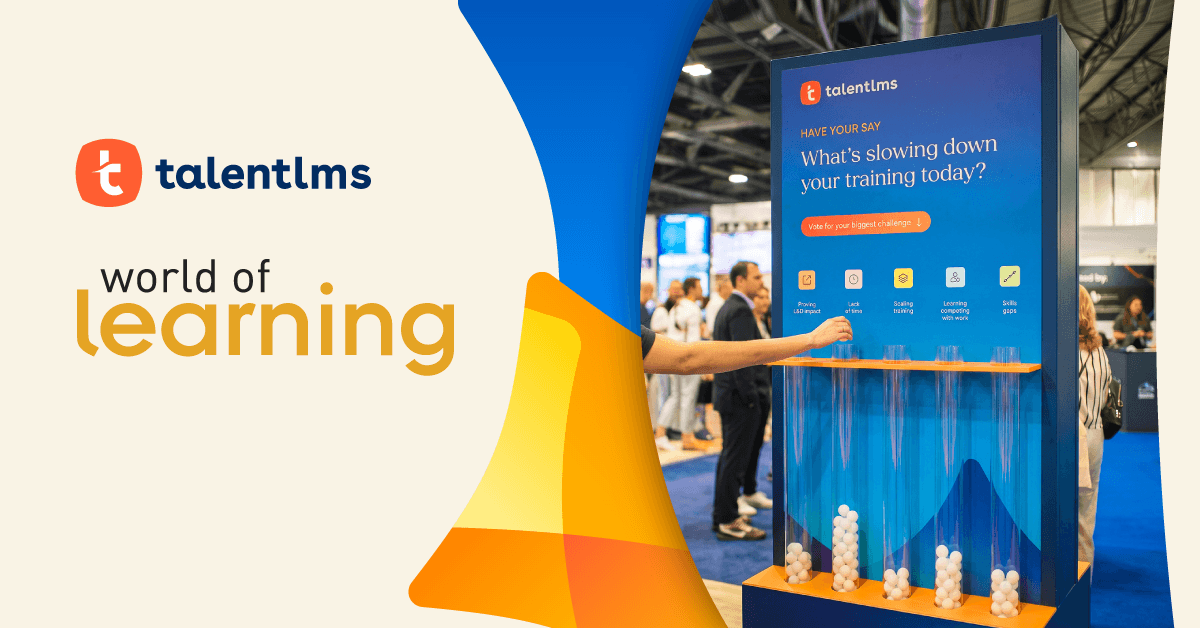
At this year’s World of Learning, the UK’s comprehensive annual event for Learning and Development (L&D) and HR professionals, featuring seminars, networking, and industry suppliers, we ran a simple poll at our stand, “What’s the one thing slowing down your training today?” where over 220 attendees stopped to vote. The results were insightful, but what really stayed with us was how people reacted to being asked.
The poll became an opening, and the conversations that followed were some of the most honest we’ve had. For most L&D professionals we spoke with, the opportunity to openly discuss their challenges and everyday frustrations was too valuable to pass up. Many told us they rarely get asked in their workplaces what they think, what challenges they’re facing, or what their experience tells them is the right approach to L&D decisions.
We came to listen, and people noticed.
In our interactive poll at World of Learning, five themes kept coming back, both in the results and in conversation.
What did L&D professionals say at World of Learning 2026?
Across conversations and poll results at World of Learning 2026, five shifts stood out. L&D’s value is still on trial, time scarcity is crowding out learning, the learning-to-doing gap is where training breaks, AI anxiety is growing, and often leadership isn’t set up to see any of it. What attendees wanted most was to be asked, listened to, and have access to evidence they could take back to their organizations.
Shift 1: L&D’s value is still on trial
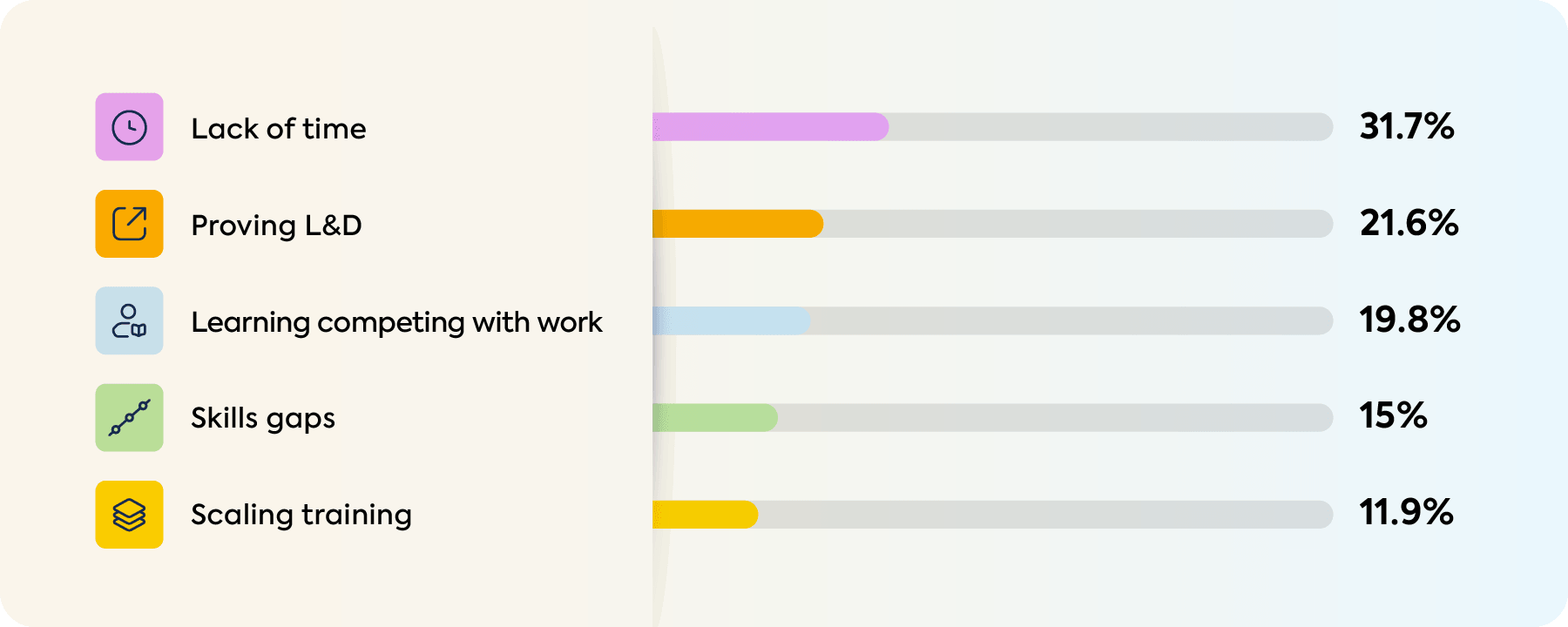
The theme people kept returning to was when budgets tighten, training is the first line to be cut. As a result, organizations often deprioritize L&D projects first. In our poll, proving L&D impact was the second-most-cited challenge (21.6% of votes).
Proving impact remains the core struggle. The verdict on whether training is effective—or even necessary—often comes from outside L&D, from parties that aren’t able to capture what learning changes. Many attendees have worked as internal or external consultants, meaning they were hired for their expertise but then not listened to. Being unheard is what “value on trial” feels like day to day.
The hunger for evidence was palpable. When we shared our Learning Debt report—which found that 41% of employees say their role has evolved faster than their company’s ability to train them—the reaction told us how starved people are for data they can put in front of decision-makers.
And the cost of that debt is concrete, with 54% of employees experiencing mistakes at work that proper training could have prevented. Such data can support the business impact L&D is asked to show, for example.
It’s also a theme we’ve explored on our podcast, Talent Talks, with L&D leader David Kelly, on “L&D in 2026: Learning debt, AI, and transformation”. He points out, demonstrating value requires a shift in how L&D communicates its contribution.

“We have to change our narrative and our mindset to, how does the work that we do impact the business? How does it provide business value?”
Shift 2: Nobody has time
Not having enough time was the most universally nodded-along pain of the event. Lack of time took 31.7% of the vote, the single biggest training challenge according to our poll at World of Learning this year. The reason is no mystery. L&D has to pull people away from daily work to train them.
Skills gaps persist because learning gets crowded out by workload. When we said this out loud, everyone agreed. TalentLMS’s 2026 L&D Benchmark Report found the same. Sixty-five percent of employees say performance expectations have risen this year, yet lack of time remains the biggest barrier to learning.
Manual admin also compounds time scarcity. Too many organizations still run training by hand—scheduling sessions, chasing completions, and sending reminders one by one. And when legacy systems have been in place for years, switching can feel like writing off the investment. Even when the current setup could cost more time than it saves.

As L&D expert Natal Dank explains in Agile L&D: fast and adaptive training at the speed of business, perfect training has become the enemy of useful training. Learning teams need to reduce bottlenecks and respond faster, not overbuild programs that are outdated before they launch.
Shift 3: The gap between learning and doing is where training breaks
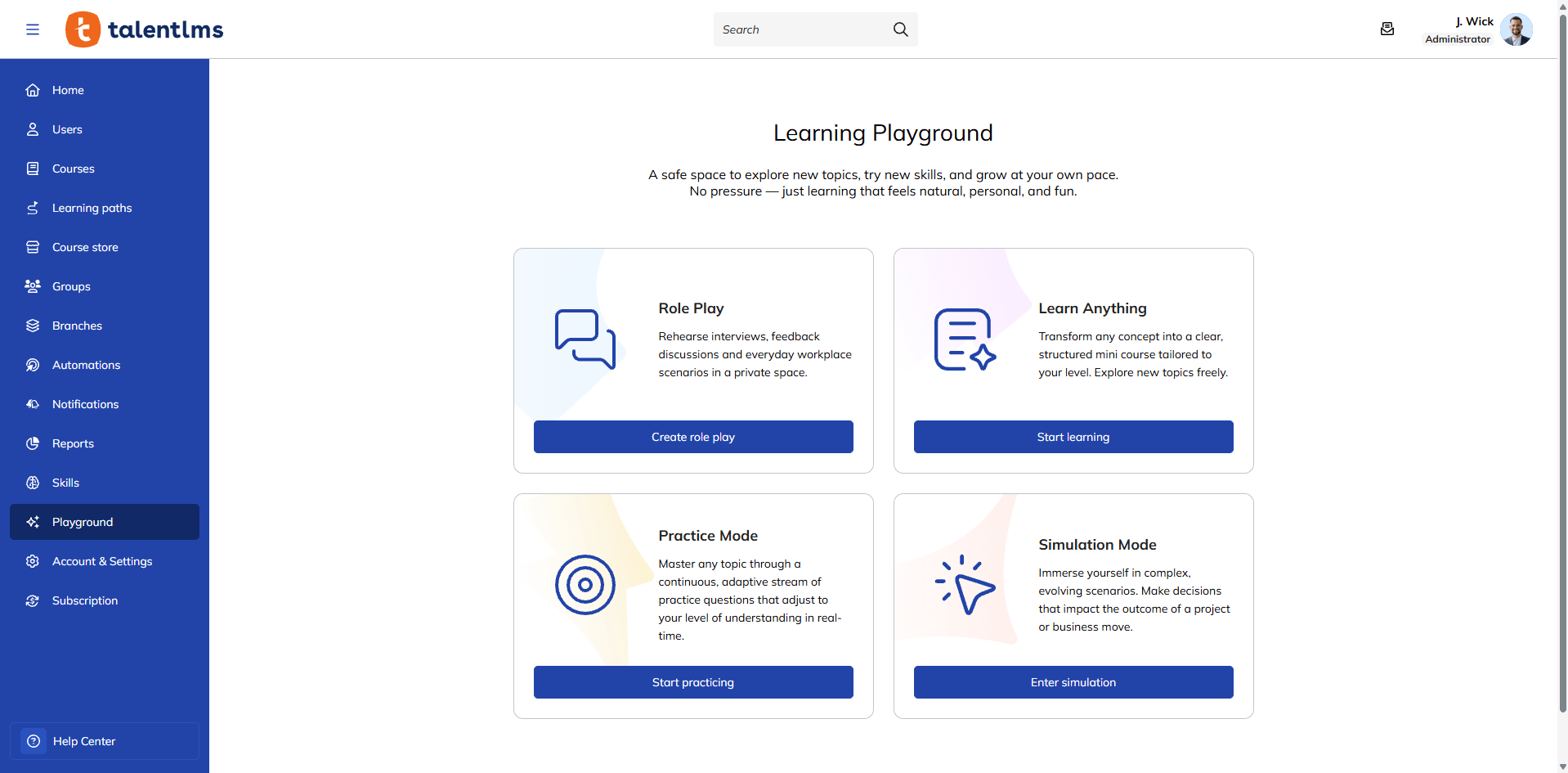
Some of the strongest booth reactions came when people saw TalentLMS’s Learning Playground feature. It addresses a gap everyone recognized immediately: the distance between finishing a course and actually applying the knowledge.
TalentLMS’s Speed-to-Skill report shows how wide that gap runs. Seven in ten respondents say people need faster ways to practice skills as job demands change. Yet only 16% say skill-building happens quickly when new needs arise. And nearly one in four (24%) say the lack of a safe environment to practice before using skills on the job slows progress down. The demand is clear for more opportunities to practice.
Bob Mosher explored this on Self-directed learning: Why your employees are training themselves. Most learning is now self-directed and happening in the flow of work, and the challenge for L&D is supporting that shift rather than fighting it.
Shift 4: AI adoption doesn’t have to mean AI expertise
Thought leaders insist L&D must become AI experts to justify their value. Meaning they should master AI for their own work, then teach it to everyone else.
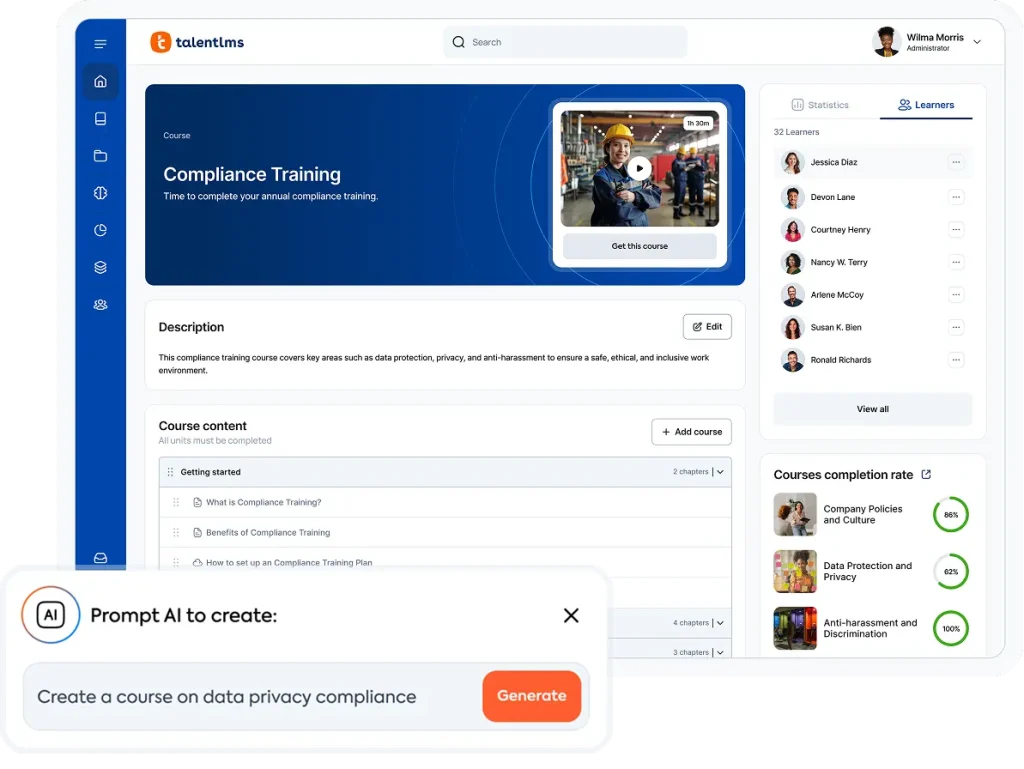
The reality on the floor was more mixed. Uneven AI adoption is legitimate—some organizations are ready, some aren’t, and some are deliberately cautious. What resonated most was that AI on TalentLMS’s features didn’t require adding another layer of complexity to their work. TalentCraft, TalentLMS’s AI course creator, was one of the strongest booth reactions. People saw how AI could speed up course creation within their existing workflow without requiring them to become AI experts first.
Control mattered too. The fact that in TalentLMS, you can switch AI off gives people the choice of using it only when and where it belongs.
TalentLMS’s above-mentioned reports found that 83% of HR managers believe their company actively supports AI learning—but only 64% of employees agree. And there’s a quieter signal underneath: 37% of employees say AI has made them appear more competent than they actually are—masking unmet training needs rather than meeting them.
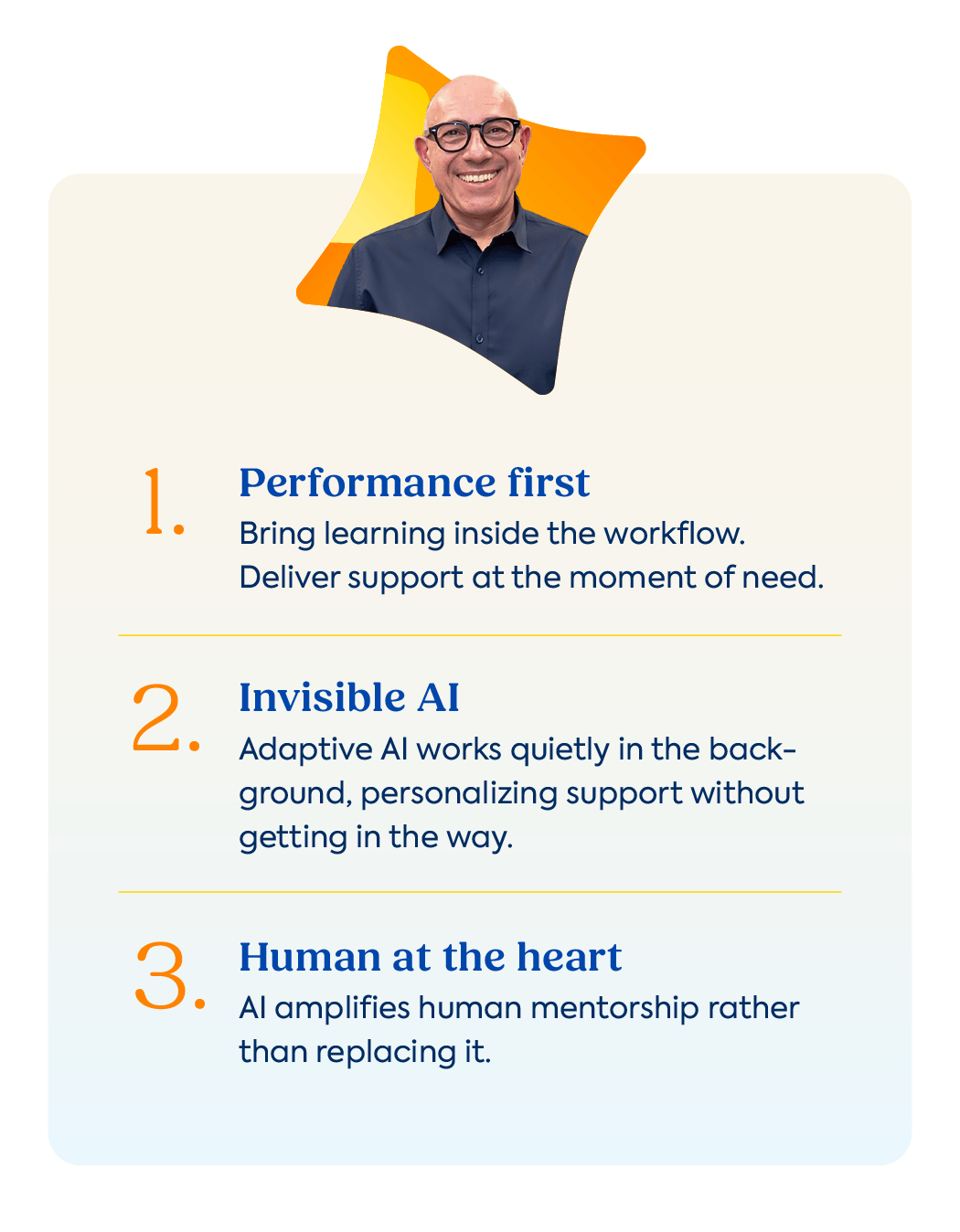
This was also the thread running through our VP of Learning Transformation Nick Gonios’s main-stage talk at the event. AI works best when it’s invisible and amplifies human mentorship instead of replacing it.
Shift 5: Leadership often hasn’t been set up to see any of this
It’s easy to assume people will stay motivated to learn regardless of circumstances, tools, or how learning is designed. Most organizations have formalized that assumption, as 61% of employees and managers say people are expected to keep their skills up-to-date on their own.
Leadership often hasn’t been set up to see the gap between what training looks like on paper and what it feels like on the ground. This doesn’t happen because they simply don’t care. It happens because the signals rarely reach them. Our Skills Visibility report shows that 90% of managers say they understand their team’s skills, but only 69% of employees agree. And the Learning Debt findings show that nearly half of employees (47%) have stayed quiet about not knowing how to do something at work.
Al Dea explored this on The manager multiplier: Bringing development into the flow of work. Managers are the missing link in developing talent, and most feel unprepared for the role—not because they’re unwilling, but because nobody equipped them for it.
What we’re doing about it
Listening is the point of an event like this. But listening without acting on what you hear is just networking. So here’s how what we heard maps to what we build:
- For proving value: Reporting in TalentLMS shows assessment results, learner progress, engagement and compliance data—the evidence L&D needs for conversations with decision-makers.
- For time scarcity: TalentCraft, TalentLMS’s AI course creator, speeds up the process of building courses, which was the single strongest reaction when time came up in conversation. TalentCards struck a chord of its own at the event. A large share of L&D teams struggle to reach deskless workers (people on the floor, on site, and on the move). TalentCards is built for exactly that. Microlearning that fits into a working day, designed for reinforcement of learning over time. For teams already on TalentLMS, it works as an add-on for their deskless workforce.
- For the learning-to-doing gap: Learning Playground gives people a space to practice before they perform, closing the distance between course completion and on-the-job application. Learning Paths help users achieve their tailored training goals with clear milestones and next steps. Finally, the AI Coach, TalentLMS’s AI-powered assistant, helps learners better understand course content and engage more actively with training material.
- For AI anxiety: AI features in TalentLMS work within your existing workflow, helping you save time without disrupting the workflow or requiring you to master AI first. And because AI is optional, you decide when and where to use it.
- For leadership visibility: Turn skills gaps into targeted development. TalentLMS’s free skills gap analysis template walks through the five-step process for making team capability visible. Plus, with Skills it’s easier to map capabilities and surface development needs.
What we’re taking back with us
Listening was our goal, and what we heard gave us plenty to think about. We’re taking all of it back with us. The frustrations, the workarounds, and the honest “we’re not there yet” will shape what we build and what we write next.
If you were at World of Learning 2026 and shared your story with us, thank you. And if any of this sounds familiar—remember that you’re not alone.
FAQs
What is learning debt?
Learning debt is the gap between the skills employees have and the skills their roles now require—a concept from TalentLMS research into how organizations fall behind on training as work changes faster than learning can keep up.
Why do L&D teams struggle to prove training’s impact?
L&D teams struggle to prove impact because training outcomes are often judged by proxies—like completion counts or immediate performance shifts—that don’t capture what learning changes over time. Limited existing research on training’s business impact makes the case harder to build.
How can L&D reach deskless workers?
L&D can reach deskless workers with microlearning designed for mobile-first, on-the-floor delivery—short, focused content that fits into a working day and reinforces learning over time, such as TalentCards.
Do you have to use AI features in an LMS?
No. In TalentLMS, AI features are optional—you can switch them off. AI adoption varies across organizations, and having control over when and where AI appears in your tools is a legitimate preference.
Do L&D professionals need AI expertise to use AI-powered LMS tools?
No. AI-powered LMS features on TalentLMS integrate AI into existing workflows, helping L&D professionals create training content faster without needing advanced AI skills or extensive technical training.